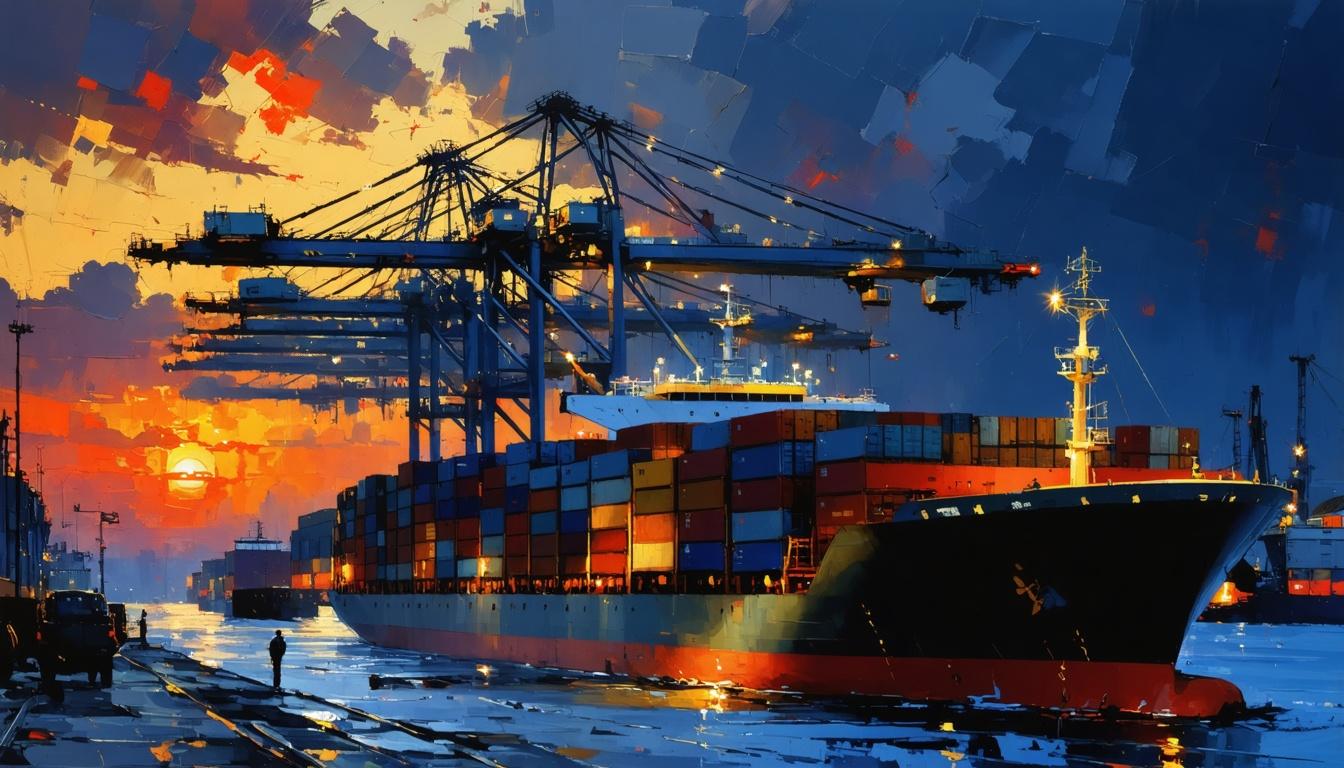
U.S. forces disable 3rd oil tanker violating blockade in Gulf of Oman

0 min read     Updated on 11 Jun 2026, 05:20 PM
scanx
Reviewed by
Shraddha JScanX News Team
AI Summary

U.S. forces disabled a third oil tanker violating a blockade in the Gulf of Oman, as confirmed by U.S. Central Command. This is the third such incident in the region.


powered bylight_fuzz_icon
42724231

*this image is generated using AI for illustrative purposes only.

U.S. forces successfully disabled a third oil tanker found to be violating a blockade in the Gulf of Oman. The operation was carried out to enforce maritime restrictions in the region.

The incident was confirmed via an official statement from U.S. Central Command. The specific details regarding the vessel's name, flag, or the exact nature of the disabling action were not immediately disclosed in the initial report.

This event marks the third instance where U.S. forces have intervened to stop an oil tanker breaching the blockade in the Gulf of Oman. The strategic waterway has been a focal point for maritime security operations.

Key Details

Aspect Detail
Location Gulf of Oman
Action Taken Disabled
Vessel Type Oil Tanker
Incident Count 3rd

How will this escalation impact global oil shipping routes and insurance premiums in the region?

What diplomatic response, if any, is expected from the nations whose vessels are being targeted?

Could these interventions lead to a sustained increase in U.S. naval presence in the Gulf of Oman?

like19
dislike

Scaramucci says immigration debate is really an affordability debate

1 min read     Updated on 11 Jun 2026, 04:05 PM
scanx
Reviewed by
Radhika SScanX News Team
AI Summary

Anthony Scaramucci argues that rising anti-immigrant sentiment is driven by economic insecurity rather than racism. He states that affordability crises cause fear to land on immigrants. Scaramucci suggests fixing economic mobility would ease immigration tensions.

powered bylight_fuzz_icon
42719696

*this image is generated using AI for illustrative purposes only.

Anthony Scaramucci, former White House communications director, argued that the current immigration debate in the United States is fundamentally rooted in economic insecurity and affordability rather than racism. He stated that when households face financial strain, immigrants often become the target of public frustration.

Scaramucci made these remarks in a post on X on Wednesday. He noted that economic concerns consistently rank among the top issues for American voters, particularly as inflation remains at its highest level since April 2023. Households are feeling the financial strain due to the rising cost of housing, healthcare, and education.

"But when you're in decline, when the affordability crisis has you missing mortgage payments, skipping the dentist, watching your kids fall behind where you were at their age, the immigrants become the threat," Scaramucci said. He added that periods of economic decline fuel a search for scapegoats because "fear needs somewhere to land."

Scaramucci emphasized that anti-immigrant sentiment is frequently a byproduct of personal economic panic. "That’s not racism. That’s economics," he stated. He suggested that addressing affordability and restoring economic mobility would do more to ease tensions surrounding immigration, arguing that if policymakers "fix the economics and you fix a lot of the rest."

The comments come as immigration remains a defining political issue during Donald Trump's presidency. The administration has made border security, deportations, and immigration enforcement central pillars of its agenda. The debate is unfolding alongside persistent concerns about affordability and the cost of living, which are top priorities for voters ahead of the November mid-term elections.

How might shifting economic indicators, such as a potential drop in inflation, influence voter sentiment on immigration ahead of the mid-term elections?

Could policymakers effectively implement economic mobility solutions quickly enough to impact the current political polarization surrounding immigration?

If economic conditions worsen, is there a risk that anti-immigrant sentiment could escalate beyond rhetoric into more severe policy measures?

like18
dislike