

Construction surges at Iran's suspected nuclear site as Pentagon plans strikes


- Satellite imagery shows clear surge in construction at suspected Iranian nuclear site Pickaxe Mountain this year
- Facility near Natanz shifting from excavation to internal construction and exterior reinforcement
- Pentagon developing next-generation penetrator bombs after June 2025 strikes left deeply buried sites intact
- IAEA lacks access to verify Iran's uranium stocks, including material enriched up to 60%
- Defense officials conducting focused planning sprint on potential operations against underground facilities

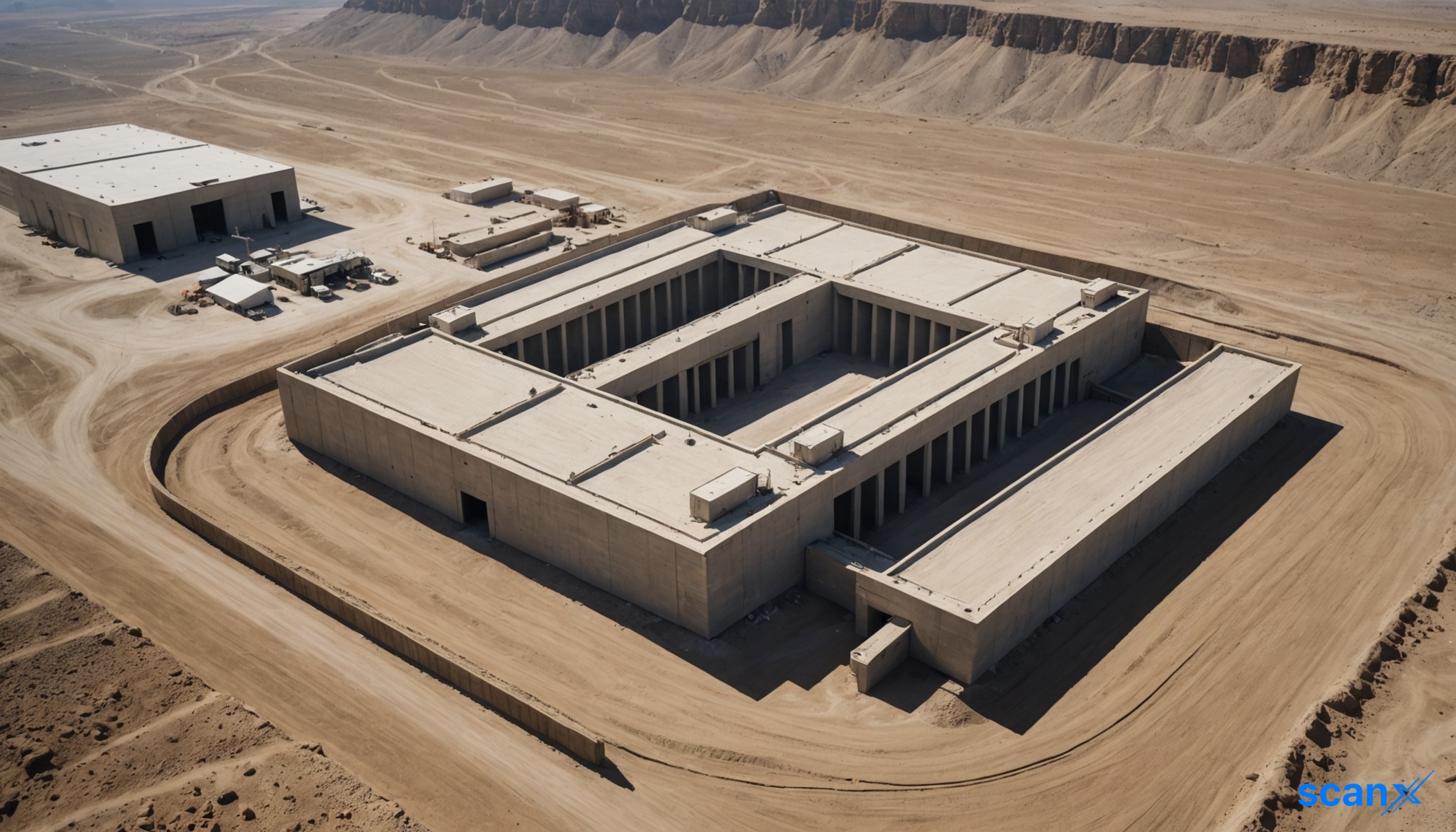

*this image is generated using AI for illustrative purposes only.
Satellite imagery analysis reveals a clear surge in construction activity this year at Pickaxe Mountain, a suspected Iranian nuclear facility located near the Natanz complex. The Center for Strategic and International Studies (CSIS) report indicates the underground site is likely intended to serve as a safe haven for Iran's nuclear program.
The facility, situated about 140 miles south of Tehran, has shifted from active excavation to internal construction and exterior reinforcement. Analysts note that the continuous construction suggests the site is not yet ready for enrichment work, if that is its intended purpose. The granite mountain embedding the facility presents significant challenges, with CSIS reporting that even the Pentagon's heaviest non-nuclear bombs would find it a difficult target.
Pentagon Develops Deeper Strike Capabilities
The developments follow President Donald Trump's July threat to attack the site, despite there being no activity at that time. Trump stated authorities were watching it closely and would probably strike relatively soon. The U.S. struck Iranian nuclear sites in June 2025 under Operation Midnight Hammer, damaging key facilities but leaving the deeply buried Isfahan site largely intact.
According to CNN, the Pentagon is now developing a next-generation penetrator bomb capable of reaching deeper underground targets, with prototype work launched last year. Defense officials are continuing to develop plans for decisive strikes on underground facilities, with Pentagon elements recently conducting a focused planning sprint on potential operations.
IAEA Cites Lack of Access
The International Atomic Energy Agency (IAEA) has been unable to verify Iran's nuclear program for more than a year, IAEA Director-General Rafael Grossi said Monday. Grossi stated the agency lacks access to information on Iran's declared stocks of low-enriched uranium and highly enriched uranium enriched up to 60% at nuclear facilities affected by the June 2025 military attacks.
He called the lack of access a serious nuclear proliferation concern requiring urgent action. Grossi urged Iran to cooperate fully with the agency and meet its obligations under the NPT Safeguards Agreement, while also calling for a return to diplomacy and negotiations over Iran's nuclear program.

How will the deployment of next-generation deep-penetrator bombs alter the strategic calculus for future military interventions against hardened underground targets?
What diplomatic leverage might the IAEA gain if Iran continues to deny access, and could this lead to renewed UN Security Council sanctions?
Is the construction at Pickaxe Mountain intended solely for enrichment, or does it signal a shift toward weaponization capabilities that would change the threshold for US military response?
 16
16





 Create Custom Screeners
  Access 200+ Pre-built Filters
  Use 50+ Readymade Screener





