USA new home sales fall 7.3% to 580K in May

1 min read     Updated on 24 Jun 2026, 09:28 PM
scanx
Reviewed by
Radhika SScanX News Team
AI Summary

USA new home sales for May fell 7.3% to 580K, missing the consensus estimate of 638K and declining from the prior reading of 622K, indicating softer demand in the residential housing market.

powered bylight_fuzz_icon
43861595

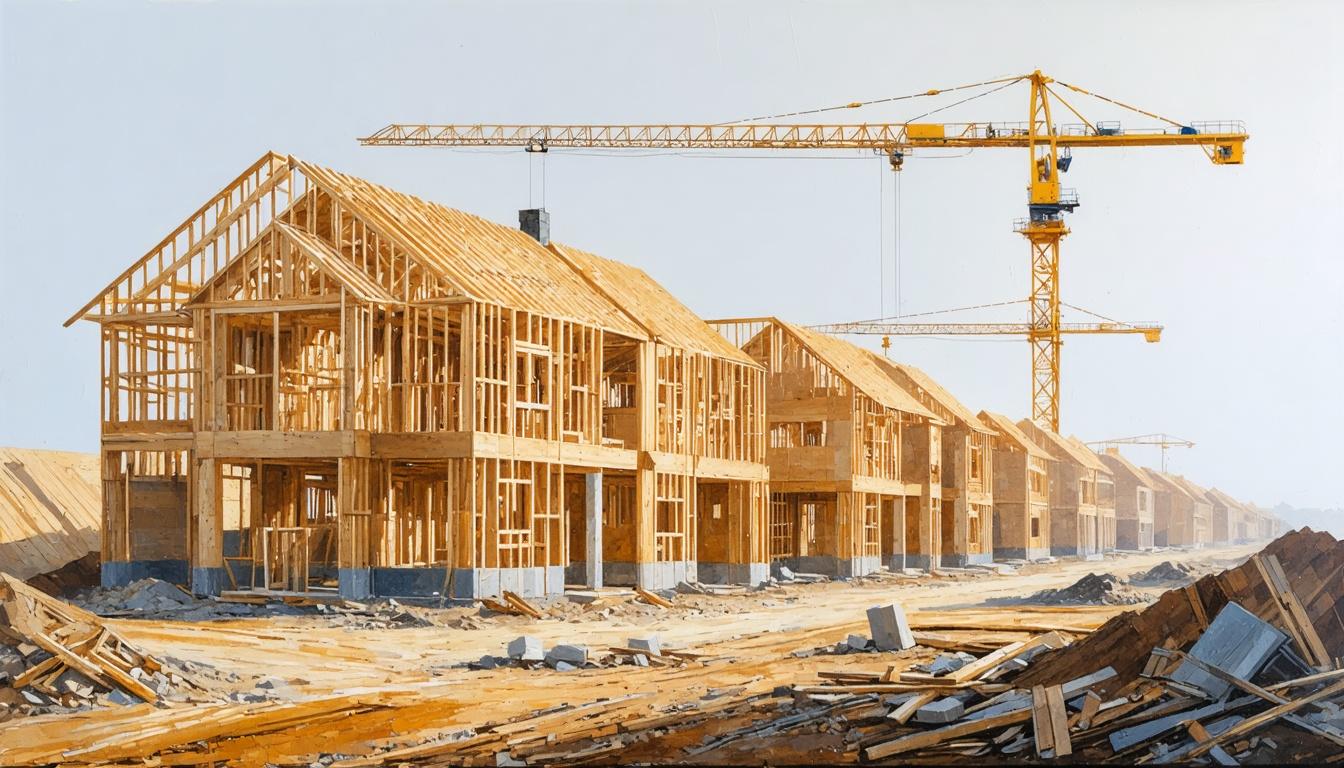
*this image is generated using AI for illustrative purposes only.

USA new home sales for May fell 7.3%, a sharper decline than the previous period's drop of 5.7%, as the sector weakened beyond market expectations. The actual sales volume of 580K missed the consensus estimate of 638K and declined from the prior reading of 622K, reflecting softer demand in the new residential housing market.

Key Data at a Glance

The following table summarizes the May new home sales figures against prior and estimated readings:

Metric: Value
Actual (May): 580K
Previous Reading: 622K
Estimate: 638K
Monthly Change: -7.3%
Prior Monthly Change: -5.7%

Performance Overview

The May actual reading of 580K represents a decline from the previous figure of 622K, while also coming in well below the market estimate of 638K. The gap between the actual outcome and the estimate stood at 58K, underscoring the degree to which the reported figure trailed consensus expectations. Similarly, the reading declined by 42K compared to the previous period's figure of 622K. The monthly decline of 7.3% worsened compared to the 5.7% drop recorded in the prior period.

Market Context

The new home sales data serves as a key indicator of residential housing activity in the USA. A reading below both the prior period and the market estimate suggests softer demand conditions in the new homes segment for May. The miss relative to the 638K estimate and the sequential decline from 622K are the primary data points of note from this release.

How might this decline in new home sales influence the Federal Reserve's upcoming interest rate decisions?

What impact could weaker demand have on homebuilder stock performance in the next quarter?

Will homebuilders adjust pricing strategies or offer incentives to stimulate demand in the coming months?

like17
dislike

J.S. Held survey shows diverging credit strategies as lenders recalibrate in Q2 2026

1 min read     Updated on 24 Jun 2026, 06:17 PM
scanx
Reviewed by
Radhika SScanX News Team
AI Summary

J.S. Held's Q2 2026 Lending Climate in America survey indicates a stabilization in lender sentiment but a divergence in credit strategies. Geopolitical risk has overtaken other factors as the primary economic concern. Lenders are selectively easing terms for smaller loans while maintaining discipline in larger exposures, and borrower appetite for M&A has decreased.

powered bylight_fuzz_icon
43850801

*this image is generated using AI for illustrative purposes only.

Global consulting firm J.S. Hold published the results of its Q2 2026 Lending Climate in America survey, revealing a shift from the tightening outlook observed in Q1 2026 toward a more differentiated lending environment. The findings indicate that while economic sentiment shows early signs of stabilization, lenders' expectations for interest rates have become less directional. Geopolitical risk now ranks as the leading concern among respondents, underscoring a complex macro environment.

The share of lenders grading the near-term US economy a "B" rose to 34.5% in Q2, up from 24.0% in Q1 2026, while the share assigning a "D" declined to 13.8% from 18.3%. "The Q2 data suggests that while sentiment is no longer deteriorating at the pace observed in Q1, lenders have not returned to a broadly optimistic stance," said J.S. Held Senior Managing Director Michael Jacoby.

Geopolitical Risk and Economic Concerns

Geopolitical risk and war were the most frequently cited factors expected to affect the economy over the next six months, selected by 42.4% of respondents. Policy risk, including interest rates, followed at 32.5%. Other tightly clustered concerns included constrained liquidity in capital markets (27.6%), stock market stability (27.1%), US recession risk (27.1%), and political uncertainty (26.6%).

"Geopolitical risk is no longer a background variable in lender decision-making," said J.S. Held Senior Managing Director Livia Paggi. "It is increasingly shaping expectations around capital availability, supply chain stability, and borrower performance."

Credit Strategies and Sector Volatility

In Q1, the survey indicated a clear shift toward tighter credit standards. In Q2, this evolved into a more differentiated approach. For loans under $5 million, reported easing increased, suggesting some lenders are selectively relaxing terms in smaller credits. "The lending environment is becoming more differentiated quarter over quarter," said J.S. Held Director Kevin Doyle.

Finance and insurance remained the sector most frequently identified as likely to experience volatility, though the share declined to 54.2% from 63.0% in Q1. Energy and power remained second at 34.0%. Technology, media, and telecommunications declined significantly from 26.0% in Q1 to 12.3% in Q2.

Borrower Activity and M&A Appetite

Borrowers continue to prioritize forward-looking initiatives despite a disciplined lending environment. Appetite for acquisitions declined further, falling to 16.7% from 21.2% in Q1, suggesting a continued shift away from M&A toward organic growth and operational investment.

How might the prioritization of geopolitical risk over interest rates influence long-term capital allocation strategies in the second half of 2026?

Will the selective easing of terms for loans under $5 million be sufficient to sustain small business growth if liquidity constraints persist in broader capital markets?

As M&A appetite continues to wane, which sectors are most likely to see a surge in organic growth investment and operational restructuring?

like20
dislike

More News on United States

Must Read Next

Earnings

Corporate Actions

Stocks