

Solex Energy Q1FY27 Results: Net profit falls 33% YoY to ₹8.3 crore


- Net profit fell 33% YoY to ₹8.3 crore in Q1FY27 amid higher fixed costs
- Revenue rose 1.8% to ₹265.6 crore while EBITDA margin contracted to 12.7%
- Order book visibility stands at ₹3,400 crore with ₹845.84 crore pipeline for Dec 2026
- Company lists on BSE main board; no fresh capital raised
- Backward integration into 2.2 GW cell line on track for late 2027 commissioning

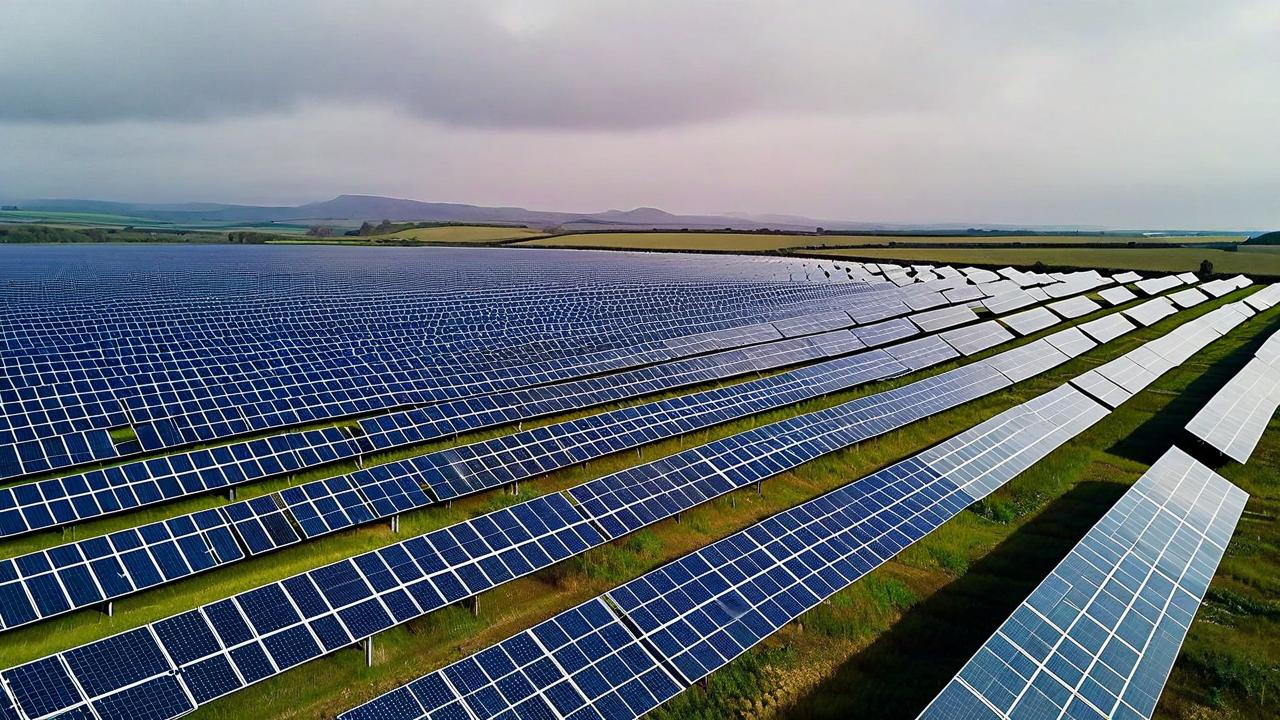

*this image is generated using AI for illustrative purposes only.
Solex Energy reported a year-on-year decline in net profit of 33% to ₹8.3 crore for the first quarter of FY27, despite a marginal rise in revenue. The contraction in profitability was driven by higher depreciation and finance costs associated with expanded capacity.
Total revenue stood at ₹265.6 crore in Q1FY27, up 1.8% from ₹261 crore in the same period last year. EBITDA fell to ₹33.8 crore from ₹42.7 crore, resulting in a margin compression from 16.4% to 12.7%.
Financial Performance
The company attributed the profit dip to structural cost increases rather than operational weakness. Depreciation and amortization more than doubled to ₹10.2 crore from ₹4.3 crore, reflecting the full-quarter impact of Line 3 and Line 4 commissioned in November 2025. Finance costs rose to ₹12.5 crore from ₹5.4 crore due to higher working capital deployment via fund-based limits.
| Metric | Q1FY27 | Q1FY26 | Change |
|---|---|---|---|
| Revenue | ₹265.6 crore | ₹261 crore | +1.8% |
| EBITDA | ₹33.8 crore | ₹42.7 crore | -20.8% |
| EBITDA Margin | 12.7% | 16.4% | -370 bps |
| Net Profit | ₹8.3 crore | ₹12.4 crore | -33.1% |
| PAT Margin | 3.1% | 4.7% | -160 bps |
Profit before tax stood at ₹11.1 crore. Earnings per share were reported at ₹7.39.
What the Numbers Show
The divergence between stable revenue and declining margins highlights the impact of fixed costs on Solex’s current scale. With revenue growth limited to 1.8%, the company absorbed a ₹5.9 crore increase in depreciation and a ₹7.1 crore rise in finance costs. This suggests that until capacity utilization improves significantly in the second half, operating leverage will remain muted as fixed expenses outpace top-line growth.
Order Book and Outlook
Management highlighted an order book visibility of approximately ₹3,400 crore, comprising confirmed purchase orders, signed MSAs, and advanced-stage discussions. The company secured a new work order worth ₹42.47 crore in August 2026 for N-type TOPCon modules, adding to a pipeline of ₹845.84 crore targeted for execution by December 31, 2026.
Chairman Dr. Chetan Shah noted that the business is inherently second-half weighted due to seasonal utility-scale project execution. He clarified that recent delivery delays were timing shifts rather than cancellations, driven by industry-wide wait-and-watch behavior following ALMM-2 regulatory clarifications.
Strategic Initiatives
Solex is advancing its backward integration plans with a 2.2 GW N-type TOPCon+ cell manufacturing line, targeted for commissioning by end-2027. The project requires approximately ₹700 crore in debt and ₹350 crore in equity. The company also listed its shares on the BSE main board in August 2026, broadening its investor base without raising fresh capital.
For FY27, management maintains its revenue guidance and expects PAT margins in the range of 5% to 6%, contingent on higher utilization rates in the latter half of the fiscal year.
Historical Stock Returns for Solex Energy
| 1 Day | 5 Days | 1 Month | 6 Months | 1 Year | 5 Years |
|---|---|---|---|---|---|
| -1.18% | -4.29% | -6.55% | -51.07% | -55.98% | 0.0% |

How will the commissioning of the 2.2 GW N-type TOPCon+ cell line by end-2027 impact Solex Energy's cost structure and margin recovery trajectory?
What specific strategies is management employing to accelerate capacity utilization for Lines 3 and 4 to mitigate the current impact of doubled depreciation costs?
How might the industry-wide 'wait-and-watch' behavior following ALMM-2 regulatory clarifications evolve, and what is the risk of delayed orders converting into cancellations?
 17
17




 Create Custom Screeners
  Access 200+ Pre-built Filters
  Use 50+ Readymade Screener





