Revvity acquires Human Cell Design to expand metabolic disease research portfolio

scanx
Reviewed by
Jubin VScanX News Team
Key Highlights
  • Revvity to acquire Human Cell Design, adding human pancreatic beta cell models to its Life Sciences portfolio
  • Transaction expected to close in Q4 2026, subject to regulatory approvals and customary conditions
  • Deal targets exposure to GLP-1 and metabolic disease therapies via HCD's EndoC-βH5 cell models
  • Integration leverages Revvity's HTRF, AlphaLISA, and pHSense technologies for enhanced drug discovery
powered bylight_fuzz_icon
50495657

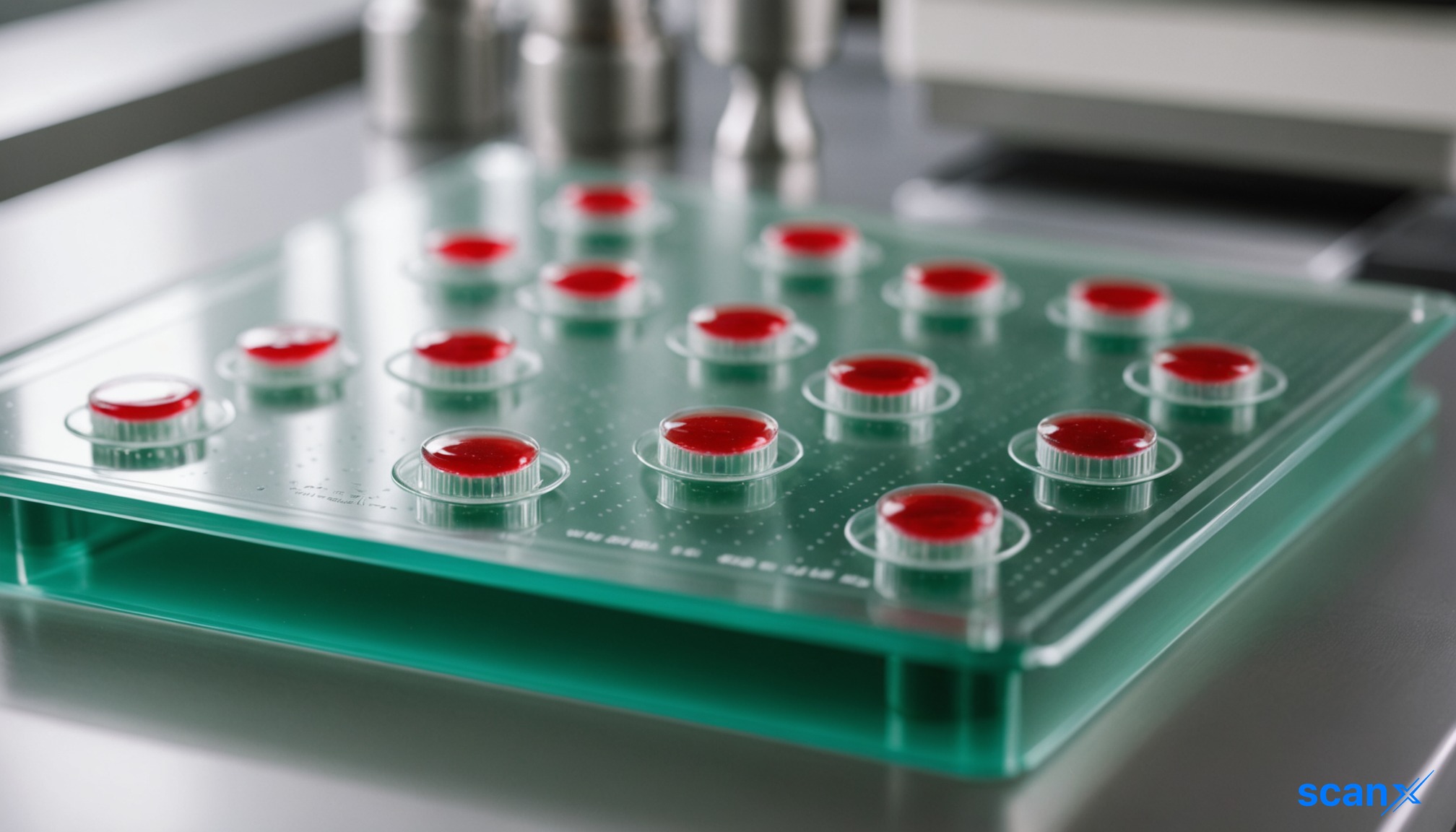
*this image is generated using AI for illustrative purposes only.

Revvity has agreed to acquire French biotech firm Human Cell Design (HCD) to gain exposure to human cell models and preclinical research solutions for metabolic diseases.

The transaction is expected to close in Q4 2026, subject to customary closing conditions including required regulatory approvals. Additional financial terms of the deal were not disclosed.

Strategic Rationale

The acquisition adds HCD’s human pancreatic beta cell models to Revvity’s Life Sciences portfolio. This supports drug discovery, screening, and preclinical research, with specific applications in GLP-1 and other metabolic disease therapies.

Prahlad Singh, president and CEO of Revvity, stated that HCD brings differentiated human cell models that complement Revvity’s broad technology portfolio. He noted that combining high-quality cell models with capabilities in screening, detection, automation, and analysis creates an opportunity to provide customers with more integrated solutions as researchers seek human-relevant approaches to understanding biology.

Technology Integration

HCD’s flagship EndoC-βH5 human pancreatic beta cell model is designed to provide a human-relevant model for studying beta cell physiology and function across diabetes and obesity research. The company also offers specialized media, reagents, preclinical research services, and its proprietary NatLine cell-line development platform.

Guillaume Costecalde, founder and president of Human Cell Design, said joining Revvity is expected to allow the firm to bring its human cell models and NatLine technology to a broader global customer base while supporting the development of new physiologically relevant cell models.

Product Synergies

The combination aligns with Revvity’s portfolio of detection and cell analysis technologies. EndoC-βH5 cells are suited for use with:

  • Revvity’s HTRF™ and AlphaLISA™ assays for measuring key pharmacological readouts such as cAMP and insulin.
  • pHSense™ technology for receptor internalization studies.
  • ATPlite™ assays for cell viability and proliferation analysis.

These detection and analysis capabilities are expected to extend to Revvity’s high-content screening platform and sophisticated approaches to interpreting complex cellular data. As wet-lab validation becomes increasingly important to support AI-enhanced science, human-relevant cell models provide a foundation for testing and confirming AI-generated insights.

Applications Beyond Discovery

HCD’s technology has applications beyond early-stage discovery, including research supporting regenerative medicine approaches for Type 1 diabetes and quality control activities as cell-based therapies progress toward commercialization. Upon completion of the acquisition, the combined solutions are expected to support customers across multiple stages of therapeutic research and development.

Disclaimer: This article is AI-generated using data from ViewTrade. ScanX is not liable for any inaccuracies.

How might the undisclosed financial terms of the Revvity-HCD acquisition compare to recent valuations in the metabolic disease biotech sector?

What regulatory hurdles could potentially delay the expected Q4 2026 closing date for this cross-border transaction?

To what extent will HCD's human-relevant cell models accelerate the validation of AI-generated drug candidates in Revvity's workflow?

like19
dislike

Revvity Q2 Results: Organic growth hits 3%, EPS guide raised

scanx
Reviewed by
Anirudha BScanX News Team
Key Highlights

Revvity’s Q2 2026 results show $711 million in revenue with 3% organic growth, driven by an 11% rise in Diagnostics. The company raised full-year organic growth guidance to 4-5% and adjusted EPS to $5.30-$5.40. A definitive agreement to divest the China immunodiagnostics business was signed, with completion expected by end-2027.

powered bylight_fuzz_icon
47410317

*this image is generated using AI for illustrative purposes only.

Revvity delivered a solid second-quarter performance with total revenue reaching $711 million, marking 3% organic growth for the period. This result was primarily fueled by an 11% organic expansion in the Diagnostics segment, which offset a slight decline in Life Sciences. Capitalizing on accelerating demand from pharmaceutical and biotech customers—particularly for AI-driven science tools—the company raised its full-year organic growth guidance to 4-5% from the previous 3-4% range. Additionally, Revvity increased its adjusted earnings per share (EPS) outlook to $5.30-$5.40, up $0.10 from prior estimates, signaling strong operational momentum and improved market conditions.

The financial results were bolstered by exceptional cash flow generation, with free cash flow reaching $184 million in the quarter, representing a 117% conversion rate of adjusted net income. Management highlighted that approximately half of the adjusted EPS upside was derived from $16 million in tariff-related refunds received during the quarter. Despite these one-time benefits, pro forma adjusted operating margins remained above the 27% guidance assumption, demonstrating underlying operational strength. The company also retired a €500 million note in mid-July, reducing gross leverage and positioning net leverage to approach two times by year-end.

Segment Performance

The Diagnostics segment emerged as the primary growth engine, generating $352 million in revenue, up 11% organically. This broad-based strength was led by reproductive health, which grew in the mid-teens, and immunodiagnostics outside China, which accelerated into high single digits. Conversely, the Life Sciences segment reported revenue of $359 million, declining 3% organically. This dip was largely attributed to a ~20% drop in the Signals software business due to difficult year-over-year comparisons and contract timing. However, management expects Signals to return to double-digit growth in the second half of the year, supported by new offerings like Signals AI and the Anthropic MCP connector.

Segment Revenue ($ Million) Organic Growth Key Drivers
Diagnostics 352 +11% Reproductive health, immunodiagnostics (ex-China)
Life Sciences 359 -3% Software comps; instrument backlog building
Total Company 711 +3% Strong diagnostics offsetting life sciences softness

Strategic Divestiture and AI Momentum

Revvity signed a definitive agreement to divest its China immunodiagnostics business, with closure expected by the end of 2027. This move aims to sharpen focus on core markets where the company generates higher returns, as China has presented structural challenges for this specific business unit. All non-GAAP metrics and guidance provided are on a pro forma basis, excluding this divested business.

What the Numbers Show

A critical divergence exists between top-line growth and software performance, highlighting a transition phase in Revvity’s portfolio. While overall organic growth is positive at 3%, the Life Sciences segment’s decline is almost entirely isolated to the Signals software business (-20%). However, this contraction is counterbalanced by robust demand for hardware instruments, particularly the Opera Phenix OptiQ, which saw double-digit order growth. The resulting instrument backlog is at its strongest level in three to four years, suggesting that the current software slowdown is temporary and likely to reverse in H2 as new AI-integrated features drive renewed adoption.

Looking ahead, Revvity expects third-quarter organic growth to range between 4% and 6%, with revenue projected between $685 million and $700 million. The company anticipates pro forma adjusted operating margins of approximately 29% for Q3, maintaining its commitment to reinvesting tariff refunds into strategic initiatives, supply chain enhancements, and talent acquisition to capitalize on the emerging AI-driven discovery workflow.

Disclaimer: This article is AI-generated using data from ViewTrade. ScanX is not liable for any inaccuracies.

How will the divestiture of the China immunodiagnostics business impact Revvity's long-term revenue mix and exposure to geopolitical trade risks?

To what extent will the integration of AI-driven tools, such as Signals AI and the Anthropic MCP connector, accelerate the expected recovery of the Life Sciences software segment in H2?

Will the strong instrument backlog for products like the Opera Phenix OptiQ sustain hardware growth momentum if broader biotech funding conditions tighten?

like19
dislike

More News on Revvity Inc