

Ranjeet Mechatronics FY26 Results: Revenue up 170%, net profit falls 65%


- Revenue from operations surged 170% YoY to ₹2,914.4 lakh in FY26
- Net profit fell 65% to ₹33.2 lakh due to rising expenses and credit provisions
- First-time provision of ₹27.3 lakh for expected credit losses impacted margins
- Trade receivables jumped 90% to ₹1,321.8 lakh, straining working capital
- AGM scheduled for September 25, 2026, to approve financials and director reappointment



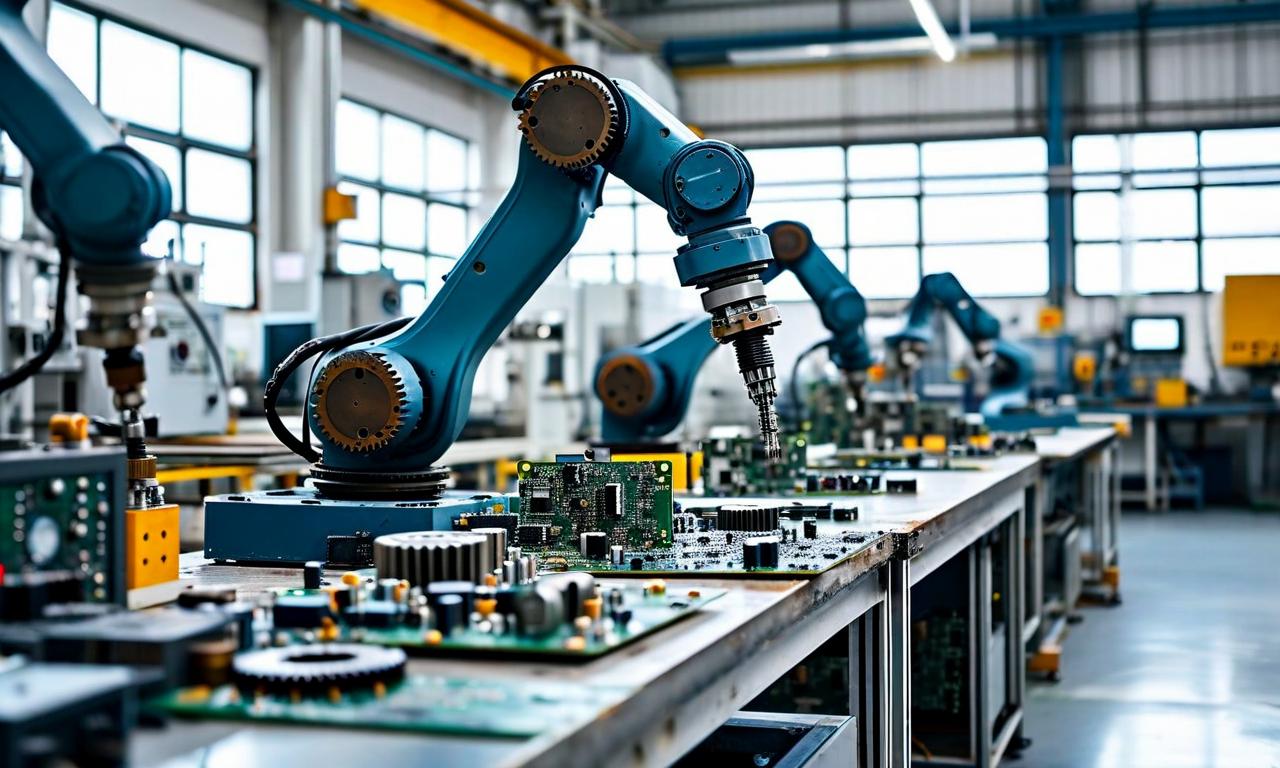
*this image is generated using AI for illustrative purposes only.
Ranjeet Mechatronics reported a significant expansion in top-line growth for FY26, with revenue from operations jumping 170% year-on-year to ₹2,914.4 lakh. Despite the robust revenue surge, profitability contracted sharply as operating expenses and credit impairments outpaced income gains.
The company’s net profit after tax (PAT) declined 65% to ₹33.17 lakh, down from ₹95.01 lakh in FY25. This divergence between revenue and profit highlights margin pressure during a period of rapid scaling. The Board of Directors has convened its 33rd Annual General Meeting for September 25, 2026, to adopt these audited financial statements.
Financial Performance
Revenue from operations more than doubled, reflecting increased activity in fire protection systems and pipe fabrication services. However, total expenses rose disproportionately, impacting the bottom line.
| Metric | FY26 | FY25 | Change |
|---|---|---|---|
| Revenue from Operations | ₹2,914.4 lakh | ₹1,079.0 lakh | +170% |
| Total Expenses | ₹2,871.0 lakh | ₹1,002.8 lakh | +186% |
| Profit Before Tax | ₹57.8 lakh | ₹124.6 lakh | -54% |
| Net Profit After Tax | ₹33.2 lakh | ₹95.0 lakh | -65% |
Finance costs decreased slightly to ₹105.4 lakh from ₹131.6 lakh in the prior year. However, other expenses surged to ₹132.9 lakh from ₹65.5 lakh, primarily driven by a ₹27.3 lakh provision for expected credit losses. Employee benefits also nearly tripled to ₹162.0 lakh, indicating workforce expansion to support operational scale.
What the Numbers Show
The most critical signal in the filing is the emergence of credit risk. For the first time in the disclosed period, Ranjeet Mechatronics booked a ₹27.3 lakh provision for bad debts under expected credit losses. This single line item accounted for approximately 82% of the reported net profit of ₹33.2 lakh. Without this provision, the underlying operational profit would have been significantly higher, suggesting that the decline in PAT is largely attributable to asset quality concerns rather than core operational inefficiency.
Balance Sheet and Working Capital
Trade receivables surged 90% to ₹1,321.8 lakh, far outpacing the 170% revenue growth in absolute terms but signaling potential collection delays or extended credit terms to fuel sales. The increase in receivables absorbed ₹626.5 lakh in cash flow from operations, contributing to a negative cash flow from investing activities of ₹7.2 lakh.
Short-term borrowings increased to ₹526.0 lakh from ₹481.5 lakh, while inventory levels stood at ₹1,386.3 lakh. The company holds minimal cash and cash equivalents of ₹5.6 lakh at year-end, highlighting tight liquidity management amidst high working capital requirements.
Corporate Governance Updates
The AGM will seek approval for the re-appointment of Whole-Time Director Devarshibhai Rakeshbhai Swadia, who retires by rotation. Additionally, shareholders will vote on appointing M/s. SCS & Co. LLP as the Secretarial Auditor for FY27. The statutory auditor, M/s. Abhishek Kumar & Associates, issued an unqualified opinion on the financial statements.
Historical Stock Returns for Ranjeet Mechatronics
| 1 Day | 5 Days | 1 Month | 6 Months | 1 Year | 5 Years |
|---|---|---|---|---|---|
| 0.0% | 0.0% | 0.0% | 0.0% | -21.51% | 0.0% |

How does management plan to address the sharp rise in credit impairments and improve receivable collection cycles in FY27?
Will the company need to raise additional equity or debt to bridge the liquidity gap caused by negative operating cash flows and high working capital requirements?
What specific operational strategies are being implemented to ensure that future revenue growth translates into proportional profit growth rather than margin erosion?
 15
15








 Access Market Heat-map & Insights
  Create, Save & Share your Screener
  Use 200+ Screening Filters





