

Nike stock erases $200 billion in value as Arvy warns of Stage 4 decline


Nike Inc. has wiped out over $200 billion in market value since its November 2021 peak, with shares plunging 78% to $39.09. The collapse triggers warnings of a 'Stage 4' technical breakdown, characterized by a typical 72% fall and a five-year recovery period. JPMorgan downgraded the stock to Underweight, citing lingering impacts from cost-cutting decisions and a stabilization outlook for FY28. Structural issues persist, with Nike Direct revenue falling 7% and Greater China revenue plunging 17% in the fourth quarter, despite modest wholesale growth.

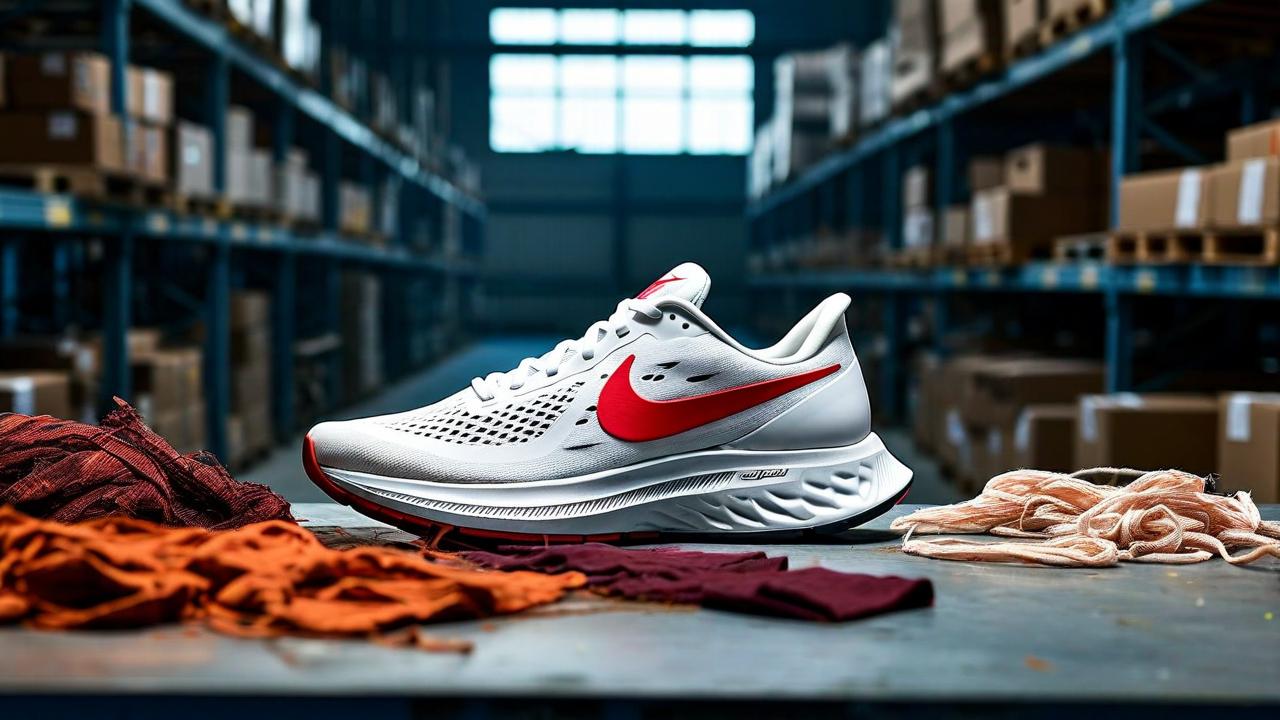

*this image is generated using AI for illustrative purposes only.
Nike Inc.'s stock-market round trip has come to resemble a slow-motion collapse. After a pandemic-era surge to a peak near $180 in November 2021, shares have ground down to below $40, erasing more than $200 billion in market value over a 57-month period. As of August 17, 2026, the stock had plummeted roughly 78%, reaching its lowest level since September 2014. Investors have concluded that the company's growth story was built on a strategy harder to unwind than to sell, leaving the athletic giant trapped in what analysts describe as a devastating technical breakdown.
The recent price action underscores the severity of the drawdown. Shares dropped 38.64% year-to-date and declined 49.21% over the last year. In the last month alone, NKE fell 10.67%, closing 4.03% lower at $39.09 per share on Monday before rising 1.33% in Tuesday premarket trading. Benzinga's Edge Stock Rankings indicate that NKE maintains a weak price trend in the short, medium, and long terms, with a poor quality score.
The 'Stage 4' warning
Thierry Borgeat, chief investment officer at Arvy, highlighted the grim statistical reality of Nike's chart pattern. He noted that a stock exhibiting a 'Stage 4' decline typically falls by 72% and takes five years to return to previous highs. "On average, only one in two stocks will make it. The rest fade into obscurity," Borgeat said. Charlie Bilello observed that Nike is suffering the largest drawdown in company history, while the Kobeissi Letter confirmed the severity, noting the collapse to multi-year lows.
The technical outlook remains bleak. Nike stock recently traded at $39.09, pinned firmly below all major moving averages. The 20-day and 50-day simple moving averages act as heavy overhead supply at $41.78 and $42.75, respectively, with the 200-day SMA lagging far above at $53.13. Momentum indicators offer little relief; the RSI hovers at a weak 35.69, and the MACD remains submerged at -0.22, indicating that multi-year downside pressure is intact.
The direct model trap
The core of Nike's difficulty traces to its direct-to-consumer pivot. In 2017, the company launched a "Consumer Direct Offense," later accelerated in 2020 as "Consumer Direct Acceleration," to gain greater control over customers and higher gross margins by pushing sales through its own channels. Direct revenue rose 73% between 2020 and 2024, while wholesale revenue rose 20% over the same period.
The trade-off was operating leverage. Nike pulled product from wholesale partners, added overhead, and ceded shelf space to rivals. Operating margin fell from 13% to 8%, even accounting for one-time tariff adjustments. Chief Executive Officer Elliott Hill, who joined in 2024, inherited a repair job. His approach centers on clearing inventory, rebuilding wholesale relationships, and repositioning the company around sport-led categories through a "Sport Offense" model. However, recent data shows Nike Direct fell 7% in the fourth quarter, while Brand Digital declined 12%, even as wholesale revenue grew 4%.
JPMorgan downgrades, trims estimates
Wall Street's patience with the turnaround has thinned. JPMorgan analyst Matthew Boss downgraded Nike to Underweight, warning that "Win Now" decisions made through the end of calendar 2026 "will linger and impact NKE's P&L in 2H27 and into FY28." The bank revised its earnings estimates as follows:
| Metric: | Estimate |
|---|---|
| Fiscal 2027 EPS: | $1.55 per share |
| Fiscal 2028 EPS: | $1.72 per share |
JPMorgan framed fiscal 2028 as a stabilization year rather than a growth year, a characterization that signals the recovery timeline extends well beyond the near term.
China drag deepens
Nike's Greater China segment has become the company's most significant drag. Sales in the region have fallen for eight straight quarters and are down about 30% since 2021, with annual revenue at an eight-year low. In the fourth quarter alone, revenue in Greater China plunged 17%. The broader sportswear market in China has expanded over this period, indicating that Nike's decline reflects share loss rather than a contraction in overall demand.
Domestic rivals Anta and Li-Ning have benefited from the "China Chic" or Guochao movement, as younger consumers increasingly favor local brands. Yaling Jiang, founder of ApertureChina, told CNBC: "In a way, Nike has just become irrelevant."
Competitive pressure beyond China
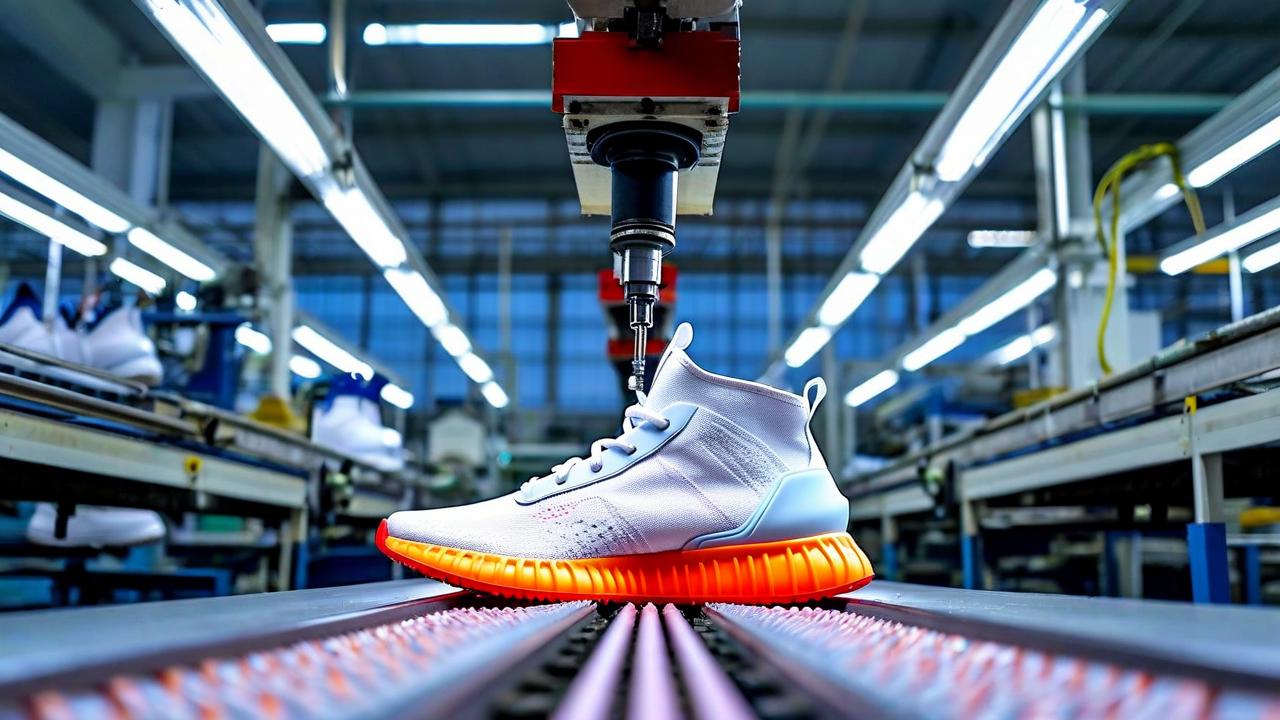
The competitive challenge is not confined to China. In the running segment, On and Hoka have gained share by emphasizing technical innovation. On's automated LightSpray process, which sprays a single-piece upper directly onto the sole, illustrates the product differentiation rivals are deploying. On Co-CEO Caspar Coppetti told Forbes: "What we're doing now is on the bleeding edge of technology." While Nike's running category has posted five straight quarters of double-digit growth, the lifestyle core continues to stall. Rival On Holding continues to post double-digit sales growth, contrasting sharply with Nike's broader weakness.
Insider buying offers a contrarian signal
Despite the stock's decline, company insiders have been purchasing shares. Over the past three quarters, Hill bought around $3 million in shares, while Apple CEO Tim Cook, a longtime board member, purchased around $4 million. Their respective stakes now total around 265,000 and 130,500 shares, worth about $10.6 million and $5.2 million respectively.
Insider buying alone, however, does not resolve the underlying challenge. Nike's recovery is fundamentally a margin story, and management will need to demonstrate restored profitability before broader market confidence returns. An AlphaSense summary by Conor Power warned that Nike is officially a "show-me" story where innovation is no longer just a strategy, but rather "a survival requirement."
What the Numbers Show
The divergence between Nike's operational efforts and market valuation highlights the depth of investor skepticism. While the company has successfully stabilized wholesale growth (up 4% in Q4) and seen running category momentum (five quarters of double-digit growth), these gains are being overshadowed by structural declines in its high-margin Direct channel (down 7%) and its critical China market (down 17%). The fact that the stock has erased $200 billion in value despite holding roughly $9 billion in cash suggests investors are pricing in a prolonged period of margin compression and share loss, validating the 'Stage 4' technical warning that recovery may take years, if it occurs at all.

How might the 'Sport Offense' strategy specifically address the structural margin compression caused by the direct-to-consumer pivot, and what operational metrics should investors monitor to verify its success?
Given the entrenched 'Guochao' trend in China, what strategic partnerships or localized product innovations could Nike deploy to regain relevance among younger Chinese consumers against rivals like Anta and Li-Ning?
To what extent can growth in the technical running segment (competing with On and Hoka) offset the stagnation in Nike's core lifestyle business, and is this segment large enough to drive overall company profitability?
 15
15









 Access Market Heat-map & Insights
  Create, Save & Share your Screener
  Use 200+ Screening Filters





