SpaceX recovers Starship Flight 13 from Indian Ocean after 24 days

scanx
Reviewed by
Anirudha BScanX News Team
Key Highlights

SpaceX is recovering Starship Flight 13 from the Indian Ocean after 24 days at sea. The rocket was guided to Christmas Island for analysis. Meanwhile, Harvard Management Co holds a $2.2 billion stake in the company, making it the university's largest public holding.

powered bylight_fuzz_icon
48664018

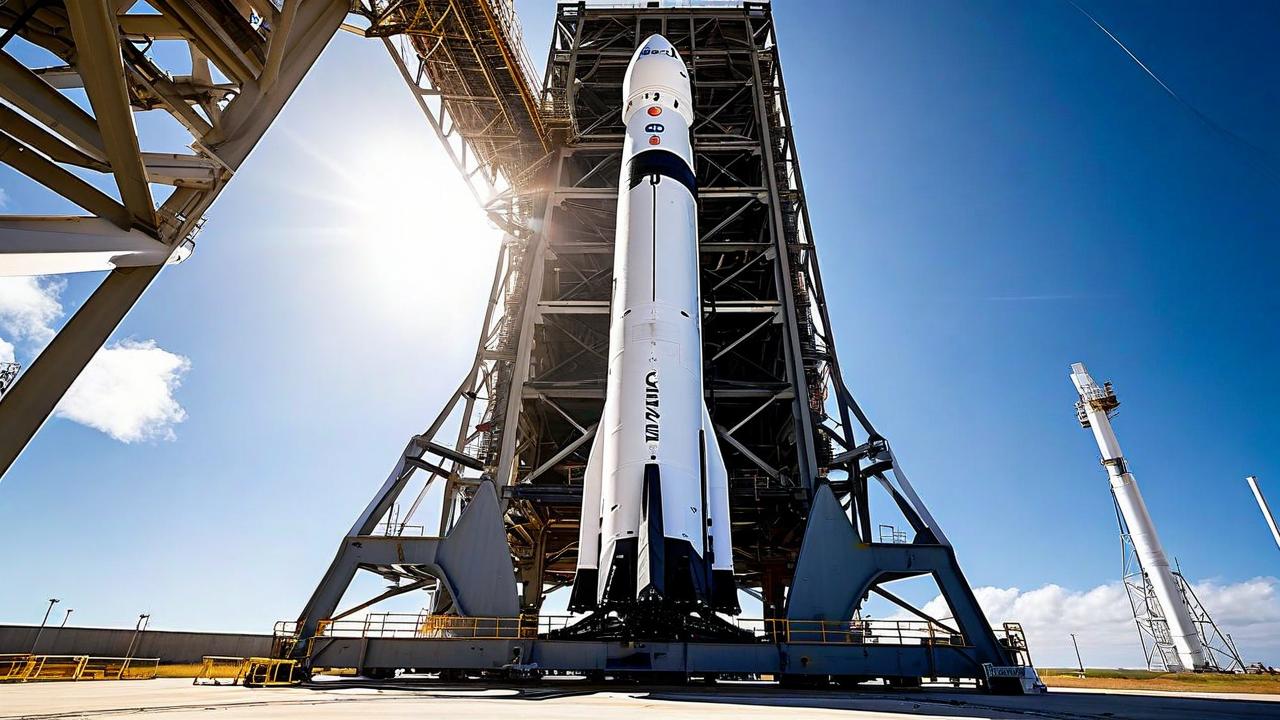
*this image is generated using AI for illustrative purposes only.

Space Exploration Technologies Corp (NASDAQ: SPCX) confirmed on Tuesday that it is recovering the Starship rocket following its 13th flight test in late July. CEO Elon Musk stated that the vehicle is being retrieved from the sea after spending approximately 24 days at sea.

Recovery Operations

The SpaceX Recovery team guided the rocket to a location just off the coast of Christmas Island in the Indian Ocean. A team of engineers is traveling to conduct additional analysis on the vehicle in calmer waters before attempting to return it to Starbase.

Musk had previously indicated on August 7, 2026, that ship recovery was "not looking good." However, he noted that the company obtained close-up photos of critical regions of the heat shield and engines for future upgrades.

Recent Launch Activity

The recovery news coincides with other operational milestones for SpaceX. The company recently conducted two Falcon 9 rocket launches just 38 minutes apart, setting a new record for the shortest time between orbital flights. These launches took place from Cape Canaveral Space Force Station in Florida and Vandenberg Space Force Base in California.

Investor Positioning

Harvard Management Co disclosed a $2.2 billion stake in SpaceX, holding 12.94 million shares of Class A common stock at the end of the second quarter of 2026. This makes SpaceX Harvard's largest disclosed public holding according to 13F filings.

Market Performance

Metric: Value:
Share Price: $141.65
Price Change: -1.18%

SpaceX shares were down 1.18% to $141.65 during overnight trading on Tuesday. Benzinga Edge Rankings indicate a favorable price trend for the stock in the short, medium, and long term.

Disclaimer: This article is AI-generated using data from ViewTrade. ScanX is not liable for any inaccuracies.

How might the successful recovery and subsequent analysis of the Starship heat shield accelerate the timeline for future orbital refueling tests?

What impact could Harvard Management Co's $2.2 billion stake have on SpaceX's valuation and potential IPO preparations in the coming quarters?

Will the record-breaking 38-minute turnaround between Falcon 9 launches signal a new standard for launch cadence, potentially disrupting competitors' pricing models?

like17
dislike

Bernstein Says Starship Reusability Central To SpaceX AI Valuation

scanx
Reviewed by
Riya DScanX News Team
Key Highlights

Bernstein identifies full Starship reusability as critical to SpaceX's AI-driven valuation, forecasting $600 billion in 2031 revenue based on 3,500 launches. This falls short of Elon Musk's $1 trillion by 2030 target. The firm also notes upside from the $60 billion Anysphere acquisition and potential orbital AI deployments starting in 2028.

powered bylight_fuzz_icon
48590619

*this image is generated using AI for illustrative purposes only.

Bernstein states that full reusability of the Starship rocket is absolutely central to Space Exploration Technologies Corp. (NASDAQ: SPCX) long-term artificial intelligence valuation and current price levels. Analyst Douglas Harned told CNBC on Monday that solving this problem is necessary for orbital AI infrastructure at scale, noting that the path toward full reusability anchors the kinds of valuations the firm expects.

Revenue Forecasts And Launch Assumptions

Bernstein forecasts roughly $600 billion in SpaceX revenue by 2031. This projection assumes about 3,500 Starship launches in that year. The figure sits below Elon Musk’s earlier projection that SpaceX could generate $1 trillion in revenue by 2030, a target Reuters confirmed in June.

Metric Bernstein Forecast (2031) Musk Projection (2030)
Revenue $600 billion $1 trillion
Launch Volume 3,500 Starship launches Not specified

SpaceX filings warn that AI compute satellites at scale need full Starship reusability to become economically compelling. Slower turnaround times could raise costs and delay deployments. Reuters reported that SpaceX has spent more than $15 billion developing Starship, which remains central to orbital AI data centers. Musk has previously described achieving fully reusable rockets as a "crazy hard problem."

Orbital AI And Software Upside

SpaceX aims to begin orbital AI compute demonstrations by late 2027, ahead of possible deployments in 2028. Vice President Stephanie Bednarek recently said Starship could make this a reality by carrying the mass needed for large orbital platforms.

Harned noted that SpaceX’s software business could add upside not currently modeled by Bernstein. He pointed to Grok and the recent acquisition of Cursor parent Anysphere as potential wildcards. The company completed its $60 billion all-stock acquisition of Anysphere this month after announcing the deal in June. Reuters indicated the move could give xAI a stronger foothold in AI coding, while Cursor’s access to developer requests could improve models like Grok. Cursor serves more than 50,000 enterprises, including 64% of the Fortune 500.

What The Numbers Show

The divergence between Bernstein’s $600 billion revenue forecast for 2031 and Musk’s $1 trillion target for 2030 highlights the sensitivity of valuations to launch frequency and cost structures. With over $15 billion already spent on Starship development, the economic viability of orbital AI hinges on achieving the rapid turnaround rates required to support the assumed 3,500 launches annually. Failure to demonstrate full reusability would directly impact the cost basis of these deployments, potentially widening the gap between analyst models and management aspirations.

Disclaimer: This article is AI-generated using data from ViewTrade. ScanX is not liable for any inaccuracies.

How might the technical challenges of achieving full Starship reusability impact the timeline for SpaceX's 2027 orbital AI compute demonstrations?

What specific synergies could arise between xAI's Grok models and Anysphere's Cursor platform to accelerate enterprise AI adoption?

If launch costs remain higher than projected due to slower turnaround times, how would that affect the competitive landscape for orbital data centers against terrestrial alternatives?

like20
dislike

More News on space exploration technologies corp