Micron shares rise 3% as analysts see little threat from China's CXMT IPO

2 min read     Updated on 27 Jul 2026, 03:52 PM
scanx
Reviewed by
Suketu GScanX News Team
AI Summary

Micron Technology shares rose over 3% to $950.54 in premarket trading, buoyed by strong Nasdaq futures and analyst confidence in its AI memory dominance. The rally persisted despite the massive IPO of Chinese rival ChangXin Memory Technologies, which raised $8.55 billion. Analysts note that while CXMT threatens commodity DRAM markets, it lags significantly in high-bandwidth memory technology crucial for AI data centers.

powered bylight_fuzz_icon
46693306

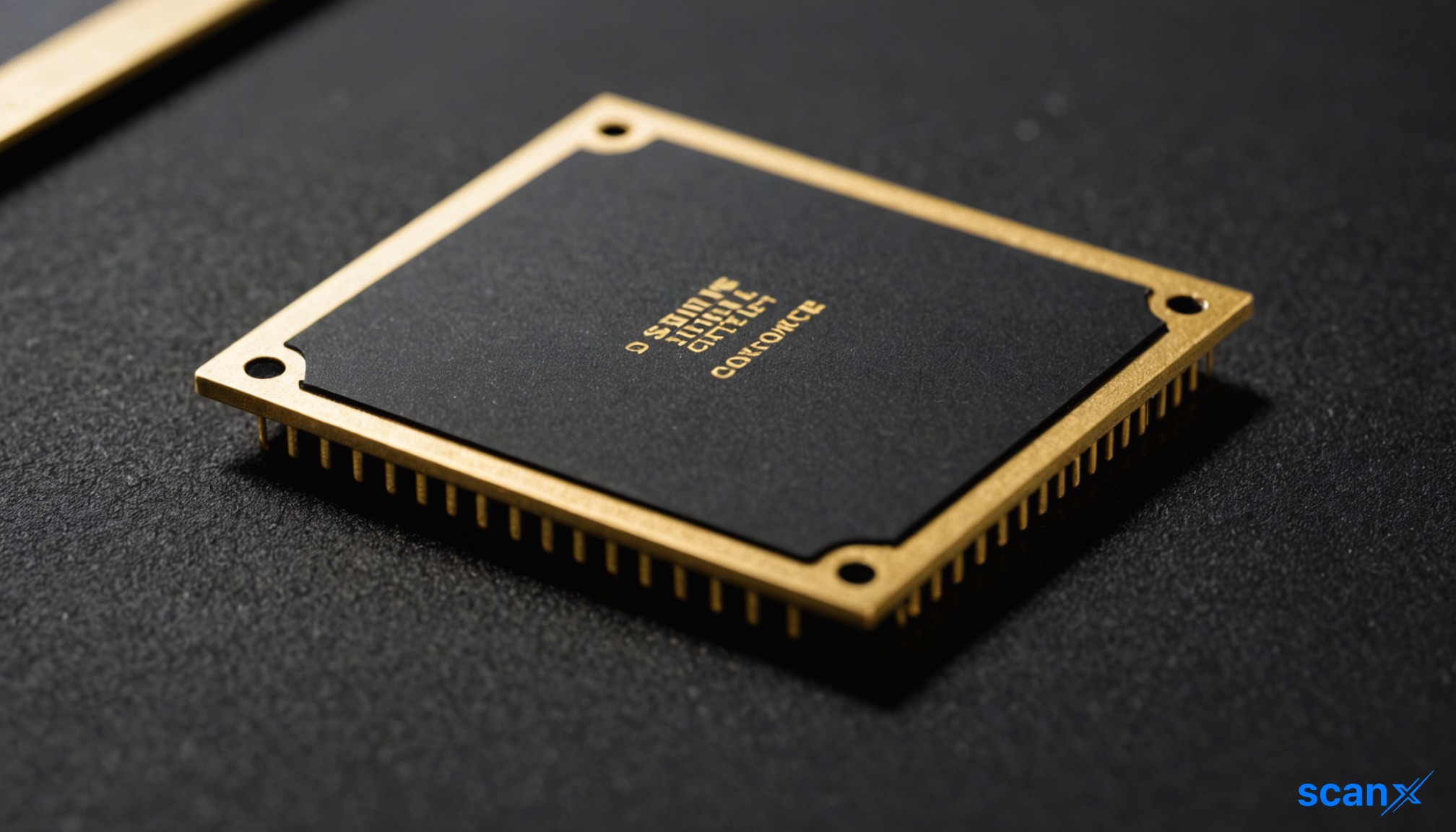
*this image is generated using AI for illustrative purposes only.

Micron Technology Inc. (NASDAQ: MU) shares rose by more than 3% during Monday’s premarket session, climbing to $950.54, as investor risk appetite strengthened alongside a firm overnight tape. The stock’s gain coincided with a major development in the global memory-chip industry: the debut of ChangXin Memory Technologies (CXMT), China’s leading DRAM manufacturer. While the listing underscores Beijing’s push to build a domestic memory champion and highlights rising competition in commodity memory, analysts argue that Micron remains well-positioned in the faster-growing artificial intelligence memory market.

The broader market rally supported Micron’s movement, with Nasdaq futures up 1.57% and S&P 500 futures gaining 0.93%. However, the specific catalyst for scrutiny was CXMT’s initial public offering, which raised 57.92 billion yuan ($8.55 billion) after pricing at 8.66 yuan per share. The stock surged more than 531% to approximately 54.60 yuan on its first day of trading, valuing the DRAM maker at roughly 3.68 trillion yuan and making it China’s most valuable listed company. This debut highlighted strong investor appetite for Chinese-made memory chips amid growing demand for AI infrastructure.

Competitive Dynamics: Commodity vs. AI Memory

Analysts suggest that the immediate threat from CXMT is limited to the commodity DRAM segment, which includes products for smartphones and personal computers. Morningstar analysts project that CXMT’s global DRAM share will rise to 10% in 2026, supported by increased AI spending and demand for domestic memory supply within China. Despite this growth, experts believe the larger opportunity in AI memory still favors Micron.

Melvin, an analyst at Milk Road AI, stated that concerns over Apple potentially sourcing cheaper DRAM from CXMT may be overstated for Micron. He argued that while CXMT could pressure commodity suppliers, Micron has strategically shifted its focus toward premium high-bandwidth memory (HBM) used in AI data centers. Melvin noted that CXMT remains at least one generation behind in HBM technology and does not yet pose a meaningful threat in the AI memory market.

Technical Analysis and Analyst Consensus

Technically, Micron is in a clear long-term uptrend, having risen 727.82% over the past 12 months. The stock trades well above its longer-term trend gauges, sitting 34.2% above the 100-day simple moving average (SMA) and 89.6% above the 200-day SMA. However, the shorter-term picture is mixed, with the stock trading 2.4% below the 20-day SMA and 0.4% below the 50-day SMA, suggesting the recent pullback is still being worked off.

The analyst consensus for Micron remains a Buy, with an average price forecast of $1548.86. Recent analyst moves reflect continued optimism:

Firm Rating Price Target Date
KeyBanc Overweight $1750.00 July 14
Cantor Fitzgerald Overweight $2000.00 June 29
Cantor Fitzgerald Overweight $1500.00 June 25

ETF Exposure and Market Impact

Micron carries significant weight in several major exchange-traded funds, meaning any substantial inflows or outflows in these funds will likely force automatic buying or selling of the stock. Key exposures include:

  • Invesco PHLX Semiconductor ETF (NASDAQ: SOXQ): 9.78% weight
  • Invesco S&P 500 Momentum ETF (NYSE: SPMO): 8.39% weight
  • iShares Semiconductor ETF (NASDAQ: SOXX): 8.03% weight

This heavy weighting amplifies the impact of institutional flows on Micron’s share price, adding another layer of volatility support as market sentiment improves.

How might CXMT's rapid valuation growth influence Beijing's future subsidies or policy support for domestic memory chip manufacturers?

What specific technological milestones must CXMT achieve to close the generational gap in High-Bandwidth Memory (HBM) and challenge Micron's AI market dominance?

Could the heavy weighting of Micron in major semiconductor ETFs lead to increased volatility if institutional investors rotate away from high-momentum tech stocks?

like18
dislike

Micron stock drops 26% from highs on AI spending concerns

2 min read     Updated on 27 Jul 2026, 11:38 AM
scanx
Reviewed by
ScanX News Team
AI Summary

Micron Technology shares have fallen over 26% from yearly highs, entering a bear market amid broader memory sector retreats. Despite strong Q3 revenue of $41.4 billion and analyst targets implying 37% upside, technical indicators like a head-and-shoulders pattern and falling RSI suggest near-term risks. The sell-off reflects investor concerns about the sustainability of AI spending, even as major tech firms increase capital expenditure plans.

powered bylight_fuzz_icon
46678108

*this image is generated using AI for illustrative purposes only.

Micron Technology (NASDAQ: MU) has entered a bear market, with its stock plunging more than 26% from its highest level this year. The sharp decline reflects broader investor caution regarding the sustainability of artificial intelligence spending, triggering a sector-wide retreat that has also impacted peers such as SanDisk and Western Digital. The Roundhill Memory ETF (CBOE: DRAM) has mirrored this trend, falling 34% from its peak. This volatility underscores the market’s sensitivity to shifts in sentiment around AI infrastructure investment, even as underlying business metrics remain robust.

Despite the near-term price pressure, Wall Street analysts remain optimistic about Micron’s long-term trajectory. The consensus target price stands at $1,268, representing a 37% upside from current levels. Notably, DA Davidson analyst Gil Luria raised his target from $1,500 to $2,000, while Needham increased its estimate from $1,550 to $1,650. These adjustments signal confidence in Micron’s ability to capitalize on the ongoing AI boom, despite short-term market fluctuations.

Fundamental performance continues to support the bullish outlook. Micron reported third-quarter revenue that jumped by over 300% to $41.4 billion, driven by surging demand for memory products essential to AI applications. Management has projected fourth-quarter revenue to reach $50 billion, indicating sustained momentum. This growth is further validated by increased capital expenditure commitments from key customers; Alphabet recently boosted its spending plan to over $205 billion, while Tesla expects to allocate $25 billion this year.

However, technical indicators suggest caution for traders in the immediate term. Implied volatility has climbed to approximately 99%, reflecting expectations of heightened price swings. The put-to-call ratio sits at 1.19, indicating a modest bearish or hedging bias rather than aggressive short positioning. Investors are watching for confirmation of further downside risk, particularly if the stock breaks below critical support levels.

Technical Outlook

Micron faces a significant technical hurdle in the form of an emerging head-and-shoulders pattern, a classic reversal signal. The pattern is defined by a central peak (the head) flanked by two lower peaks (the shoulders), with a neckline support level at $850. A break below this neckline would confirm the bearish structure and potentially accelerate downward momentum.

Metric Value Implication
Price Decline >26% Entered bear market territory
Consensus Target $1,268 37% upside potential
Q3 Revenue $41.4 billion >300% YoY growth
Q4 Revenue Guidance $50 billion Sustained demand expected
Key Support Level $850 Head-and-shoulders neckline

The Relative Strength Index (RSI) has deteriorated significantly, falling from a high of 86 in May to 45 currently. This decline suggests weakening buying pressure and increases the risk of further near-term declines. If the stock fails to hold above the $850 neckline, the RSI trend may reinforce the bearish technical setup, challenging the fundamental optimism held by analysts.

What the Numbers Show

A divergence exists between Micron’s strong operational results and its recent price action. While revenue surged over 300% to $41.4 billion in the third quarter, the stock has retreated more than 26%. This disconnect highlights that the current sell-off is driven primarily by sentiment and valuation concerns regarding AI spending sustainability, rather than a deterioration in business fundamentals. The substantial analyst targets, averaging $1,268, suggest that the market may be overreacting to short-term volatility, leaving significant upside if AI capital expenditure trends remain intact.

How might Micron's ability to meet its $50 billion Q4 revenue guidance influence the sustainability of the current head-and-shoulders bearish technical pattern?

If Alphabet and Tesla maintain their increased capital expenditure commitments, will this be sufficient to counteract broader market fears regarding the sustainability of AI infrastructure spending?

What specific catalysts could cause Micron's stock to break below the critical $850 neckline support, potentially triggering a deeper correction despite strong fundamental performance?

like20
dislike

More News on Micron Technology Inc