

Micron surges 12% as BofA cites open-source AI demand


Bank of America analyst Vivek Arya reiterated a Buy rating on Micron Technology with a $1,550 price target, arguing that open-source AI models will expand the total addressable market for memory chips. The report challenges the view that low-cost Chinese AI models threaten memory sales, noting that running large models requires significant hardware investment. Micron shares jumped more than 12% on the news, leading a broader rally in memory stocks as the Nasdaq 100 topped 29,000.


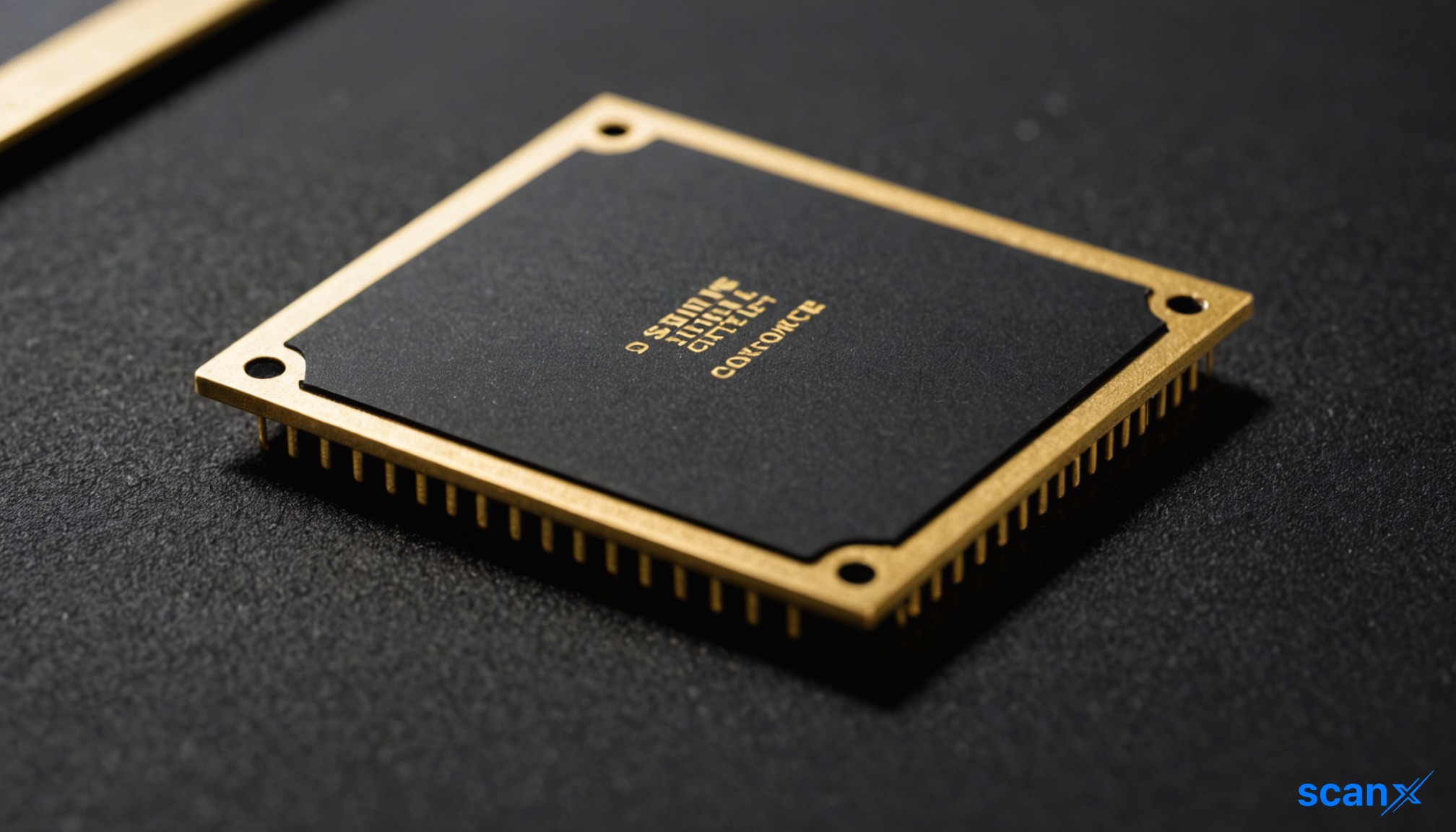
*this image is generated using AI for illustrative purposes only.
Micron Technology Inc. (NASDAQ: MU) surged more than 12% on Tuesday, leading a memory-led rally on Wall Street as Bank of America reiterated a Buy rating with a price target of $1,550. Analyst Vivek Arya argued that the proliferation of open-source, lower-cost Chinese AI models will fuel greater memory demand rather than curb it, countering concerns that these models threaten hardware sales. The report highlights that while pricing for access may be low, the hardware requirements for running massive models remain substantial, driving enterprise investment in memory infrastructure.
The Core Argument
Arya posits that while closed models like OpenAI's GPT-5.6 consolidate memory demand in centralized data centers, open models multiply it. Every enterprise or government downloading open weights creates a new customer-side memory socket. The analysis follows the release of Kimi K3 by Moonshot AI, a 2.8-trillion-parameter system described as the largest open-weight model ever built. Despite Chinese labs charging significantly less for access—Kimi K3 runs at $3 per million input tokens compared to $15 for Anthropic's Claude Opus 4.8—BofA emphasizes that pricing is a business-model choice rather than a reflection of hardware costs. Running Kimi K3 still requires approximately 1.4 terabytes of high-bandwidth memory (HBM) across 64 or more accelerators per serving instance.
Competitive Landscape
The report addresses the risk of Chinese competition, specifically from ChangXin Memory Technologies (CXMT). BofA notes that CXMT, China's fastest-growing DRAM maker, competes primarily in commodity chips rather than the HBM3E and HBM4 components essential for advanced AI systems. Additionally, it remains uncertain whether US equipment makers will receive approval to sell to CXMT in the near term. This suggests that Micron remains insulated from direct competition in the highest-margin segments of the AI memory market.
Financial Outlook and Analyst Ratings
Beyond AI demand, BofA identifies the potential expiration of Micron's share repurchase restrictions under the CHIPS Act around December 2026 as a key catalyst. Arya estimates the company could generate $120 billion to $130 billion in annual free cash flow over the next several years. A hypothetical 40% payout policy could translate to $50 billion to $60 billion in annual share repurchases, representing roughly 5% to 6% of projected market capitalization.
| Date | Firm | Price Target | Action | Rating |
|---|---|---|---|---|
| Jul 14, 2026 | KeyBanc | $1,600 → $1,750 | Maintains | Overweight |
| Jun 29, 2026 | Cantor Fitzgerald | $1,500 → $2,000 | Maintains | Overweight |
| Jun 25, 2026 | Barclays | $1,175 → $2,000 | Maintains | Overweight |
| Jun 25, 2026 | Deutsche Bank | $1,500 → $1,550 | Maintains | Buy |
| Jun 25, 2026 | Citigroup | $1,200 → $1,400 | Maintains | Buy |
| Jun 25, 2026 | Morgan Stanley | $1,050 → $1,200 | Maintains | Overweight |
The consensus rating on Micron remains a Buy, with an average price target of $1,316.79. Individual targets range from a low of $385 to a Street-high of $2,000.

How will the release of larger open-weight models like Kimi K3 impact the pricing power of HBM manufacturers as demand scales?
What are the potential geopolitical risks if US equipment export restrictions to CXMT are tightened or unexpectedly relaxed?
Could the proliferation of open-source AI models accelerate a shift toward edge computing, altering the current data center-dominated memory demand profile?
 18
18





 Access 50+ Readymade Screeners
  Use 200+ Custom Filters
  Get Full Market Insights





