

Kansai Nerolac Paints approves ₹597 crore capacity expansion across three plants


Kansai Nerolac Paints Board approved a ₹597 crore capacity expansion across Sayakha, Bawal, and Hosur plants. The investment targets industrial paints, powder coating, and resins, funded via internal accruals.

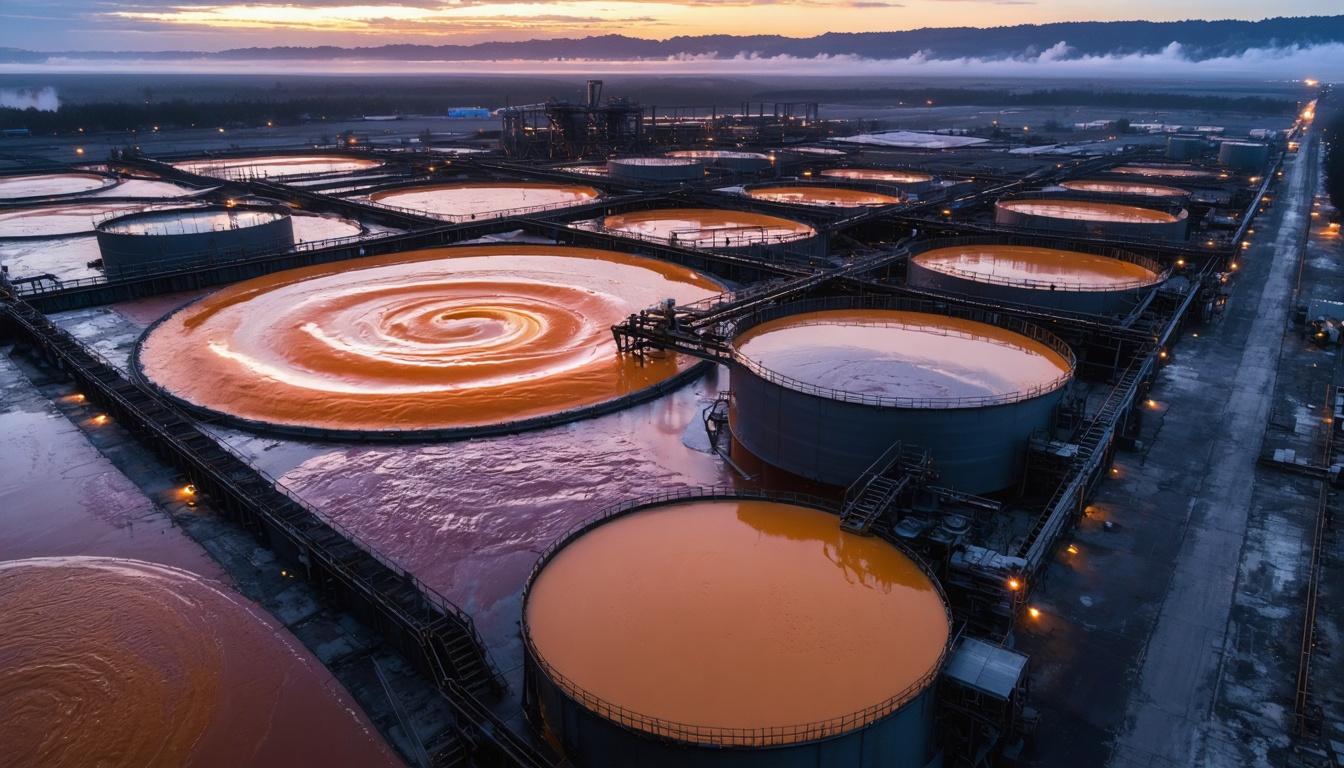

*this image is generated using AI for illustrative purposes only.
Kansai Nerolac Paints received Board of Directors approval for a significant capacity expansion worth ₹597 crore on August 3, 2026. The company plans to add production lines for industrial paints, powder coating, and industrial resins across its Sayakha, Bawal, and Hosur facilities. This strategic move aims to capitalize on estimated growth in the automotive paint industry and rising market demand for powder coatings, while also supporting backward integration in resin manufacturing. The entire investment will be financed through internal cash accruals, preserving the company's balance sheet strength.
The approval was announced in compliance with Regulation 30 of the Securities and Exchange Board of India (Listing Obligations and Disclosure Requirements) Regulations, 2015, and SEBI Master Circular No. HO/49/14/14(7)2025-CFD-POD2/I/3762/2026 dated January 30, 2026. G. T. Govindarajan, Company Secretary, certified the disclosure submitted to both the Bombay Stock Exchange and the National Stock Exchange of India Ltd. The Board meeting commenced at 12.20 p.m. and concluded at 3.45 p.m.
Capacity Expansion Details
The expansion involves five specific capacity additions across three plants, scheduled for phased completion by the end of FY28-29. The following table outlines the details of each addition, including investment figures as disclosed:
| Plant Location | Product Segment | Existing Capacity | Proposed Addition | Investment Required |
|---|---|---|---|---|
| Sayakha | Industrial Paints (Auto Paints, ARF-Auto Refinish, Thinner) | 1,973 KL/month | 1,750 KL/month | ₹204 Crores |
| Bawal | Industrial Paints (Auto Paints, Thinner) | 3,926 KL/month | 1,625 KL/month | ₹143 Crores |
| Hosur | Industrial Paints (Auto Paints, Thinner) | 2,237 KL/month | 900 KL/month | ₹65 Crores |
| Sayakha | Powder Coating | Nil | 1,215 MT/month | ₹128 Crores |
| Sayakha | Industrial Resins (Alkyd, Polyester, Acrylic) | 852 MT/month | 815 MT/month | ₹61 Crores |
Operational Rationale
The expansion addresses distinct market needs at each facility. At Sayakha, the addition of 1,750 KL/month for auto paints and refinish products responds to broader automotive industry growth. Simultaneously, the new 1,215 MT/month powder coating line aims to capture emerging market demand. The 815 MT/month increase in industrial resins at Sayakha serves a dual purpose: meeting increased auto paint requirements and advancing the company's backward integration strategy.
At Bawal and Hosur, the focus remains on industrial paints, specifically auto paints and thinners. These additions aim to optimize utilization rates, which currently stand at 95% for Bawal and 76% for Hosur. Sayakha's existing utilization for industrial paints is at 87%, while its resin segment operates at 79% capacity.
What the Numbers Show
The capital allocation highlights a strategic shift toward vertical integration and high-growth segments. The dedicated outlay for powder coating represents a new revenue stream, as the existing capacity was nil. The decision to fund the entire ₹597 crore project via internal accruals indicates strong free cash flow generation, allowing Kansai Nerolac Paints to execute growth initiatives without external debt dilution.
Historical Stock Returns for Kansai Nerolac Paints
| 1 Day | 5 Days | 1 Month | 6 Months | 1 Year | 5 Years |
|---|---|---|---|---|---|
| -1.53% | -4.00% | -10.47% | +4.81% | -29.15% | -58.48% |

How will the new powder coating capacity position Kansai Nerolac against established competitors in the industrial coatings market?
What is the expected timeline for the ROI on the ₹597 crore investment, and how might this impact near-term earnings per share?
Could the backward integration into industrial resins significantly improve gross margins by reducing raw material dependency?
 16
16







 Access 50+ Readymade Screeners
  Use 200+ Custom Filters
  Get Full Market Insights





