

IRFC Signs ₹13,527 Cr Loan to Refinance Hyderabad Metro


Indian Railway Finance Corporation Ltd. has signed a ₹13,527 crore term loan agreement with L&T Metro Rail (Hyderabad) Limited to refinance the debt obligations of the Hyderabad Metro Rail project. The 20-year loan facility, which carries no processing fees, is supported by a robust credit enhancement framework including an unconditional undertaking by the Government of Telangana. This refinancing replaces existing debt instruments such as NCDs and commercial papers, aiming to improve the project's long-term financial sustainability and support the expansion of the 69.2 km metro network.

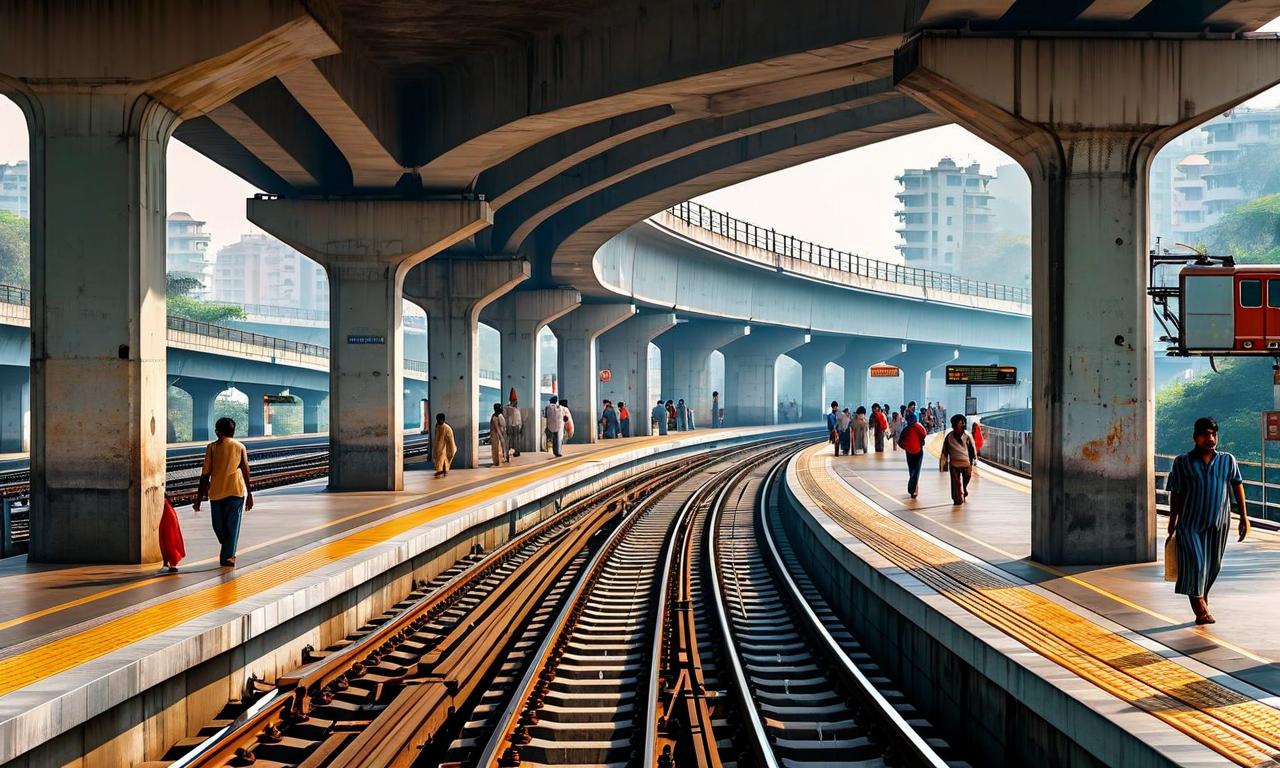

*this image is generated using AI for illustrative purposes only.
Indian Railway Finance Corporation Ltd. has signed a term loan agreement worth ₹13,527 crore with L&T Metro Rail (Hyderabad) Limited to refinance the debt obligations of the Hyderabad Metro Rail project. This transaction marks a significant development in urban transportation financing, reflecting the corporation's evolution into a diversified infrastructure financing institution. The loan agreement was signed in the presence of IRFC CMD & CEO Manoj Kumar Dubey and Telangana Chief Secretary K. Ramakrishna Rao, underscoring the strategic importance of the deal for strengthening urban mobility infrastructure.
Key Deal Parameters
The refinancing arrangement is structured to support the long-term financial sustainability of the metro network. The following table outlines the key parameters of the deal:
| Parameter: | Details |
|---|---|
| Deal Value: | ₹13,527 crore |
| Loan Tenure: | 20 years |
| Processing Fees: | None |
| Purpose: | Refinancing for Hyderabad Metro |
| Sector: | Urban Transportation Infrastructure |
Supporting Urban Transportation Infrastructure
The facility will refinance existing debt obligations, including non-convertible debentures (NCDs), commercial papers, and term loans. By replacing higher-cost debt with competitively priced long-term rupee financing, the arrangement is designed to ease the long-term financial obligations associated with operating and maintaining a large metropolitan rail network. The transaction follows the transfer of 100 per cent ownership of L&TMRHL from Larsen & Toubro Limited to the Government of Telangana through Hyderabad Metro Rail Limited (HMRL).
Hyderabad Metro Rail Phase-I spans 69.2 kilometres across three corridors with 57 stations. The network currently caters to over 5 lakh passenger journeys daily. The refinancing is expected to materially strengthen the project’s financial flexibility, enabling the Government of Telangana to accelerate the planned expansion of Hyderabad’s metro network, including new corridors and enhanced connectivity.

How will the reduced debt servicing costs from this refinancing impact the Hyderabad Metro's fare structure and potential reduction in ticket prices for daily commuters?
Which specific new corridors and expansion phases of Hyderabad Metro are likely to be prioritized using the financial flexibility unlocked by this refinancing deal?
Could IRFC's move into urban infrastructure financing signal a broader strategic shift that may lead to similar refinancing deals for other state-owned metro rail projects across India?
 18
18





 Access 50+ Readymade Screeners
  Use 200+ Custom Filters
  Get Full Market Insights





