

Hypercharge Q1FY27 Results: Revenue down 58%, gross margin expands to 44%


- Revenue fell 58% YoY to $1.4 million as Hypercharge shifted focus from low-margin DC fast charging to higher-margin Level 2 deployments
- Gross margin expanded 19 percentage points to 44%, driven by a 68% increase in subscription and service revenue to $520,074
- Comprehensive loss widened 118% to $876,583 due to a 28% rise in operating expenses, including non-recurring costs from the Eddie acquisition
- Sales backlog grew 68% sequentially to $3.49 million, providing visibility into future revenue conversion
- Network footprint expanded to over 9,400 charging ports following the addition of 2,700 ports via the Eddie acquisition

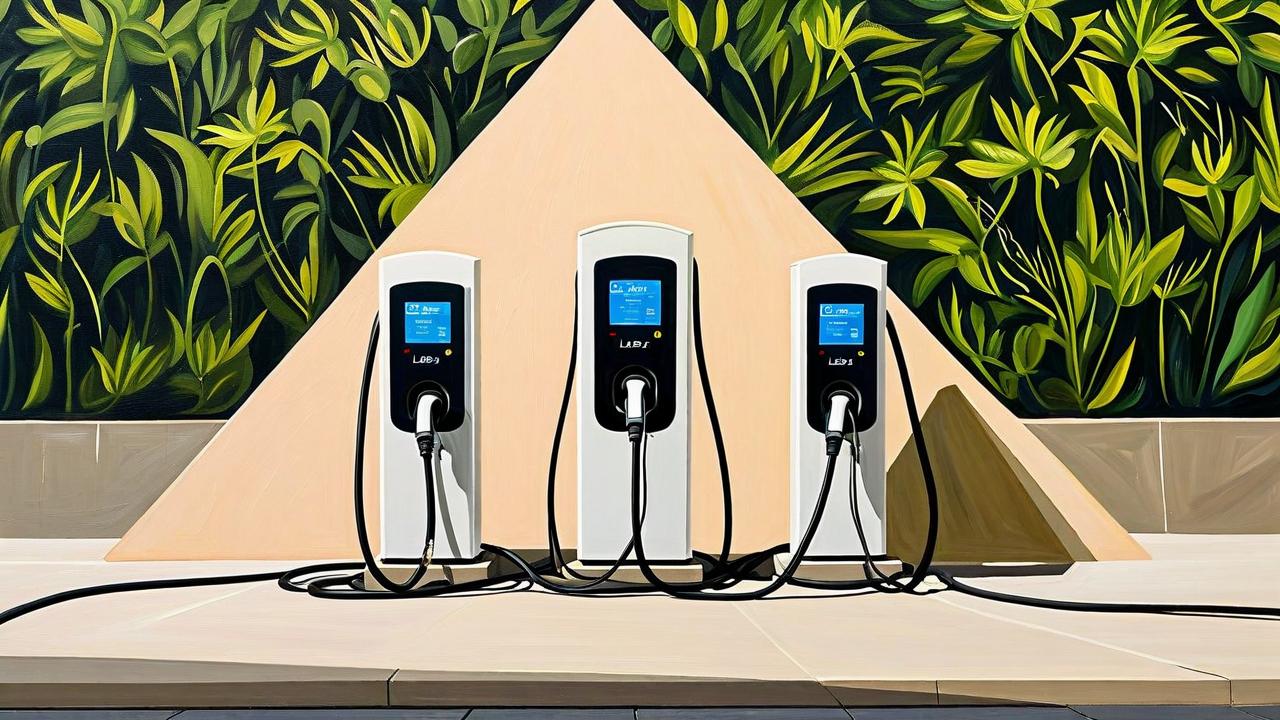

*this image is generated using AI for illustrative purposes only.
Hypercharge Networks Corp. (TSXV: HC) reported a 58% year-over-year decline in revenue to $1.4 million for the first quarter of fiscal 2027, ending June 30, 2026. The drop reflects a strategic pivot away from lower-margin DC fast charging equipment deliveries toward higher-margin Level 2 deployments and recurring service revenue.
Despite the top-line contraction, the company’s gross margin expanded significantly by 19 percentage points to 44%, up from 25% in the prior-year period. This improvement was driven by a greater contribution from subscription and service revenue, which rose 68% to $520,074. However, operating expenses increased 28% to $1.6 million, primarily due to non-recurring costs associated with the acquisition of charge point operator Eddie and higher professional fees. Consequently, the comprehensive loss widened 118% to $876,583, compared to a loss of $402,877 in Q1FY26.
Strategic Shift and Network Expansion
The revenue decline was largely attributable to the prior-year quarter including large, concentrated DC fast charging equipment deliveries that carried lower margins. Hypercharge is now prioritizing Level 2 charging deployments, which offer superior gross margins and recurring revenue streams. During the quarter, the company delivered 541 charging ports.
The company also materially expanded its network footprint through the acquisition of Eddie, effective May 1, 2026. This transaction added more than 2,700 charging ports, strengthening Hypercharge’s presence in Québec. The total network now exceeds 9,400 charging ports, comprising over 6,700 ports delivered directly by Hypercharge and the acquired Eddie portfolio.
Financial Highlights
| Metric | Q1FY27 (Three months ended June 30, 2026) | Q1FY26 (Three months ended June 30, 2025) | Change |
|---|---|---|---|
| Revenue | $1,421,800 | $3,404,582 | -58% |
| Gross Profit | $620,945 | $841,392 | -26% |
| Gross Margin | 44% | 25% | +19 pp |
| Operating Expenses | $1,607,791 | $1,258,202 | +28% |
| Comprehensive Loss | $(876,583) | $(402,877) | +118% |
| Loss Per Share | $(0.01) | $(0.00) | N/A |
Subscription and service revenue growth was supported by SaaS subscriptions, higher EV charging utilization, and new station activations. The sales backlog also strengthened, rising 68% sequentially to $3.49 million as of June 30, 2026, from $2.07 million at March 31, 2026, providing visibility into future revenue recognition.
Carbon Credit Proceeds and Management Change
Hypercharge received $1.74 million in cash proceeds from the sale of Clean Fuel Regulations compliance credits generated during the 2025 calendar year. This represents an increase of more than 600% compared to $236,058 in the prior year. These proceeds are required to be reinvested in eligible EV infrastructure or programs that reduce EV ownership costs.
In management news, Kyle Moncrief, CFA, was promoted to Chief Financial Officer, effective August 27, 2026, succeeding Alex McAulay who stepped down. Mr. Moncrief recently oversaw the acquisition and integration of Eddie.
What the Numbers Show
The divergence between revenue decline and margin expansion highlights the structural shift in Hypercharge’s business model. While total revenue fell nearly 60%, gross margin nearly doubled to 44%. This indicates that the company is successfully trading top-line volume for profitability quality, moving away from one-off hardware sales toward a mix dominated by higher-margin services and subscriptions. However, the widening comprehensive loss underscores that current operating leverage has not yet offset the fixed cost base and one-time acquisition expenses.

How long is Hypercharge projected to take to achieve operating profitability given the current mix of Level 2 deployments and recurring service revenue?
What specific integration challenges or synergies are expected from the Eddie acquisition to drive future margin expansion beyond the initial non-recurring costs?
Will the mandatory reinvestment of the $1.74 million in carbon credit proceeds accelerate Hypercharge's network growth rate or primarily support existing infrastructure maintenance?
 17
17










 Create Custom Screeners
  Access 200+ Pre-built Filters
  Use 50+ Readymade Screener





