

Sterlite Technologies targets ₹20,000 crore revenue by FY29 under Lakshya roadmap


- Sterlite Technologies targets ₹20,000 crore revenue by FY29, up from ~₹4,750 crore in FY26
- EBITDA margin expected to expand by >1,380 bps to >27% by FY29 from ~13% in FY26
- Company plans ₹1,000 crore annual capex for three years to expand capacity by 50%
- Open order book stands at over $2 billion with Q1FY27 marking record quarterly results
- Fiber density per rack rises 64x to 64,000 in new Vera Rubin AI architectures



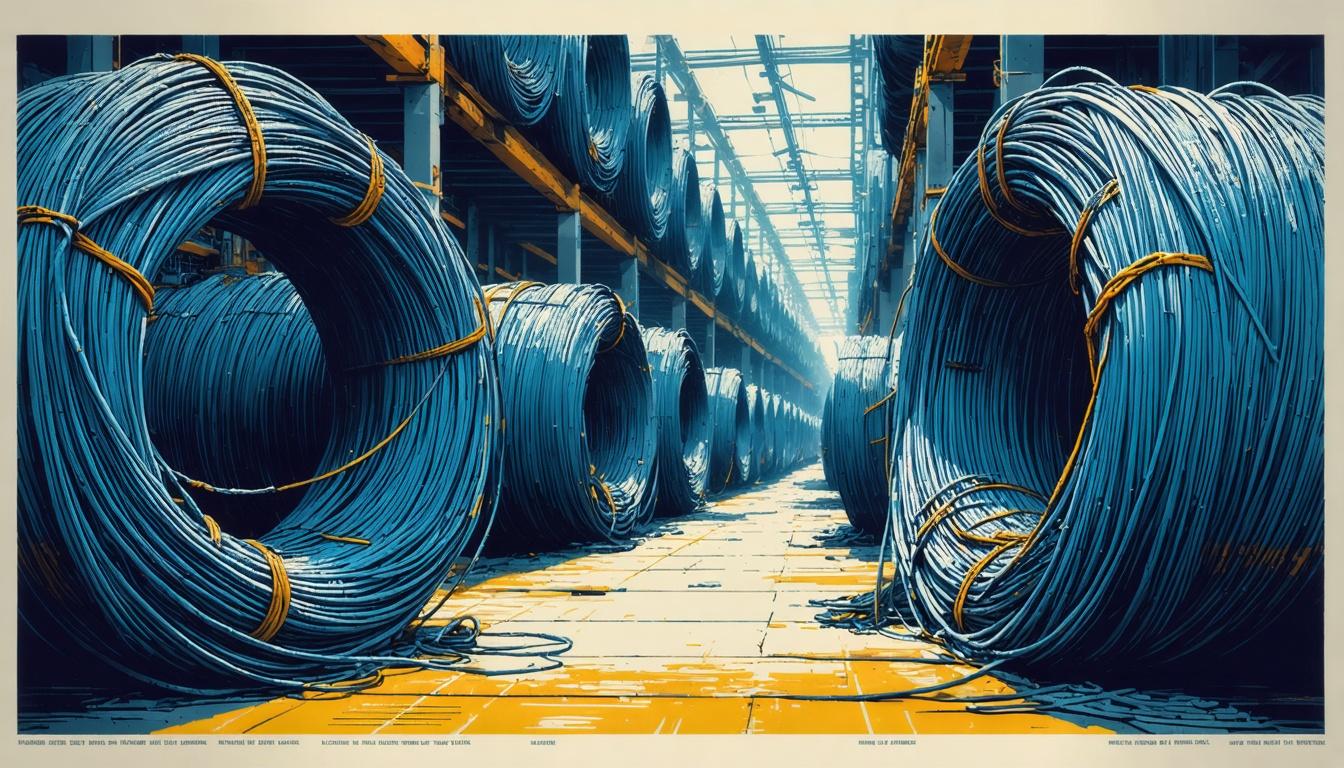
*this image is generated using AI for illustrative purposes only.
Sterlite Technologies conducted its investor and analyst meeting on Thursday, September 3, 2026. The company released the recording of the session and an accompanying investor presentation detailing its strategic growth roadmap for FY27 to FY29. Management highlighted that Q1FY27 marked the company's highest-ever quarterly revenue and EBITDA impact.
Growth Roadmap: Lakshya
The company outlined a plan titled 'Lakshya' aiming to rank among the top five global players in optical connectivity solutions. The financial targets under this roadmap are aggressive, seeking to quadruple revenue over the next three fiscal years.
| Timeline | Revenue Target | EBITDA Margin Target |
|---|---|---|
| FY26 | ~₹4,750 crore | ~13% |
| FY29 | ₹20,000 crore | >27% |
Group CFO Ajay Jhanjhari noted the EBITDA margin improvement represents more than 1,380 basis points. Management highlighted structural shifts in optical demand driven by AI data centers and broadband expansion as key tailwinds. The company noted that AI factories are rewriting data center connectivity stacks, with fiber density per rack increasing from 1,000 in legacy systems to 64,000 in upcoming Vera Rubin architectures.
Capacity Expansion and Capital Allocation
To support this growth, Sterlite Technologies plans to invest ₹1,000 crore annually over the next three fiscal years. This capital expenditure will expand preform, fiber, and cable capacities by 50%. Additionally, the company is establishing a greenfield manufacturing facility in India for pre-terminated connectivity solutions, expected to create over 3,000 jobs for women.
The firm also committed to allocating 2% of annual revenue toward technological innovation, focusing on multi-core fiber (MCF), hollow-core fiber (HCF), and co-packaged optics (CPO). CFO Ajay Jhanjhari stated the company has an open order book of more than $2 billion, providing strong visibility into future opportunities.
Market Context and Risks
Sterlite Technologies emphasized India's emergence as a major AI infrastructure opportunity. India currently has approximately 1.5GW of data center capacity, expected to increase to 10GW by 2030, implying a 46% CAGR. The company holds a 9% global market share in optical fiber cable (excluding China) and operates 10+ advanced manufacturing facilities.
Key risks identified include geopolitical trade policy changes, supply chain resilience for critical materials, and execution excellence in capacity ramp-up. The company stated that continued hyperscaler investment and favorable tariff frameworks are critical assumptions for achieving these targets.
What the Numbers Show
The shift from legacy systems to Vera Rubin architectures involves a 64x increase in fiber content per rack (from 1,000 to 64,000 fibers). This density increase necessitates high-density connectivity solutions, driving the need for the company's new greenfield facility focused on pre-terminated solutions rather than just raw fiber production.
Presentation Availability
The video recording of the meet and the investor presentation are available on the company's website under the 'Announcements' tab and 'Our Growth Roadmap' section.
Historical Stock Returns for Sterlite Technologies
| 1 Day | 5 Days | 1 Month | 6 Months | 1 Year | 5 Years |
|---|---|---|---|---|---|
| -4.99% | -13.39% | -1.58% | +187.57% | +585.91% | +312.17% |

How might the planned 50% capacity expansion in preform, fiber, and cable segments impact Sterlite Technologies' pricing power and market share dynamics in a potentially crowded global optical connectivity market?
Given the reliance on hyperscaler investment for achieving FY29 targets, what specific contingency strategies has management outlined to mitigate risks associated with potential slowdowns in AI data center capital expenditure?
How will the allocation of 2% of annual revenue to R&D for emerging technologies like hollow-core fiber and co-packaged optics translate into tangible revenue contributions within the three-year 'Lakshya' roadmap?
 20
20











 Access 50+ Readymade Screeners
  Use 200+ Custom Filters
  Get Full Market Insights





