

Golkunda Diamonds Q1FY27 PAT surges 64%; targets 50% domestic revenue by 2030


Golkunda Diamonds & Jewellery Ltd posted a 64% PAT surge in Q1FY27 to ₹5.14 crore, driven by margin expansion. In its debut earnings call, management targeted 50% domestic revenue by 2030, backed by a new Mumbai facility with ₹250-300 crore annual potential. Exports remain dominant, with the Middle East contributing 85-90% of sales, while lab-grown diamonds represent a nascent but high-growth segment.


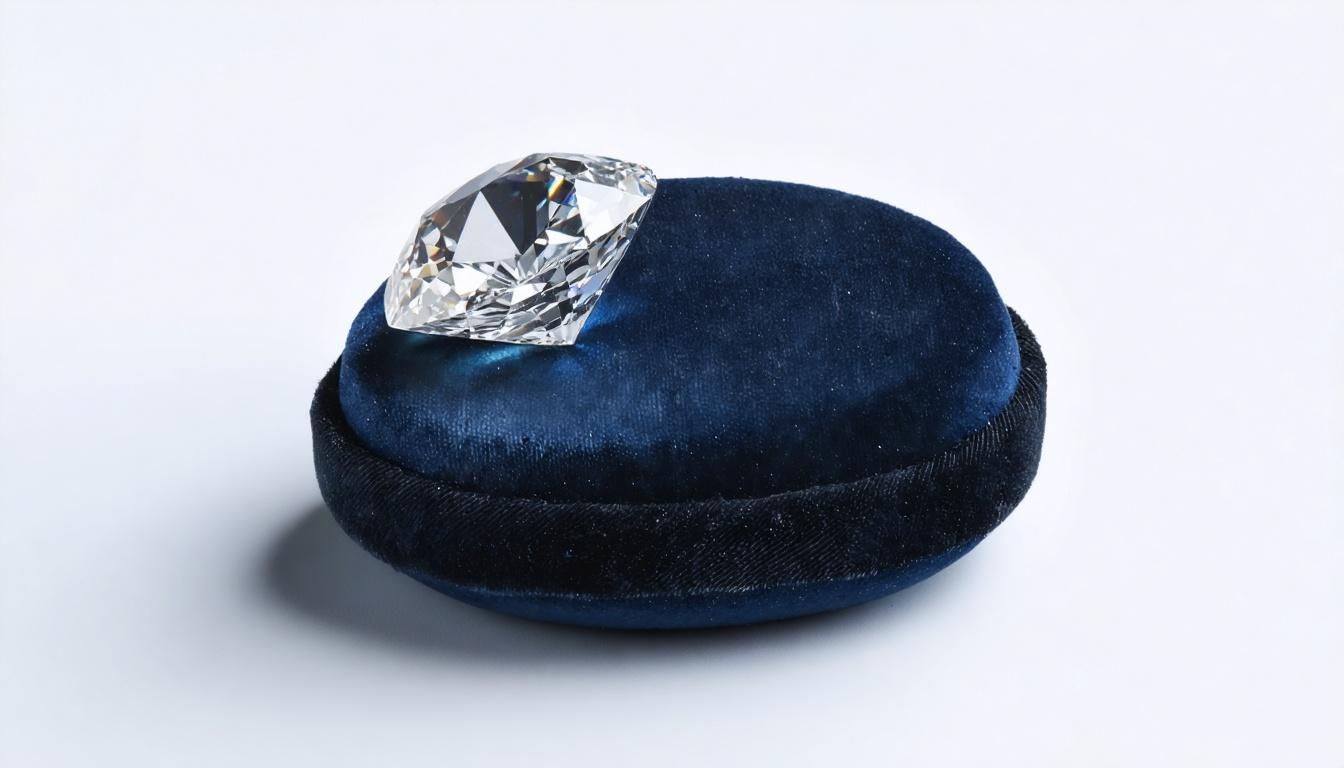
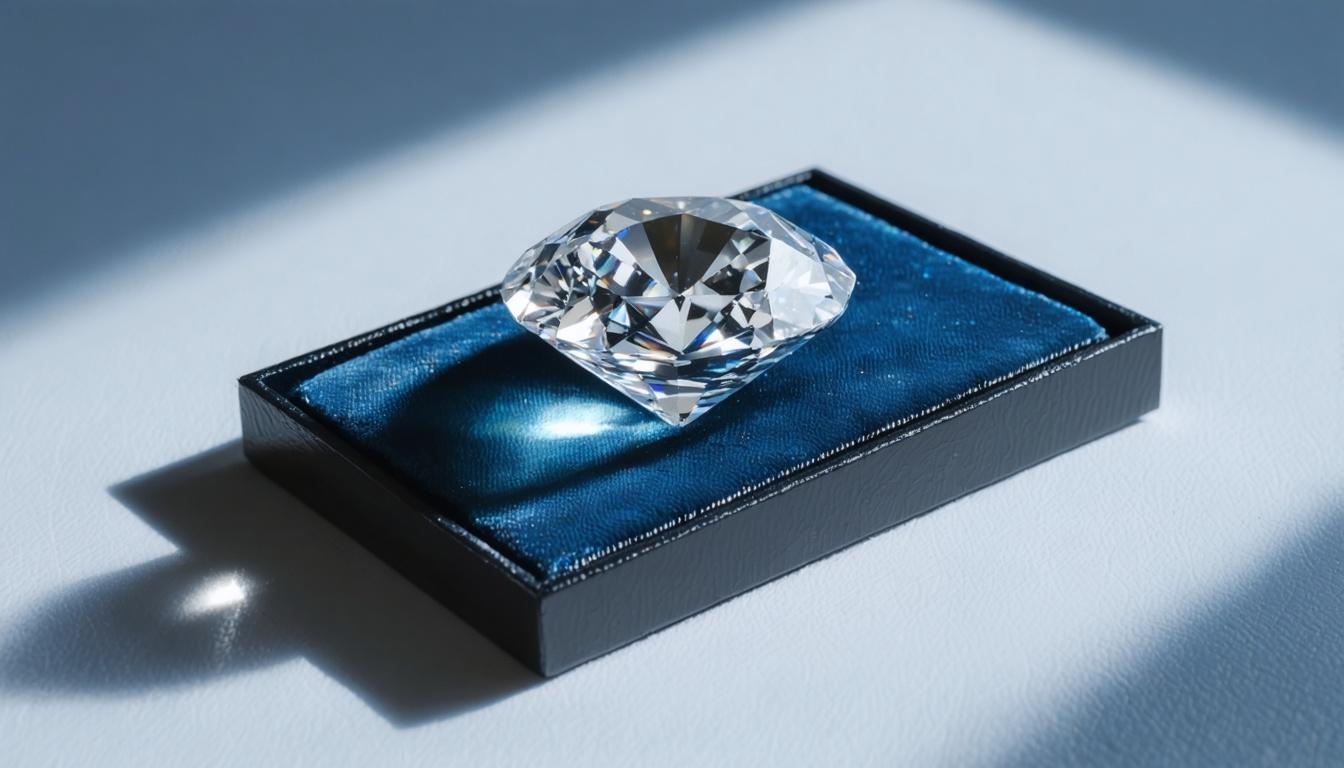
*this image is generated using AI for illustrative purposes only.
Golkunda Diamonds & Jewellery reported a robust start to FY27, with net profit after tax (PAT) surging 63.9% year-on-year to ₹5.14 crore in the quarter ended June 30, 2026. This significant bottom-line growth outpaced a 22.7% increase in revenue from operations, which stood at ₹8,521.49 lakh, signaling strong operational leverage and improved cost efficiency. The Board of Directors approved the standalone unaudited financial results on August 08, 2026, highlighting margin expansion as the primary driver of profitability.
The company’s earnings per share (diluted) rose to ₹7.32 from ₹4.50 in the corresponding quarter of the previous year. This performance was underpinned by a 69.3% surge in EBITDA to ₹8.64 crore, compared to ₹5.10 crore in Q1FY26. The improvement was fueled by increased net sales, reflecting stronger demand in core export markets across Europe and the Gulf, alongside initial traction from new domestic operations. Additionally, during the quarter, the company allotted 12,40,000 Convertible Warrants on a preferential basis at an issue price of ₹214 per warrant, receiving ₹63.40 lakhs (25% of the issue price) from warrant holders as per SEBI (CDR) Regulations.
Financial Performance Highlights
| Particulars | Q1FY27 (₹ Lakh) | Q1FY26 (₹ Lakh) | YoY Change |
|---|---|---|---|
| Revenue from Operations | 8,521.49 | 6,943.73 | +22.72% |
| Other Income | 19.38 | 18.04 | |
| Total Revenue | 8,540.87 | 6,961.77 | +22.68% |
| EBITDA | 864.12 | 510.34 | +69.32% |
| EBITDA Margin (%) | 10.14 | 7.35 | +279 BPS |
| Net Profit After Tax | 514.03 | 313.57 | +63.93% |
| PAT Margin (%) | 6.03 | 4.52 | +151 BPS |
| EPS (Diluted, ₹) | 7.32 | 4.50 | +62.67% |
Operational Developments and Strategy
Beyond financial results, Golkunda Diamonds commenced operations at its new domestic manufacturing facility in Andheri East, Mumbai, on August 03, 2026. The 5,360 sq. ft. facility has an installed capacity of approximately 125–150 kg of jewellery per annum, targeting leading retail chains and organised retailers across major Indian cities. This expansion marks the company’s strategic entry into the domestic B2C retail segment, diversifying its revenue base beyond traditional exports. The Board also approved the incorporation of a wholly owned subsidiary in India to further expand market presence, subject to Registrar of Companies approval.
The new plant represents a 50-60% increase in overall manufacturing capacity. It provides a single manufacturing base capable of producing across the entire product spectrum — diamond, gold, gemstone, jadau, and lab-grown diamond jewellery — spanning rings, earrings, pendants, necklaces, bangles, and bracelets. This strategic move supports the company's entry into lab-grown diamond and gold jewelry manufacturing to meet rising domestic demand from prestigious Indian retailers.
Strategic Outlook and Guidance
In its first-ever earnings conference call held on August 13, 2026, management provided detailed guidance on its long-term trajectory. Arvind Dadha, Managing Director, stated that the company aims for 15-20% growth in FY27, predominantly driven by exports, as the new domestic facility is currently in the sample-making and pitching phase. For the current fiscal year, domestic revenue contribution is expected to be modest, estimated between ₹15 crore and ₹20 crore.
Looking ahead, the company has set an ambitious target for domestic business to constitute 50% of total revenue by 2030. At current export levels of approximately ₹280 crore, this implies a total revenue run-rate of ₹550 crore to ₹600 crore by that horizon. The new Mumbai facility alone holds an annual revenue potential of ₹250 crore to ₹300 crore once fully ramped up over three years. The company plans to launch its B2C retail operations, focusing on lab-grown diamonds, around Diwali 2026.
Export markets remain the current backbone, with the Middle East accounting for 85-90% of total business. The US market, which previously contributed 20-30% of revenue, has declined to below 10% due to tariff challenges, though management noted stabilization in recent months. Lab-grown diamond jewellery currently contributes less than 5-7% of total revenue, primarily from the US market, with significant growth expected in both exports and domestic B2C channels.
Kantikumar Dadha, Chairman & Whole-time Director, stated that the quarter reflects the underlying strength of the export business built over three decades. He emphasized that with the new Mumbai facility operational, the focus on the lab-grown diamond segment, and planned entry into B2C retail, the company is well-positioned to create sustainable long-term value.
What the Numbers Show
The divergence between revenue growth (22.7%) and EBITDA growth (69.3%) signals improved operating efficiency in Q1FY27. EBITDA margin expanded by 279 basis points to 10.14%, while PAT margin widened by 151 basis points to 6.03%. This margin expansion suggests effective cost management and favorable product mix shifts, likely benefiting from higher-value exports or optimized manufacturing costs at the new facility. Investors should monitor whether this margin trajectory sustains as the company scales its domestic operations and enters the competitive lab-grown diamond segment.
Historical Stock Returns for Golkunda Diamonds & Jewellery
| 1 Day | 5 Days | 1 Month | 6 Months | 1 Year | 5 Years |
|---|---|---|---|---|---|
| -0.45% | -6.63% | +3.49% | +22.61% | +35.69% | +341.94% |

How might the planned entry into the competitive domestic B2C retail segment impact Golkunda's historically strong export-driven margins?
What specific strategies will management employ to regain market share in the US, which has declined to below 10% due to tariff challenges?
Given the 50-60% increase in manufacturing capacity, what are the potential risks of underutilization if domestic demand growth lags behind the 2030 target?
 15
15








 Create Custom Screeners
  Access 200+ Pre-built Filters
  Use 50+ Readymade Screener





