

Ford raises FY26 adj. EBIT outlook to $10B-$11B from prior


Ford Motor Company has raised its FY26 adjusted EBIT guidance to $10 billion to $11 billion and adjusted free cash flow to $6.0 billion to $7.0 billion. The revisions reflect improved operational performance and stronger cash generation expectations compared to previous estimates.



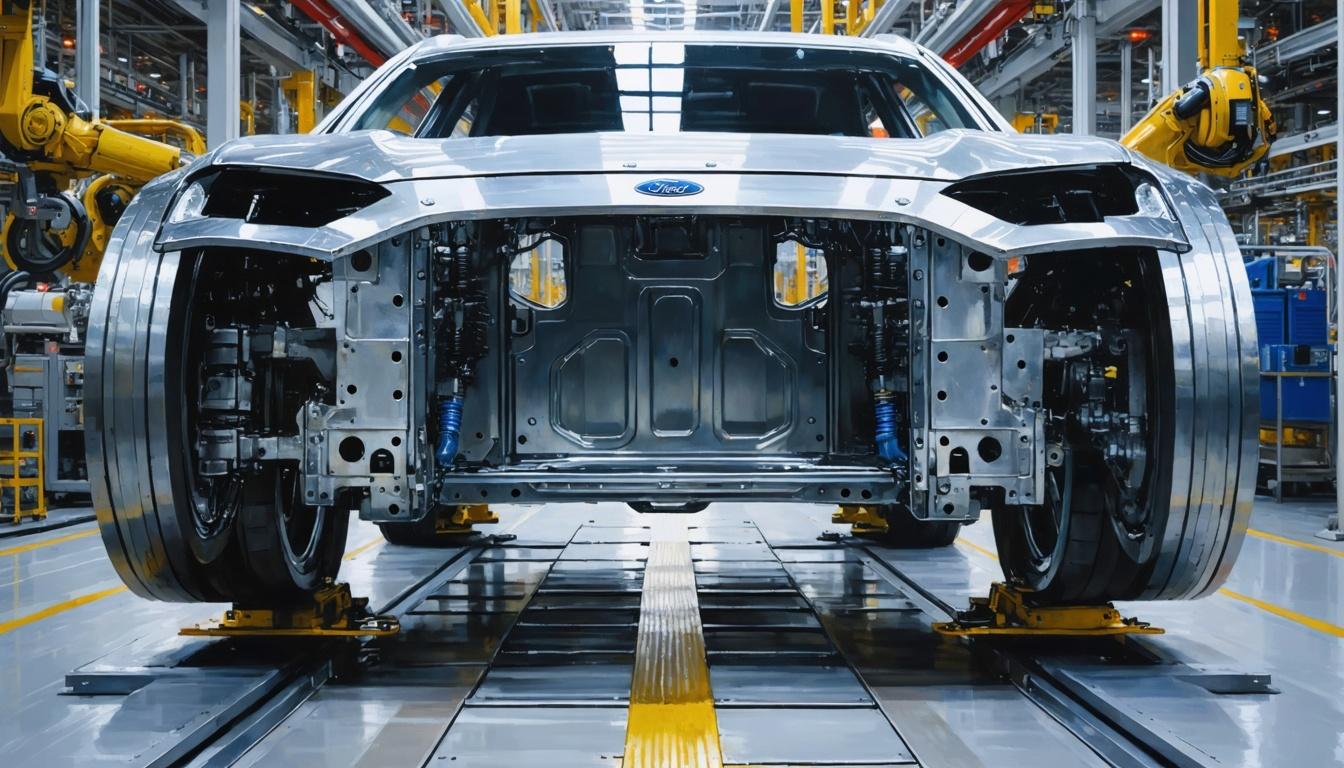
*this image is generated using AI for illustrative purposes only.
Ford Motor Company raised its full-year adjusted earnings before interest and taxes (EBIT) guidance to $10 billion to $11 billion for FY26, an increase from the prior range of $8.5 billion to $10.5 billion. The automaker also upgraded its adjusted free cash flow forecast to $6.0 billion to $7.0 billion, up from the earlier estimate of $5.0 billion to $6.0 billion. This upward revision reflects improved operational efficiency and stronger-than-expected profitability across its business segments.
The revised guidance indicates a significant improvement in Ford's financial trajectory for the fiscal year. By raising both its EBIT and free cash flow targets, the company signals confidence in its ability to generate higher returns despite market volatility. The increase in the lower bound of the EBIT guidance by $1.5 billion highlights a substantial shift in expected performance compared to the initial outlook.
Financial Guidance Revision
The updated financial metrics provide a clearer picture of Ford's expected performance for FY26. The following table outlines the changes in the company's guidance:
| Metric | Previous Guidance | Revised Guidance |
|---|---|---|
| Adjusted EBIT | $8.5 billion to $10.5 billion | $10 billion to $11 billion |
| Adjusted Free Cash Flow | $5.0 billion to $6.0 billion | $6.0 billion to $7.0 billion |
What the Numbers Show
The simultaneous increase in both EBIT and free cash flow guidance suggests that Ford is not only generating higher operating profits but also managing its capital expenditures and working capital more effectively. The widening of the EBIT range from a $2 billion spread ($8.5B-$10.5B) to a $1 billion spread ($10B-$11B) may indicate greater certainty in revenue streams and cost controls. This alignment between top-line operational gains and bottom-line cash generation is a positive signal for investors seeking sustainable growth and liquidity.

How will Ford allocate the additional $1-2 billion in projected free cash flow between shareholder returns and capital expenditures for EV infrastructure?
What specific operational efficiencies or cost-cutting measures are driving the narrowed EBIT guidance range, and are these sustainable beyond FY26?
How does this revised profitability outlook impact Ford's competitive positioning against legacy rivals like GM and emerging EV-focused competitors?
 20
20






 Access Market Heat-map & Insights
  Create, Save & Share your Screener
  Use 200+ Screening Filters





