

Emami Paper Mills FY26 Results: EBITDA rises 48% to ₹217 crore


Emami Paper Mills reported a 48.48% jump in EBITDA to ₹217.18 crore and a near-tripling of PBT to ₹93.36 crore for FY25-26. Driven by specialty product mix and cost efficiencies, the company recommended a ₹3.20 per share equity dividend.


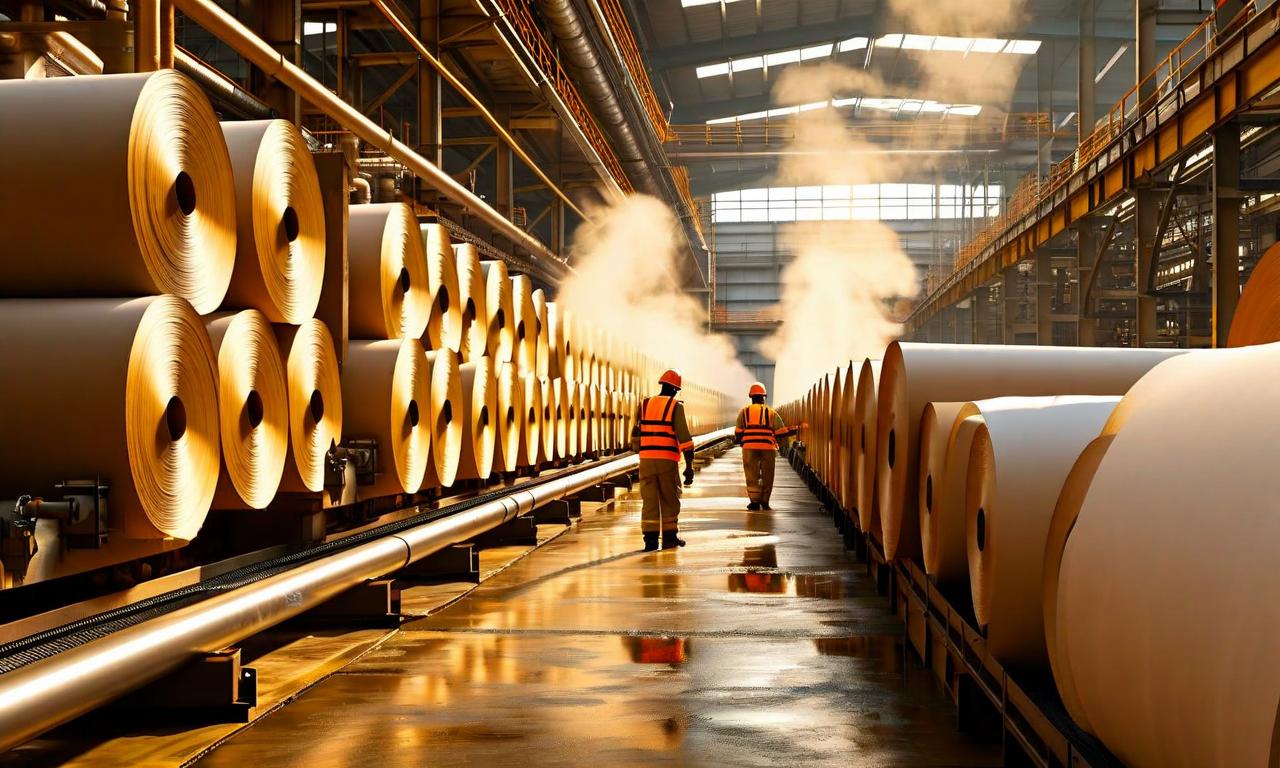
*this image is generated using AI for illustrative purposes only.
Emami Paper Mills delivered a significant improvement in profitability for FY25-26, with EBITDA rising 48.48% to ₹217.18 crore from ₹146.27 crore in the previous year. Profit Before Tax (PBT) surged nearly 2.8 times to ₹93.36 crore, up from ₹33.39 crore, driven by disciplined cost management and a higher contribution from value-added specialty products. Despite a marginal 1% decline in turnover due to industry-wide realisation pressures, the company operated at 100% capacity utilisation. The Board of Directors recommended an equity dividend of ₹3.20 per share and a preference dividend of ₹8 per share for the financial year ended March 31, 2026.
The submission of the Annual Report under Regulation 34 of SEBI (LODR) Regulations, 2015, was filed on August 4, 2026. Dispatch of the report and the notice for the 44th Annual General Meeting is scheduled to commence on August 10, 2026. The audited financial statements were reviewed by Statutory Auditors S K Agrawal and Co Chartered Accountants LLP, with no qualifications or adverse remarks noted.
Financial Performance Highlights
The financial results reflect strong operational execution despite challenging market conditions.
| Metric | FY25-26 | FY24-25 | Change |
|---|---|---|---|
| EBITDA | ₹217.18 crore | ₹146.27 crore | +48.48% |
| Profit Before Tax | ₹93.36 crore | ₹33.39 crore | ~+179% |
| Capital Investment | ₹30.29 crore | ₹20.50 crore | +47.76% |
| CSR Expenditure | ₹174.26 lakhs | ₹161.71 lakhs* | Excess spent |
Note: CSR obligation was ₹161.71 lakhs; actual spend was ₹174.26 lakhs.
Operational Drivers and Strategy
Management attributed the earnings growth to strategic pricing initiatives and an improved product mix. The company strengthened its portfolio in specialty papers, including Oil and Grease Resistant (OGR) paper and pharma insert paper, which offer sustainable margins. A shift towards Free On Board (FOB) buying reduced shipping freight costs by approximately 16-17%. Additionally, the upgrade of Paper Machine No. 2, including new headbox and calendaring sections, enhanced product quality and machine productivity. Total production volume reached 3.03 lakh tonnes against an installed capacity of 3.40 lakh tonnes.
What the Numbers Show
The divergence between the 1% decline in turnover and the 48% surge in EBITDA indicates a successful margin expansion strategy rather than volume-driven growth. This suggests that Emami Paper Mills is effectively leveraging its specialty product portfolio and cost-control measures—such as freight optimisation and energy efficiency—to protect profitability amidst subdued realisations in commoditised grades. The high capital expenditure of ₹30.29 crore underscores a continued commitment to operational modernisation, aiming to sustain this margin resilience in future quarters.
Corporate Governance and Dividends
The company transferred 15,050 equity shares to the Investor Education and Protection Fund (IEPF) during the year. As of March 31, 2026, 1,56,493 equity shares remained held by the IEPF Authority. The Board also redeemed preference shares, including 4,80,000 Series II Tranche II OCRPS on January 20, 2026, and 2,70,000 Series II Tranche III OCRPS on March 27, 2026. The dividend payout aligns with the company’s Dividend Distribution Policy under Regulation 43A of SEBI (LODR) Regulations, 2015.
Historical Stock Returns for Emami Paper Mills
| 1 Day | 5 Days | 1 Month | 6 Months | 1 Year | 5 Years |
|---|---|---|---|---|---|
| -2.28% | +1.07% | +2.28% | +106.47% | +23.26% | -30.51% |

How sustainable is the current margin expansion given the ongoing industry-wide pressure on realisation prices for commoditised paper grades?
What specific return on investment (ROI) metrics are expected from the ₹30.29 crore capital expenditure, particularly regarding the upgraded Paper Machine No. 2?
Will the shift towards Free On Board (FOB) buying models face resistance from existing distributors or impact customer retention in key export markets?
 15
15





 Access 50+ Readymade Screeners
  Use 200+ Custom Filters
  Get Full Market Insights





