

CNH Industrial Q2 EPS beats estimates, stock jumps 14%


CNH Industrial reported Q2 2026 revenue of $4.8 billion and adjusted EPS of $0.13, beating estimates. Stock rose 14%. Guidance raised to $0.41-$0.46 EPS. Tariffs pressured margins.



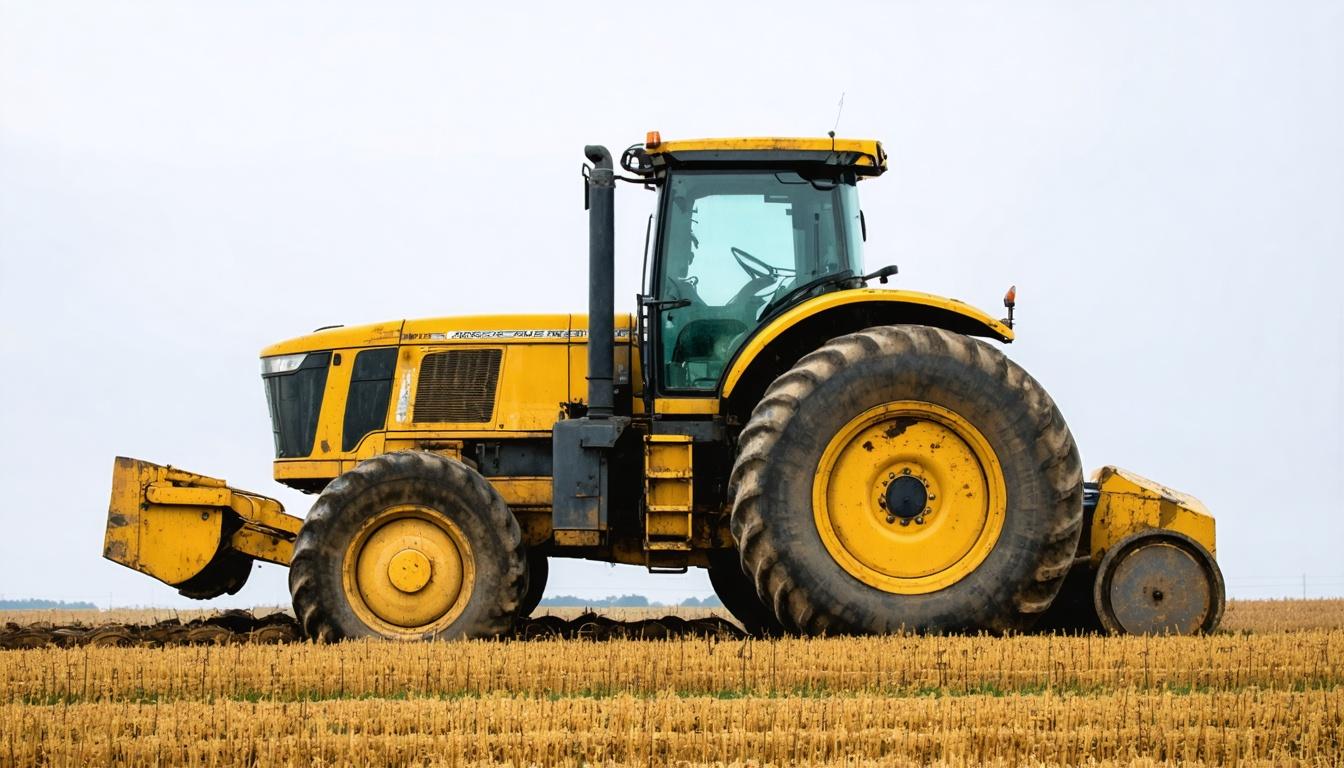
*this image is generated using AI for illustrative purposes only.
CNH Industrial N.V. shares surged nearly 14% to $11.67 on Monday after the agricultural and construction equipment maker reported second-quarter 2026 results that exceeded Wall Street expectations and raised its full-year earnings outlook. The company reported consolidated revenues of $4.8 billion, a 2% year-over-year increase, while adjusted earnings per share (EPS) came in at $0.13, beating the analyst consensus estimate of $0.10 by 30 percent. Despite the top-line growth and earnings beat, GAAP net income declined 35% to $141 million as the company navigated the trough of the agriculture cycle amid low commodity prices and high input costs for farmers.
The results, announced on August 3, 2026, reflect disciplined execution in challenging market dynamics. CFO Jim Nicholas noted that while operational improvements in pricing, sourcing, and manufacturing are delivering as planned, higher tariffs have prevented those gains from fully reaching shareholders. He stated that much of the benefit was absorbed by tariff costs, adding that if tariff rates remain stable, future price-cost improvements should increasingly flow to shareholders. CEO Gerrit Marx highlighted constructive equipment-cycle indicators, including dealer inventory normalization and aging fleets, which supported the decision to update full-year guidance to the higher end of previous ranges.
Segment Performance
The Agriculture segment saw net sales increase 1% to $3.28 billion, driven by favorable price realization that countered lower volumes in South America. However, adjusted EBIT for Agriculture decreased 35% to $170 million, with margins contracting by 290 basis points to 5.2%. Industry sales volumes declined across most regions, with North America seeing double-digit drops in tractor sales. Adjusted gross margin fell 210 basis points to 19.7% due to lower volumes, unfavorable product mix, tariffs, and higher labor and research and development costs.
In contrast, the Construction segment delivered strong top-line growth, with net sales increasing 12% to $866 million, driven by higher volumes in North America and shipments delayed from the first quarter. Global industry sales volume for construction equipment increased 17% for heavy equipment. Despite the revenue growth, adjusted EBIT for Construction fell 57% to $15 million due to tariff impacts and higher research and development expenses. Adjusted gross margin declined 380 basis points to 11.9%.
| Segment | Net Sales ($ millions) | Sales Change | Adjusted EBIT ($ millions) | EBIT Change |
|---|---|---|---|---|
| Agriculture | 3,280 | +1% | 170 | (35)% |
| Construction | 866 | +12% | 15 | (57)% |
| Financial Services | 656 | (4)% | — | — |
Financial Services and Balance Sheet
Financial Services revenues decreased 4% to $656 million, largely driven by unfavorable volumes in South America and North America, reduced used equipment sales, and lower yields. Net income for this segment was $71 million, down from $87 million year-over-year. The managed portfolio, including unconsolidated joint ventures, stood at $28.0 billion as of June 30, 2026. Receivables greater than 30 days past due rose to 4.4% of total receivables, attributed to economic factors impacting farmers in South America.
Operating cash flow totaled $145 million, while Industrial Activities generated free cash flow of $150 million. The company ended June with $1.87 billion in cash and cash equivalents and $25.97 billion in debt. It returned about $200 million to shareholders through dividends and share repurchases.
What the Numbers Show
The divergence between revenue growth and profit decline highlights the pressure on margins within the industrial activities. While consolidated revenues grew 2%, adjusted EBIT of industrial activities fell 25% to $167 million. This compression was primarily driven by the Agriculture segment, where volume declines in key markets like South America were not fully offset by price gains. Additionally, the impact of tariffs and increased selling, general, and administrative expenses further eroded profitability. CNH lowered its estimated 2026 tariff impact to about 170 basis points for Agriculture and 470 basis points for Construction.
Outlook and Guidance
CNH Industrial updated its 2026 outlook, forecasting results at the higher end of previously communicated ranges. The company expects Agriculture segment net sales to be flat year-over-year, including a 2% currency translation effect, with an adjusted EBIT margin between 5.0% and 5.5%. For the Construction segment, net sales are projected to rise between 5% and 10% year-over-year, with an adjusted EBIT margin between 1.8% and 2.3%. Free cash flow of industrial activities is expected to range between $200 million and $400 million, and adjusted diluted earnings per share are forecast between $0.41 and $0.46, up from the prior range of $0.35 to $0.45.

How might the stabilization of tariff rates impact CNH Industrial's ability to pass price-cost improvements to shareholders in the latter half of 2026?
What specific strategies is CNH employing to mitigate the rising delinquency rates (4.4%) in its Financial Services portfolio, particularly among South American farmers?
Could the current normalization of dealer inventories and aging fleets signal a sustained recovery in North American tractor sales, or are these temporary cyclical indicators?
 15






 Create Custom Screeners
 Access 200+ Pre-built Filters
 Use 50+ Readymade Screener





