

CleanSpark Q3FY26 Results: Net loss narrows to $240M; secures $6.6B lease


- GAAP net loss narrowed to $240 million from $378 million in the prior quarter
- Revenue rose 1% QoQ to $138 million; gross margin dipped to 38%
- Secured 20-year triple-net lease at Sandersville campus worth $6.6 billion in contracted revenue
- Normalized adjusted EBITDA was positive $20 million despite negative reported EBITDA
- Total liquidity stands at $917 million, including nearly 14,000 bitcoin

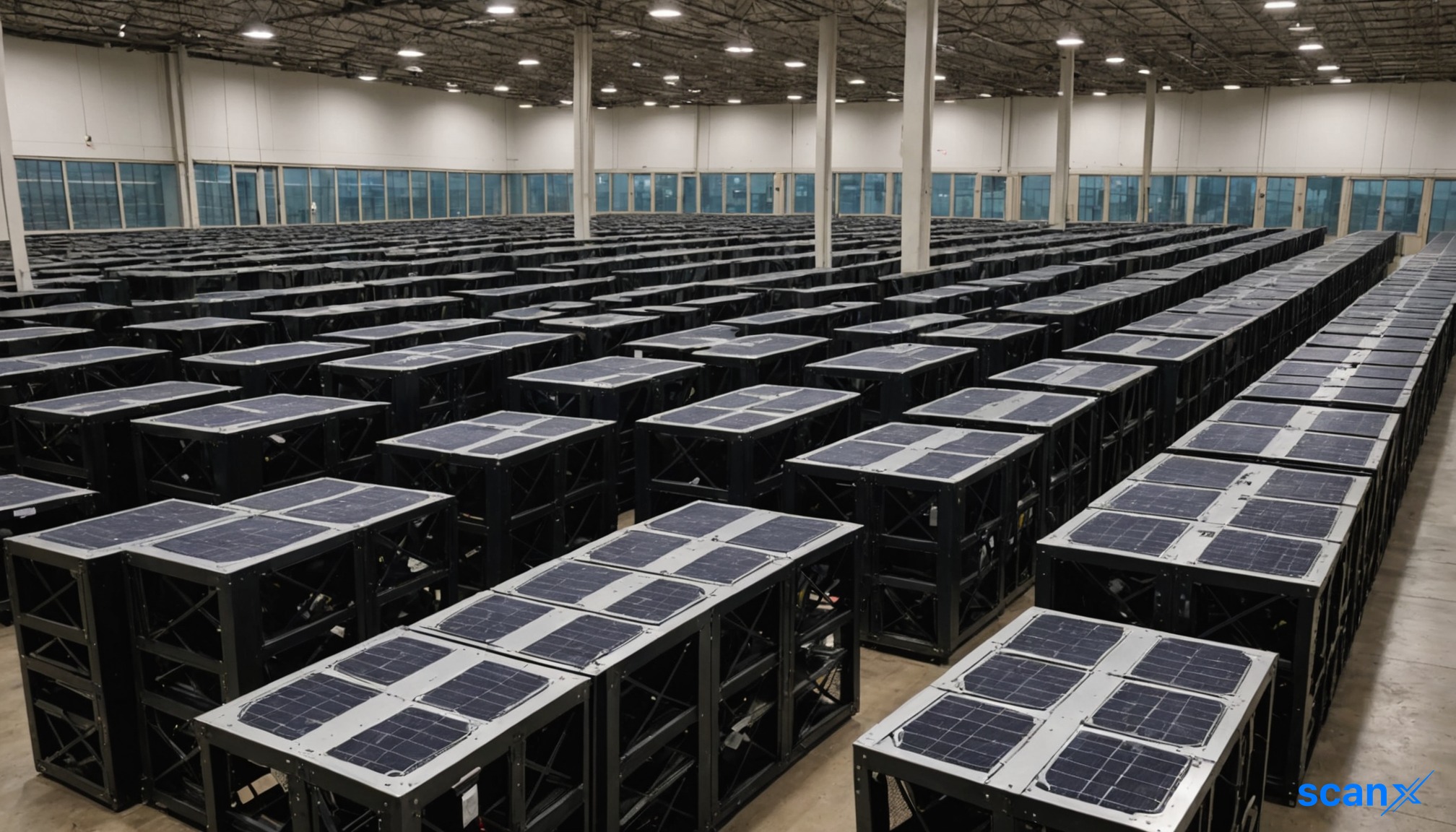

*this image is generated using AI for illustrative purposes only.
CleanSpark Inc reported a GAAP net loss of $240 million for the third quarter of fiscal year 2026, an improvement from the $378 million loss recorded in the preceding quarter. The narrowing of losses was primarily attributed to smaller unfavorable mark-to-market adjustments on bitcoin balances compared to the prior period.
Despite the bottom-line loss, the company announced a landmark 20-year triple-net lease agreement at its Sandersville, Georgia campus. This deal with a high investment-grade technology counterparty generates $6.6 billion in contracted revenue, potentially expanding to $11.6 billion with two five-year extension options. This transaction marks a strategic pivot toward diversified digital infrastructure and AI data centers.
Financial Performance
Revenue for the quarter stood at $138 million, reflecting a modest 1% increase from the second quarter. Gross margin contracted to 38% from 40% in the prior quarter, as power prices saw a slight increase. Adjusted EBITDA was negative $113 million; however, when normalized for non-cash mark-to-market items, the company produced positive adjusted EBITDA of $20 million.
| Metric | Q3FY26 | Q2FY26 | Change |
|---|---|---|---|
| Revenue | $138 million | $137 million | +1% |
| Gross Margin | 38% | 40% | -2 pp |
| GAAP Net Loss | $240 million | $378 million | Narrowed |
| Adj. EBITDA (Normalized) | $20 million | N/A | Positive |
Strategic Pivot to AI Infrastructure
The Sandersville lease represents the most significant transaction in the company's history. The structure is a true triple-net lease, meaning taxes, insurance, and maintenance capital expenditure sit with the tenant. Consequently, CleanSpark expects near 100% net operating income margin on this contract. The project involves nearly 250 megawatts of gross capacity and 175 megawatts of critical IT load.
Management highlighted that the equity portion for the Sandersville project is fully funded. Future buildout costs are estimated at $10 to $12 million per megawatt, with total cash needs for capital expenditure projected between $1.75 billion and $2.1 billion. The company plans to finance the majority of this via project-based debt, targeting loan-to-cost ratios exceeding 90%.
Bitcoin Holdings and Liquidity
As of June 30, the company held total liquidity of $917 million, including approximately $200 million in cash and almost 14,000 bitcoin. Digital asset management activities generated $8.6 million in cash during the quarter, bringing the fiscal year total to $25.8 million. Management emphasized that bitcoin holdings serve as flexible capital, allowing the company to avoid forced sales of equity or assets.
What the Numbers Show
The divergence between the GAAP net loss and normalized adjusted EBITDA highlights the volatility inherent in holding large cryptocurrency positions. While the headline loss of $240 million appears severe, it is driven by non-cash accounting adjustments rather than operational cash burn. In fact, operations generated positive normalized EBITDA of $20 million, suggesting the core mining and infrastructure business remains cash-generative despite market price fluctuations. Furthermore, the shift toward triple-net leases transforms the revenue profile from volatile commodity-linked earnings to predictable, high-margin contractual income, significantly de-risking future cash flows.

How will CleanSpark's reliance on project-based debt with >90% loan-to-cost ratios impact its balance sheet resilience if interest rates remain elevated during the Sandersville buildout?
What specific operational milestones must CleanSpark meet to trigger the two five-year extension options that could expand the lease revenue from $6.6 billion to $11.6 billion?
Given the shift toward AI data centers, how does CleanSpark plan to manage the competitive risk of technology counterparty default or contract renegotiation over the 20-year term?









 Create Custom Screeners
  Access 200+ Pre-built Filters
  Use 50+ Readymade Screener





