

CleanSpark signs $6.6 billion AI lease, reports Q3 net loss of $239.8 million


CleanSpark Inc. secured a major 20-year triple-net lease for its Sandersville campus, valued at $6.6 billion, marking a strategic shift toward AI infrastructure. Concurrently, the company reported a Q3FY26 net loss of $239.8 million as mining revenues declined 30.5% year-over-year to $138.0 million.



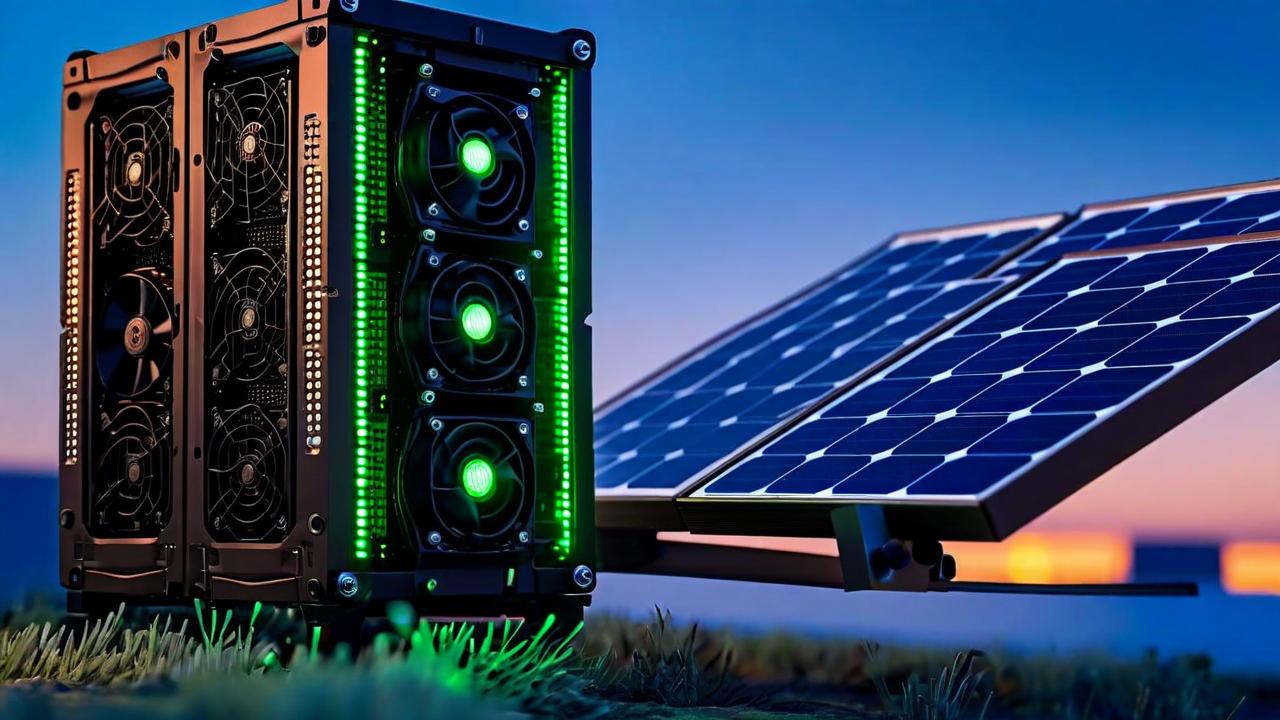
*this image is generated using AI for illustrative purposes only.
CleanSpark Inc. has executed a transformative 20-year infrastructure lease for its Sandersville, Georgia, campus, securing $6.6 billion in contracted revenue from an investment-grade global technology company, while simultaneously reporting a fiscal third-quarter 2026 (Q3FY26) net loss of $239.8 million. This strategic move diversifies the firm’s revenue streams beyond cryptocurrency mining, offering an expected cumulative net operating income (NOI) contribution margin of nearly 100%. The Q3 results reflect a challenging period for core mining operations, with revenue dropping 30.5% year-over-year to $138.0 million, contrasting sharply with the long-term stability of the new high-performance computing (HPC) deal.
The lease agreement is structured as a true triple-net (NNN) lease with annual escalators, directly linking CleanSpark’s real estate assets to long-term, stable cash flows. CEO and Chairman Matt Schultz described the development as providing durable cash flows and de-risked economic returns for shareholders. The deal supports the deployment of production-grade infrastructure dedicated to various computing workloads, signaling a broader pivot toward diversified energy-intensive computing services. CleanSpark confirmed it has ordered and pre-paid all long-lead items needed to meet the project’s ready-for-service date in late 2027, with the anticipated equity portion fully funded.
Lease Structure and Financial Impact
The financial terms of the Sandersville lease underscore its significance to CleanSpark’s balance sheet. The initial 20-year term generates approximately $6.6 billion in expected contract value for the 175 MW facility. If the lessee exercises two five-year extension options, the total contract value rises to $11.6 billion. The structure ensures high profitability, with an average annual NOI contribution of approximately $330 million. Estimated landlord project costs are set at $10-$12 million per megawatt of critical IT load.
| Metric | Value |
|---|---|
| Initial Term Revenue | $6.6 billion |
| Total Value with Extensions | $11.6 billion |
| Annual NOI Contribution | ~$330 million |
| NOI Margin | Nearly 100% |
| Landlord Cost per MW | $10-$12 million |
Q3FY26 Financial Results
Despite the significant progress in its data center division, CleanSpark’s core financials deteriorated in Q3FY26. Quarterly revenue fell to $138.0 million from $198.6 million a year earlier. The company posted a net loss of $239.8 million, or 89 cents per basic share, compared to net income of $257.4 million in the same period last year. Adjusted EBITDA swung to negative $113.0 million from positive $377.7 million year-over-year. Bitcoin production also contracted, dropping to 586 coins in July from 614 in June.
President and CFO Gary Vecchiarelli noted that despite challenging bitcoin mining economics, the company maintains a portfolio of scarce, grid-connected power assets. As of June 30, CleanSpark held $202.6 million in cash and $814.9 million in Bitcoin holdings, with total assets standing at $2.7 billion.
What the Numbers Show
The juxtaposition of declining bitcoin production and Q3 losses against the signing of a massive, high-margin HPC lease illustrates CleanSpark’s evolving business model. While crypto mining remains volatile—evidenced by the swing from $257.4 million profit to $239.8 million loss—the $6.6 billion lease provides a predictable, nearly 100% margin revenue stream that insulates the company from cryptocurrency price fluctuations. The ability to generate $330 million annually in NOI from this single asset suggests that non-mining revenues could soon become a dominant driver of profitability, reducing reliance on hash rate efficiency and bitcoin price appreciation.

How will CleanSpark allocate the anticipated $330 million annual NOI from the Sandersville lease to offset current mining losses and fund future infrastructure expansion?
What specific operational risks or construction delays could threaten the late 2027 ready-for-service date for the 175 MW facility, and how might they impact the contract's start?
Will the strategic pivot toward high-performance computing (HPC) necessitate a restructuring of CleanSpark's existing Bitcoin mining portfolio, potentially leading to asset sales or hash rate reductions?
 16
16





 Access 50+ Readymade Screeners
  Use 200+ Custom Filters
  Get Full Market Insights





