

Cisco Q4FY26 Results: Revenue, EPS beat estimates; guidance raised


- Cisco reported a fiscal Q4 2026 double beat, with revenue and EPS exceeding analyst expectations.
- Full-year FY27 revenue guidance of $72.2B-$73.4B surpassed the $68.69B estimate by a wide margin.
- Shares fell 1.81% to $110.12 due to broader tech sector weakness despite strong fundamentals.
- Company expands AI infrastructure push with Super Micro Computer integration planned for October 2026.

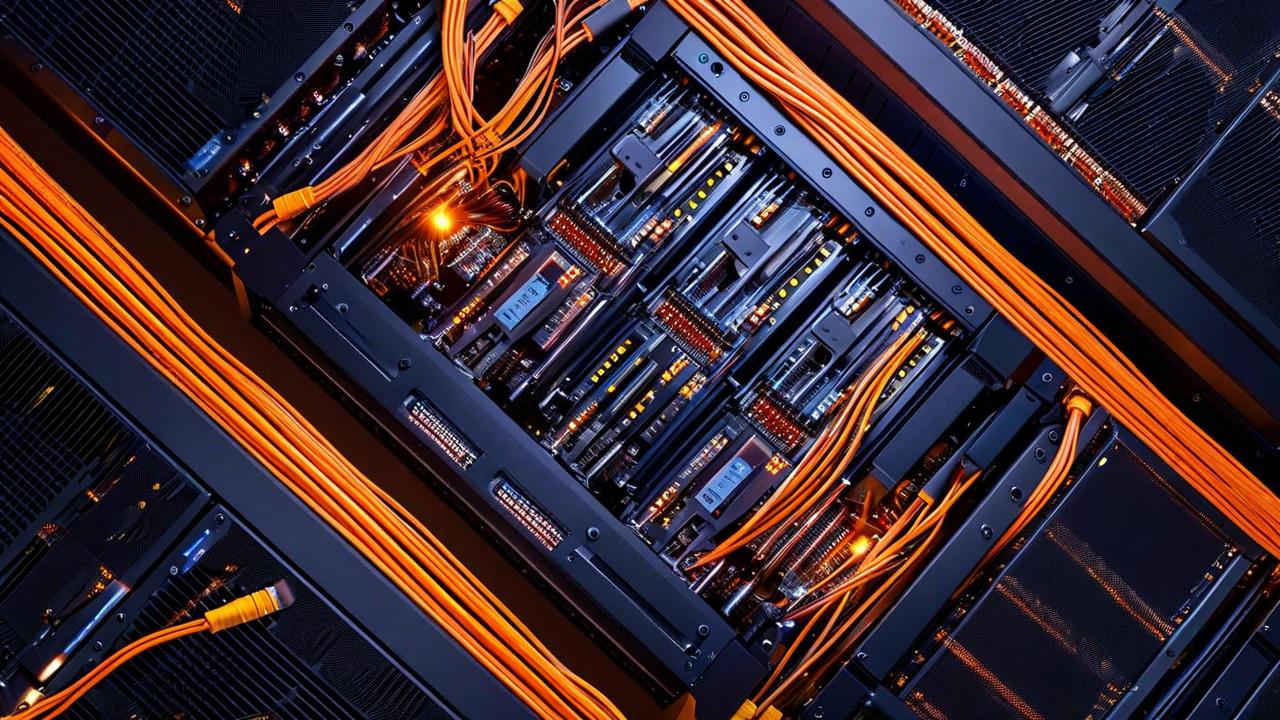

*this image is generated using AI for illustrative purposes only.
Cisco Systems (NASDAQ: CSCO) shares traded lower Friday as broad technology sector weakness overshadowed its fiscal fourth-quarter 2026 earnings beat and strong full-year guidance.
The networking giant reported results that topped analyst expectations, with fiscal 2027 revenue guidance of $72.2 billion-$73.4 billion significantly above the $68.69 billion estimate. Adjusted EPS guidance of $5.05-$5.11 also exceeded the $4.80 consensus.
Despite the positive fundamental data, Cisco’s stock declined 1.81% to $110.12. The S&P 500 Technology sector was the weakest performer, falling 0.71%, while the Nasdaq Composite slipped 0.27%.
What the Numbers Show
Cisco’s guidance represents a substantial upside to market expectations. The midpoint of the new revenue guidance range ($72.8 billion) is approximately 6.6% higher than the prior estimate of $68.69 billion. This divergence suggests management sees stronger demand momentum than priced into current analyst models, particularly in its core networking business.
Strategic Focus on AI Infrastructure
Cisco is expanding its artificial intelligence infrastructure strategy to address thermal and power constraints in data centers. The company plans to offer integrated Super Micro Computer solutions for its Secure AI Factory in October 2026.
Key strategic developments include:
- Targeting dense GPU systems such as Nvidia’s Vera Rubin NVL72 and HGX Rubin NVL8 platforms.
- Integrating rack-to-fabric liquid cooling into its infrastructure offerings.
- Emphasizing that power and cooling capabilities dictate where AI infrastructure can be built.
Technical Outlook and Market Sentiment
While Cisco remains in a longer-term uptrend, having gained 59.33% over the past 12 months, near-term momentum has softened. The stock trades below its 20-day simple moving average of $115.28 and 50-day SMA of $115.37, but remains well above the 200-day SMA of $93.91.
Technical indicators suggest potential consolidation:
- MACD sits below its signal line with a negative histogram, indicating fading upside momentum.
- Key resistance is identified at $121.50, where rebounds may face selling pressure.
- Key support lies near $109, close to the 100-day SMA of $109.84.
Jim Cramer reiterated his bullish view on CNBC, describing Cisco’s quarter as "really good" and noting that management’s guidance was "very conservative." However, investor rotation out of technology stocks weighed on sentiment, with Communication Services gaining 1.06% as capital shifted to other sectors.
Quality vs. Growth Profile
Benzinga Edge scoring highlights a divergence between Cisco’s fundamental quality and growth perception:
- Momentum: 89.06/100, reflecting strong longer-term trend retention.
- Quality: 85.94/100, indicating a robust fundamental profile.
- Value: 16/100, suggesting valuation remains a headwind.
- Growth: 10.95/100, a low reading that may concern investors prioritizing high-growth tech names.

How will Cisco's October 2026 launch of integrated Super Micro Computer solutions impact its competitive positioning against pure-play AI infrastructure providers like Nvidia and Dell?
Given the low 'Growth' score of 10.95/100, will institutional investors continue to rotate capital out of Cisco despite its strong 'Quality' rating, favoring higher-growth AI names instead?
To what extent will Cisco's focus on liquid cooling and power management solutions drive revenue growth if data center expansion slows due to energy constraints?
 20
20








 Access Market Heat-map & Insights
  Create, Save & Share your Screener
  Use 200+ Screening Filters





