

Cantabil Retail posts 13% revenue rise, 33.21% EBITDA margin in Q1FY27


Cantabil Retail India Ltd delivered strong Q1FY27 results with 13% revenue growth and 33.21% EBITDA margin. The company recovered ₹10 crore of a previous loan, plans aggressive store expansion, and maintains guidance for ₹1,000 crore annual revenue.

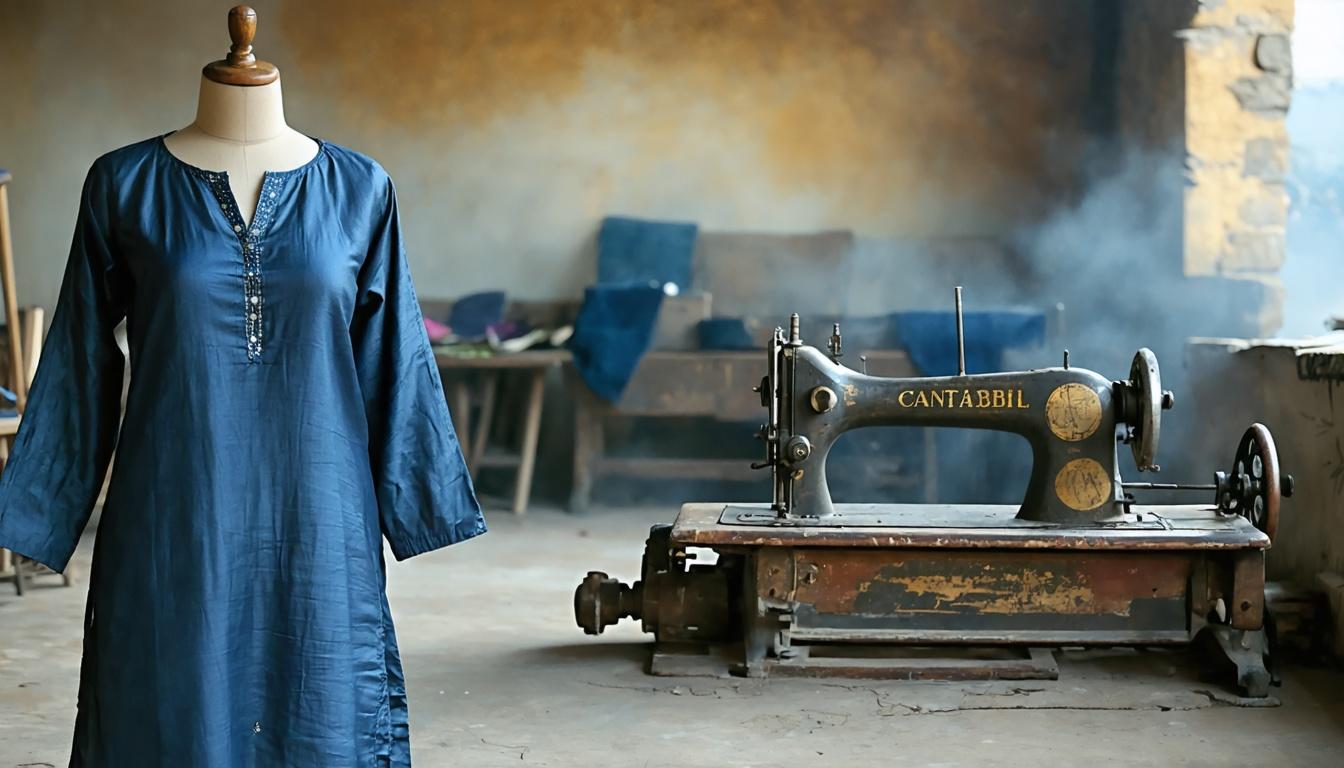

*this image is generated using AI for illustrative purposes only.
Cantabil Retail India Ltd reported a 13% year-on-year revenue increase to ₹178.8 crore for the quarter ended June 30, 2026, driven by disciplined sourcing and scale efficiencies. The Board of Directors, meeting on August 5, 2026, approved the unaudited standalone financial results alongside a recommended final dividend of ₹0.75 per equity share for FY26. This performance underscores improved operational leverage, with EBITDA surging 21% to ₹59.4 crore, lifting the operating margin to an industry-leading 33.21%. The dividend recommendation is subject to shareholder approval at the upcoming Annual General Meeting (AGM), with a record date fixed for August 28, 2026.
The Board also approved the notice for the 38th AGM and the re-appointment of key executives. Statutory auditors Walker Chandiok & Co LLP reviewed the financial statements under Regulation 33 of the SEBI (Listing Obligations and Disclosure Requirements) Regulations, 2015. The company operates predominantly within a single primary business segment: Retail, as per Ind AS 108 "Operating Segments".
Financial Performance
Revenue from operations grew to ₹178.8 crore from ₹158.7 crore in Q1FY26. Total income stood at ₹181.77 crore, up from ₹161.02 crore in the prior-year period. Operating expenses increased to ₹160.96 crore from ₹141.93 crore, reflecting higher employee benefits and other operational costs. Profit before tax rose to ₹20.81 crore from ₹19.10 crore.
| Particulars | Q1FY27 (₹ Cr) | Q1FY26 (₹ Cr) | Change (%) |
|---|---|---|---|
| Revenue from operations | 178.8 | 158.7 | +13% |
| EBITDA | 59.4 | 49.0 | +21% |
| EBITDA Margin | 33.21% | 30.9% | +231 bps |
| Net Profit | 16.3 | 14.7 | +11% |
| EPS (Basic/Diluted) | ₹1.95 | ₹1.75 | +11.4% |
Earnings per share increased to ₹1.95 from ₹1.75 in the previous year. Other income contributed ₹2.95 crore, up from ₹2.35 crore in Q1FY26. The dividend payout represents 37.5% on the equity share face value of ₹2 each.
Corporate Governance Updates
The Board approved the re-appointment of Vijay Bansal as Chairman and Managing Director and Deepak Bansal as Whole Time Director. Both appointments are for a five-year term effective from April 1, 2027, to March 31, 2032, pending shareholder approval at the AGM. Vijay Bansal brings 37 years of experience in strategic planning and business development, while Deepak Bansal provides strategic leadership for retail operations with over 20 years of industry experience. The disclosure notes that Basant Goyal is the brother-in-law of Deepak Bansal.
Operational Insights and Guidance
During the earnings call held on August 6, 2026, management highlighted that same-store sales growth remained positive at 4.04%, driven by strong consumer traction. Chairman Vijay Bansal noted that the company has consistently delivered robust financial results over the past five years, achieving a revenue CAGR of 22% and PAT CAGR of 26%.
Chief Financial Officer Shivendra Nigam stated that gross margin expansion was driven by a combination of product mix improvement and inflation corrections. Management reaffirmed its annual target of maintaining an average annual gross margin of 60%. Regarding EBITDA, while the current quarter delivered 33.21%, management guided for an annual average of 30% plus, citing Ind AS impacts from opening larger stores.
Strategic Initiatives and Capital Allocation
The company operates 667 stores covering 9.42 lakh square feet. Management expects to open 28 to 30 stores in Q2FY27, with new store sizes averaging 1,810 square feet in Q1, aiming for an average of 1,500 square feet by year-end. This shift towards larger formats has reduced franchise expansion opportunities in Tier-3 towns due to higher investment requirements.
On capital allocation, management confirmed that ₹10 crore of a ₹25 crore loan extended to a real estate developer in March 2026 was recovered in Q1FY27. The remaining ₹15 crore is expected to be repaid before February 2027. Management assured that such transactions will not be repeated. Additionally, raw material inflation impacted costs by approximately 10%, which was passed on to customers without affecting sales volumes. Inventory days were managed at 114 days in FY26, with a target to maintain between 110 to 120 days going forward.
What the Numbers Show
EBITDA margin expansion to 33.21% highlights improved operational leverage, as EBITDA grew 21% against a 13% revenue increase. This contrasts with previous margin compression signals, suggesting successful cost control measures. Employee benefits expense rose 17.5% to ₹44.17 crore, outstripping revenue growth, but was offset by higher scale efficiencies. The company's resilient balance sheet and disciplined sourcing practices continue to support profitability amid input cost fluctuations. The recovery of significant loan amounts and focus on inventory optimization signal improved capital discipline.
Historical Stock Returns for Cantabil Retail
| 1 Day | 5 Days | 1 Month | 6 Months | 1 Year | 5 Years |
|---|---|---|---|---|---|
| -2.84% | -5.82% | -7.77% | +1.66% | -10.30% | +82.06% |

How will the strategic shift towards larger store formats (averaging 1,500 sq ft) impact Cantabil's ability to penetrate Tier-3 markets compared to its previous franchise model?
Given the 10% raw material inflation passed on to customers, what is the risk of demand elasticity affecting same-store sales growth in subsequent quarters?
Will the re-appointment of the Bansal brothers signal a continuation of current operational strategies or introduce new initiatives to sustain the 22% revenue CAGR?
 20
20





 Create Custom Screeners
  Access 200+ Pre-built Filters
  Use 50+ Readymade Screener





