Canopy Growth renews EU GMP certification at Kincardine facility

scanx
Reviewed by
Suketu GScanX News Team
Key Highlights

Canopy Growth Corporation has renewed its EU GMP certification for the Kincardine, Ontario facility, as confirmed by the Regierungspräsidium Tübingen. This regulatory milestone ensures the continuity of its end-to-end supply chain for medical cannabis exports to Europe. The operational stability aligns with recent financial performance, where international cannabis net revenue grew 10% year-over-year in Q1 FY27.


powered bylight_fuzz_icon
48256939

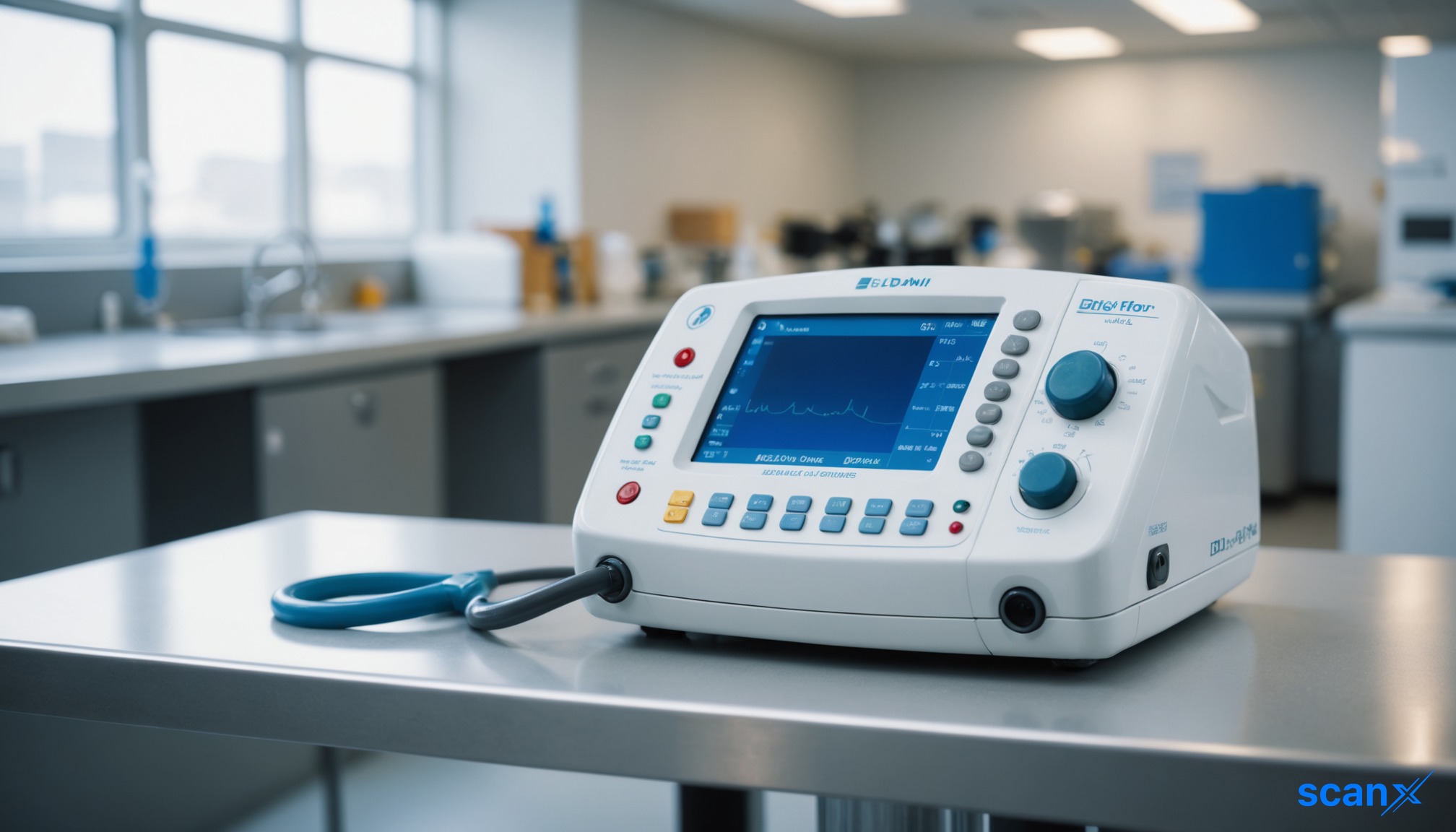
*this image is generated using AI for illustrative purposes only.

Canopy Growth Corporation (TSX: WEED) (NASDAQ: CGC) has secured renewed European Union Good Manufacturing Practice (EU GMP) certification for its Kincardine, Ontario cultivation facility. The certification was issued by the Regierungspräsidium Tübingen – Leitstelle Arzneimittelüberwachung Baden-Württemberg, validating the facility’s compliance with strict European regulatory standards for pharmaceutical-grade cannabis production.

The renewed status is critical for Canopy Growth’s supply chain integrity, allowing it to continue exporting Canadian-grown cannabis flower to medical markets across Europe. Kincardine serves as the anchor asset in the company’s end-to-end EU GMP supply chain, linking cultivation in Canada with distribution capabilities through its second EU GMP facility in Sankt Leon-Rot, Germany.

Operational Impact and Revenue Context

The certification renewal supports Canopy Growth’s expanding presence in the European market. Luc Mongeau, Chief Executive Officer of Canopy Growth, stated that the renewal reflects the quality and consistency of operations at Kincardine. He noted that the company is broadening its flower portfolio, including through the introduction of MTL Cannabis genetics and additional strains, to meet evolving patient needs.

Financially, the company reported momentum in Europe during the recent quarter. International cannabis net revenue increased 10% year-over-year in the first quarter of fiscal 2027. This growth underscores the commercial relevance of maintaining uninterrupted EU GMP-compliant supply from Kincardine.

What the Numbers Show

The correlation between the renewed certification and the 10% year-over-year rise in international cannabis net revenue highlights the dependency of Canopy Growth’s European expansion on regulatory continuity. Without the EU GMP status at Kincardine, the company would face significant barriers to supplying the region, potentially stalling the revenue growth observed in Q1 FY27. The data suggests that operational excellence in cultivation directly supports top-line performance in key international markets.

Disclaimer: This article is AI-generated using data from ViewTrade. ScanX is not liable for any inaccuracies.

How might the introduction of MTL Cannabis genetics impact Canopy Growth's market share among European medical patients compared to its existing strains?

What are the potential risks to Canopy Growth's European revenue if regulatory standards for EU GMP certification tighten further in the coming fiscal year?

Could the success of the Kincardine-Sankt Leon-Rot supply chain model encourage other Canadian cultivators to pursue similar end-to-end EU GMP certifications?

like18
dislike

Canopy Growth beats Q1 FY27 estimates with 13% revenue surge

scanx
Reviewed by
Naman SScanX News Team
Key Highlights

Canopy Growth Corporation delivered a strong Q1 FY2027 performance with $81.2M in revenue, a 13% increase year-over-year. The company beat earnings expectations with a loss per share of $(0.03) versus a consensus of $(0.10). Growth was driven by the MTL Cannabis acquisition, particularly in Canada's medical and adult-use markets, while adjusted gross margins expanded to 31%.

powered bylight_fuzz_icon
47652609

*this image is generated using AI for illustrative purposes only.

Canopy Growth Corporation reported a first-quarter fiscal 2027 net revenue of $81.2 million (CA$81.2M), representing a 13% year-over-year increase and surpassing the consensus estimate of $58.52 million (CA$82.03M). The company posted a basic and diluted loss per share of $(0.03) (US$0.02), significantly beating the analyst consensus estimate of a $(0.10) (US$0.04) loss. This performance marks a substantial improvement from the $(0.24) loss per share recorded in Q1 FY2026, driven by broad-based revenue growth across all business segments and disciplined cost management.

Financial Highlights

The company’s consolidated financial results for the three months ended June 30, 2026, reflect improved operational efficiency and margin expansion. While free cash outflow increased to $(25.7M) from $(11.6M) in the prior year period due to working capital timing, the adjusted EBITDA loss narrowed by 59% to $(3.2M). The net loss decreased 68% to $(14.6M), highlighting the impact of revenue growth against controlled expenses.

Metric: Q1 FY2027 Q1 FY2026 Change
Consolidated Net Revenue: $81.2M $72.1M +13%
Cannabis Net Revenue: $65.1M $57.0M +14%
Storz & Bickel Net Revenue: $16.1M $15.2M +6%
Gross Margin: 27% 25% +2 pp
Adjusted Gross Margin: 31% 25% +6 pp
Net Loss: $(14.6M) $(44.9M) -68%
Basic & Diluted Loss Per Share: $(0.03) $(0.24) Improved
Adjusted EBITDA Loss: $(3.2M) $(7.9M) -59%

Segment Performance

Revenue growth was led by the cannabis division, which saw a 14% increase in net revenue to $65.1M. Canada medical cannabis was the strongest performer, rising 22% to $25.8M, driven by an increase in insured customers and the integration of MTL Cannabis Corp. This growth was partially offset by the Canadian government’s reduction in the Veterans Affairs Canada (VAC) reimbursement rate for medical cannabis.

Canada adult-use cannabis revenues jumped 10% to $29.7M, primarily attributable to increased flower sales following the MTL Cannabis acquisition. International markets cannabis revenue grew 10% to $9.6M, led by strength in Europe, specifically Poland. Storz & Bickel sales increased 6% to $16.1M, benefiting from prior-year portfolio expansion and sales in non-core markets.

Margins and Profitability Outlook

Consolidated gross margin improved to 27% from 25% in the prior year. On an adjusted basis, gross margin expanded to 31%, excluding inventory step-up charges of $2.6 million related to the MTL Cannabis acquisition. Storz & Bickel’s gross margin surged to 48% from 29%, aided by cost rationalization and the recovery of certain U.S. tariffs.

Tom Stewart, Chief Financial Officer, stated that the combination of top-line growth and cost management is enabling steady progress on key profitability measures. He noted that the MTL Cannabis integration is driving increased supply of high-quality flower and meaningful synergies, with further improvements anticipated in the second half of fiscal 2027 as the integration completes.

Disclaimer: This article is AI-generated using data from ViewTrade. ScanX is not liable for any inaccuracies.

How will the completion of the MTL Cannabis integration in H2 FY2027 specifically impact Canopy Growth's supply chain efficiency and flower product margins?

What is the long-term strategic plan to offset the revenue impact from the Canadian government's reduction in Veterans Affairs Canada reimbursement rates?

Canopy Growth's free cash outflow increased significantly despite improved EBITDA; what specific working capital adjustments or operational changes are expected to stabilize cash flow in the coming quarters?

like16
dislike

More News on Canopy Growth Corp