Bharat Parenterals doubles capex to ₹300 crore for biologics facility

2 min read     Updated on 11 Aug 2026, 05:35 PM
scanx
Reviewed by
Suketu GScanX News Team
AI Summary

Bharat Parenterals Limited increases Phase 1 capex for Varenyam Biolifesciences to ₹300 crore to add biologics CDMO capabilities. The Savli facility will target US and EU markets, with completion expected in Q2 2028.


powered bylight_fuzz_icon
47995501

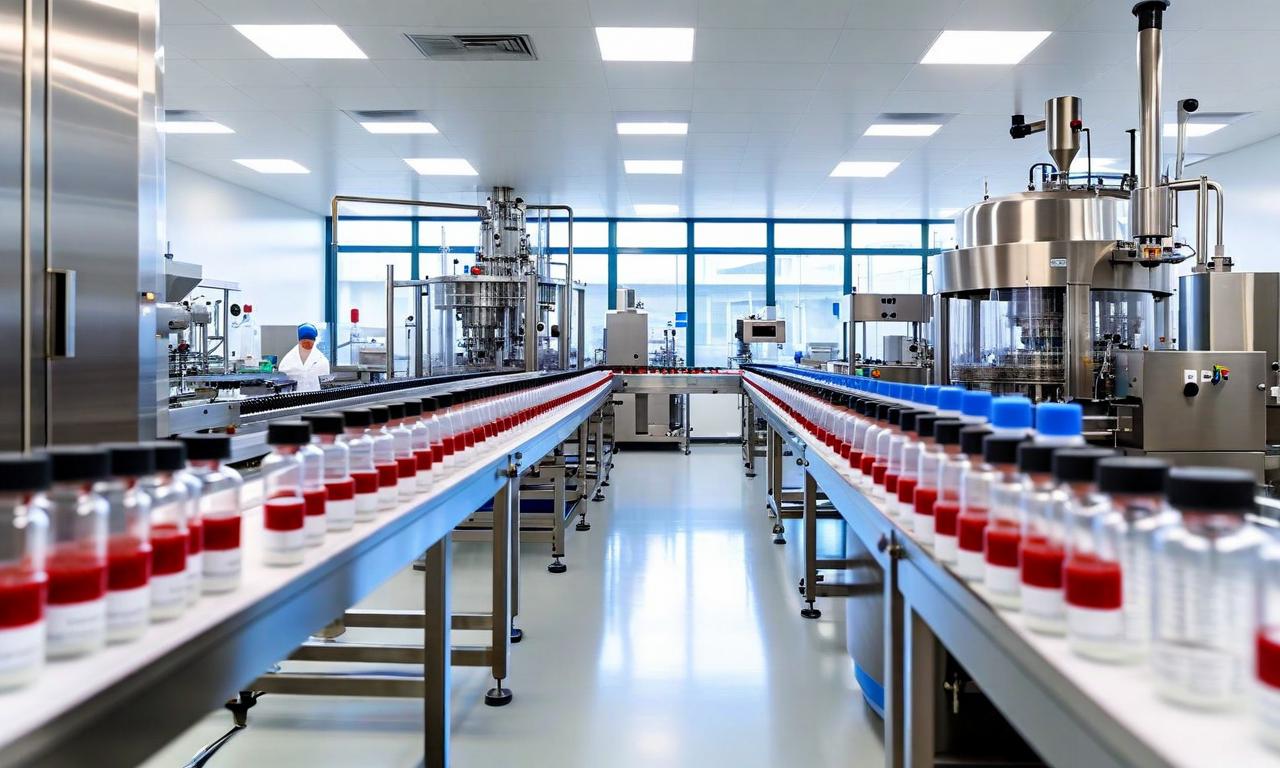
*this image is generated using AI for illustrative purposes only.

bharat parenterals has doubled the Phase 1 capital expenditure for its upcoming manufacturing facility in Savli to ₹300 crore, driven by a strategic expansion into biologics and biosimilar contract development and manufacturing organization (CDMO) services. The Board of Directors of its wholly owned subsidiary, Varenyam Biolifesciences Private Limited, approved the enhanced scope on August 11, 2026, moving beyond the original plan focused solely on small-molecule oncology products for regulated rest-of-world markets. This shift aims to capture higher-value opportunities in the United States and European Union, addressing specific capacity gaps in the global biologics supply chain for innovator biotech companies.

The disclosure was made pursuant to Regulation 30 of the Securities and Exchange Board of India (Listing Obligations and Disclosure Requirements) Regulations, 2015, read with SEBI Master Circular No. SEBI/HO/CFD/PoD-2/I/3762/2026 dated January 30, 2026. The company informed the BSE Limited that the revised investment plan remains subject to applicable statutory and regulatory approvals, including those from the US Food and Drug Administration (USFDA), EU-GMP, and ANVISA. Construction is targeted for completion by Q2 2028, subject to regulatory and commissioning timelines.

Facility Expansion Details

The upgraded facility in Savli will comprise two dedicated blocks: one for biologics and biosimilars and another for small-molecule oncology products. This dual-capability design allows Varenyam Biolifesciences to serve as a single partner for customers requiring scale-up from clinical-stage development to commercial-scale manufacturing, reducing the need for clients to transition between multiple vendors.

Parameter Details
Subsidiary Varenyam Biolifesciences Private Limited
Revised Phase 1 Capex ₹300 crore (previously ₹150 crore)
New Capabilities Biologics and biosimilar CDMO services
Existing Capabilities Small-molecule oncology
Target Markets United States, European Union, SRA Rest-of-World
Regulatory Approvals USFDA, EU-GMP, ANVISA
Expected Completion Q2 2028

Strategic Rationale

Management stated that the upgrade addresses tightening capacity in the scale-up segment between early clinical supply and full commercial launch. By building dedicated biologics capacity alongside existing oncology lines, the company aims to secure multi-year, relationship-driven CDMO engagements with higher barriers to entry. Bhahim B. Desai, Director – Strategy & IR, noted that the global biologics and biosimilar CDMO market is estimated at approximately USD 24-27 billion, with projections reaching USD 38.3 billion to USD 94.1 billion by the early 2030s. North America currently holds an estimated 34%-43% market share, while Asia Pacific is viewed as the fastest-growing region.

What the Numbers Show

The doubling of capital expenditure from ₹150 crore to ₹300 crore signals a significant pivot from a lower-margin, rest-of-world generic model to a higher-value, regulated-market CDMO strategy. While the initial outlay has increased substantially, management views this as an investment in "stickier" revenue streams characterized by longer customer relationships and higher switching costs for clients. The inclusion of USFDA and EU-GMP approvals broadens the addressable customer base beyond the original scope, potentially improving long-term revenue visibility despite the higher upfront investment risk associated with complex biologics manufacturing infrastructure.

Historical Stock Returns for Bharat Parenterals

1 Day5 Days1 Month6 Months1 Year5 Years
-0.36%-6.12%-2.50%+30.97%-1.70%+294.07%

How will the increased capital expenditure of ₹300 crore impact Bharat Parenterals' short-term cash flow and debt-to-equity ratios before the facility becomes operational in 2028?

What specific competitive advantages does Varenyam Biolifesciences possess against established global CDMO players in securing early-stage biologics contracts in the US and EU markets?

Given the complexity of biologics manufacturing, what is the projected timeline for achieving full capacity utilization and break-even for the new Savli facility?

Bharat Parenterals Q1FY27 loss widens to ₹3.6 crore on base effect

3 min read     Updated on 07 Aug 2026, 04:36 PM
scanx
Reviewed by
Shriram SScanX News Team
AI Summary

Bharat Parenterals' Q1FY27 results show a widened consolidated net loss of ₹3.6 crore and a 19.2% revenue drop to ₹93.7 crore, attributed to a high base effect. Despite this, gross margins improved to 50.6%, and subsidiary Varenyam Healthcare turned profitable.

powered bylight_fuzz_icon
47481281

*this image is generated using AI for illustrative purposes only.

Bharat Parenterals reported a consolidated net loss of ₹3.6 crore for Q1FY27, widening significantly from a loss of ₹0.9 crore in the same quarter last year. Consolidated revenue from operations declined 19.2% year-on-year to ₹93.7 crore, primarily driven by a high base effect created by the delivery of an opening tranche of a ₹210 crore institutional order in Q1FY26. Despite the revenue contraction, the group’s gross margin expanded by approximately 1,000 basis points to 50.6%, indicating improved revenue quality even as operating expenses rose 16.5% to ₹38.9 crore due to pre-commercial investments at subsidiaries.

The Board of Directors approved the unaudited financial results on August 05, 2026, pursuant to Regulation 30 and 33 of the SEBI (Listing Obligations and Disclosure Requirements) Regulations, 2015. The results were reviewed by statutory auditors Shah Mehta & Bakshi Chartered Accountants and recommended by the Audit Committee. Management emphasized that the revenue decline reflects contract lifecycle timing rather than demand loss, with the current quarter comparing the closing tranche of the large order against its opening tranche.

Financial Performance Overview

Standalone revenue from operations fell 41.2% to ₹55.5 crore from ₹94.4 crore in Q1FY26. However, standalone EBITDA margin improved to 12.3% from 11.9% in the prior year, supported by a gross margin increase to 39.8% from 33.4%. Standalone net profit declined 63.4% to ₹3.7 crore. Finance costs decreased by 51% to ₹0.7 crore, and trade receivables reduced by 32% year-on-year to ₹118.6 crore, signaling improved working capital efficiency.

Consolidated EBITDA stood at ₹8.5 crore with a margin of 9.1%, down from ₹13.8 crore at 11.9% in Q1FY26. The decline in EBITDA was entirely attributable to increased operating expenses, which rose to ₹38.9 crore (41.5% of revenue) from ₹33.4 crore (28.8% of revenue). These costs were substantially concentrated at subsidiaries Innoxel Lifesciences and Varenyam Healthcare, which are building capacity ahead of contracted forward revenue. Non-cash depreciation charges of ₹8.7 crore further pressured consolidated profitability.

Metric Standalone Q1FY27 Standalone Q1FY26 YoY Change Consolidated Q1FY27 Consolidated Q1FY26 YoY Change
Revenue from Operations (₹ Cr) 55.5 94.4 -41.2% 93.7 116.0 -19.2%
EBITDA (₹ Cr) 6.8 15.3 -55.6% 8.5 13.8 -38.0%
EBITDA Margin (%) 12.3% 11.9% 9.1% 11.9%
Net Profit / (Loss) (₹ Cr) 3.7 10.0 -63.0% (3.6) (0.9) +308.4%
EPS (₹) 5.31 14.51 -63.4% (5.17) (1.27) +307.1%

Subsidiary Performance

Innoxel Lifesciences, the group’s Contract Development and Manufacturing Operations (CDMO) arm, reported revenue of ₹21.4 crore, up 164.8% year-on-year, driven by licensing, milestone, and development income. It posted an EBITDA loss of ₹1.8 crore and a net loss of ₹10.4 crore, attributed to ₹6.3 crore in depreciation and ₹2.3 crore in finance costs against a fully invested asset base. Commercial CMO supply is expected to begin in Q2FY27, with management targeting out-licensing revenue of ₹70–90 crore for FY27.

Varenyam Healthcare, focused on domestic ethical branded formulations, saw revenue rise 52.2% to ₹25.1 crore. It achieved an EBITDA of ₹3.1 crore with a margin of 12.4% and a net profit of ₹2.8 crore, reversing losses recorded in Q4FY26. The subsidiary expanded its field force to 211 medical representatives and covers over 7,500 hospitals. Varenyam Biolifesciences remains pre-operational with minimal operating costs of ₹0.09 crore.

What the Numbers Show

The divergence between standalone profitability and consolidated losses highlights the group's transitional phase. While the core manufacturing business maintains healthy margins and improves working capital efficiency, the heavy fixed-cost burden at Innoxel Lifesciences continues to drag down group-level metrics. Notably, consolidated PAT excluding Innoxel was positive at ₹6.8 crore, underscoring that the parent company and other subsidiaries remain profitable. The order book stands at ₹171 crore, covering approximately 80–85% of the revenue required for the remaining nine months of FY27.

Corporate Actions

The Board approved the re-appointment of Mr. Hemang Shah as Executive Director for a term of five consecutive years, effective July 02, 2026, subject to shareholder approval at the AGM. The company also fixed September 19, 2026, as the date for its 33rd Annual General Meeting (AGM) to be held via Video Conferencing/other Audio-Visual means (VC/OAVM).

Historical Stock Returns for Bharat Parenterals

1 Day5 Days1 Month6 Months1 Year5 Years
-0.36%-6.12%-2.50%+30.97%-1.70%+294.07%

When is Innoxel Lifesciences expected to reach its break-even point given the commencement of commercial CMO supply in Q2FY27 and the current high fixed-cost burden?

How will the anticipated ₹70–90 crore in out-licensing revenue from Innoxel impact Bharat Parenterals' consolidated profitability for FY27?

What specific strategies is management employing to offset the 16.5% rise in operating expenses driven by pre-commercial investments at subsidiaries?

More News on Bharat Parenterals

1 Year Returns:-1.70%