

Barfresh cuts FY26 sales guidance to $23M-$26M; prioritizes new Ohio plant


Barfresh Food Group reported Q2 2026 revenue of $4.7 million, up 190% YoY but missing estimates, and cut FY26 guidance to $23M-$26M due to Arps Dairy integration costs. The company is prioritizing a new 44,000 sq ft facility in Ohio to improve long-term efficiency.

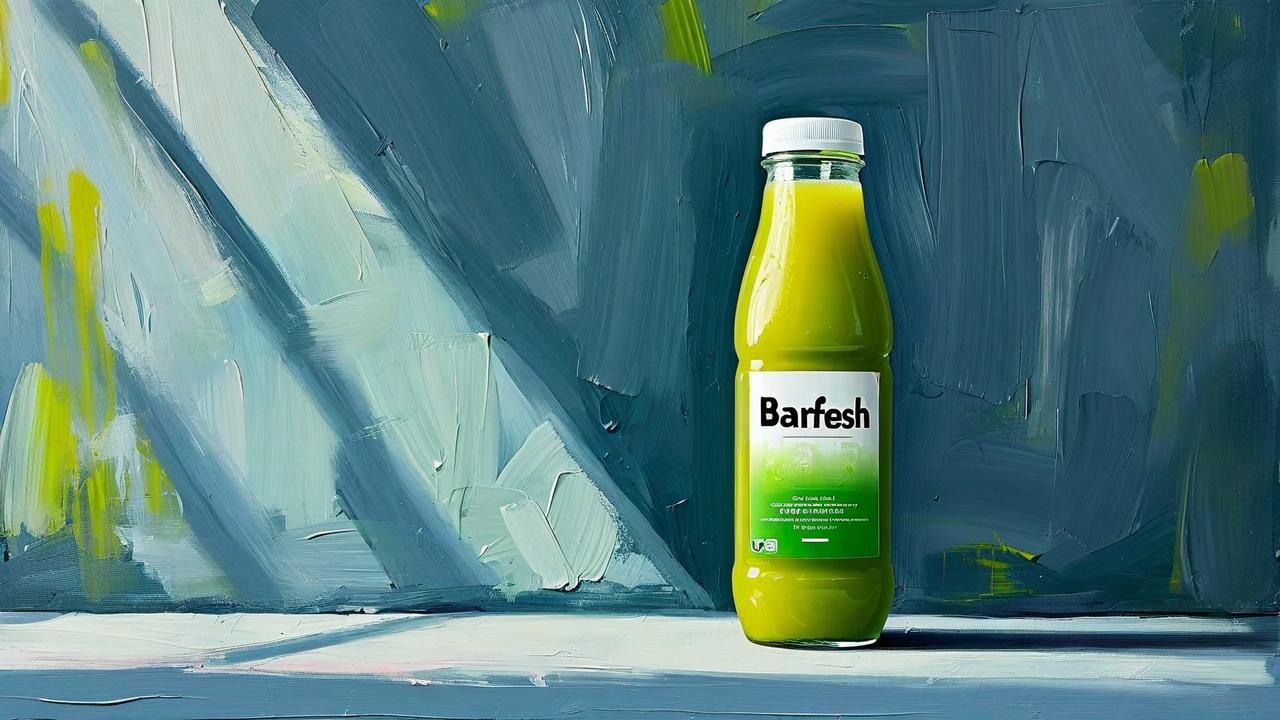

*this image is generated using AI for illustrative purposes only.
Barfresh Food Group Inc. (NASDAQ: BRFH) reported second quarter 2026 revenue of $4.7 million, falling short of analyst consensus estimates of $5.354 million. The company posted a net loss of $1.9 million for the quarter ended June 30, 2026, translating to a loss of $(0.12) per share. This per-share figure missed the analyst consensus estimate of $(0.05) by 140% and represents a 100% deterioration from the loss of $(0.06) per share recorded in the same period last year.
Despite the miss against estimates, revenue grew 190% year-over-year from $1.6 million in Q2 2025, driven primarily by the contribution from the Arps Dairy acquisition. However, operational execution lagged behind projections, leading management to revise its full-year 2026 guidance significantly. The company lowered its FY26 sales outlook from $28.000 million-$32.000 million to $23.000 million-$26.000 million, which now falls below the analyst consensus estimate of $28.476 million.
Operational Challenges and Guidance Revision
Riccardo Delle Coste, Chief Executive Officer, attributed the below-expectation results to productivity issues at the existing Arps Dairy facility. Infrastructure and equipment required more investment than planned to reach operable conditions for the needed product volume. These startup and inefficiency costs weighed heavily on gross margin and Adjusted EBITDA.
Consequently, Barfresh revised its fiscal year 2026 guidance:
- Revenue: Expected to be between $23 million and $26 million, representing 62% to 83% growth compared to fiscal year 2025.
- Adjusted EBITDA: Expected to range from negative $1.0 million to $2.0 million.
The company expects to achieve Adjusted EBITDA breakeven or a loss of no more than $0.5 million in the second half of 2026 as production efficiencies improve and new school district wins ramp for the 2026-27 school year.
Strategic Shift to In-House Production
Management emphasized that the company is transforming from reliance on third-party co-manufacturers to controlling its own production. This transition involves three key areas: commercial momentum in the education channel, the ramp-up of the existing Arps Dairy facility, and the construction of a larger facility in Defiance, Ohio.
CEO Riccardo Delle Coste noted that while the Arps acquisition successfully stabilized supply and allowed the company to reengage with customers, the condition of the old facility’s infrastructure was worse than anticipated. The plant could not reliably run both Barfresh products and the ice cream business simultaneously. As a result, the ice cream business was temporarily moved out to focus capacity on core branded products. Management expects to bring the ice cream business back once production is fully stabilized.
A top operational priority is the construction of a new 44,000 square foot facility in Defiance, Ohio. The company aims for partial commissioning of core products by the end of 2026. CEO Delle Coste stated that this facility will represent a "meaningful step change" in production economics once commissioned. The company plans to secure a new mortgage and additional equipment financing to complete the project, having already used proceeds from a recent convertible note to pay off the existing mortgage on the property.
Financial Performance Details
Gross margin turned negative in the quarter, with a gross loss of $150,000 (-3.2% of revenue), compared to a gross profit of $506,000 (31.1% of revenue) in Q2 2025. Selling, marketing, and distribution expenses decreased to $561,000 (12% of revenue) from $634,000 (39% of revenue) year-over-year, aided by lower personnel costs and a shift toward single-serve products requiring less customer equipment. General and administrative expenses rose to $794,000 from $673,000, reflecting higher personnel and recruiting costs associated with the Arps Dairy business.
CFO Lisa Roger provided a breakdown of the factors impacting the revised Adjusted EBITDA guidance:
- Approximately $1.8 million relates to higher processing spend at Arps Dairy.
- Approximately $0.8 million is due to the loss of Arps Dairy ice cream mix business.
- Approximately $0.8 million relates to material cost increases.
- Approximately $0.6 million is attributable to delayed revenue recovery for legacy Barfresh product lines.
- Another $0.6 million relates to unrealized synergies in inbound, storage, freight, and cold storage costs.
Adjusted EBITDA was a loss of $1.2 million for the quarter, compared to a loss of $600,000 in Q2 2025.
| Metric: | Q2 2026 | Q2 2025 | Change |
|---|---|---|---|
| Revenue: | $4.7 million | $1.6 million | +190% |
| Gross Profit/Loss: | $(150,000) | $506,000 | N/A |
| Net Loss: | $1.9 million | $880,000 | Widened |
| Adjusted EBITDA Loss: | $1.2 million | $600,000 | Widened |
| EPS: | $(0.12) | $(0.06) | 100% decrease |
Balance Sheet and Financing
As of June 30, 2026, Barfresh held approximately $1.4 million in cash and accounts receivable, and $2.2 million in inventory. In March 2026, the company secured a $7.5 million senior convertible note financing. Proceeds were used to pay off the existing mortgage on its Defiance, Ohio manufacturing facility and other obligations. Additionally, the company received approval for a $2.4 million government grant to purchase specialized equipment for full-scale production, which must be utilized in 2026.
What the Numbers Show
The divergence between strong top-line growth (190% YoY) and deteriorating profitability metrics highlights the integration challenges of the Arps Dairy acquisition. While revenue nearly tripled due to the new business unit, gross margins flipped from positive to negative, indicating that cost structures have not yet scaled efficiently with volume. The reliance on external financing ($7.5 million note) and government grants ($2.4 million) underscores the capital intensity required to bridge the gap between current operational inefficiencies and the projected breakeven timeline in late 2026.

How will the requirement to secure a new mortgage and additional equipment financing for the Defiance facility impact Barfresh's debt-to-equity ratio and interest expense coverage in 2027?
Given the temporary suspension of the ice cream business, what is the specific timeline for reintegrating this product line, and will it require further capital expenditure or lease agreements?
To what extent does the $2.4 million government grant cover the remaining equipment costs for the Defiance facility, and are there performance milestones attached that could jeopardize future funding?
 16
16



 Access Market Heat-map & Insights
  Create, Save & Share your Screener
  Use 200+ Screening Filters





