

ASML Holding delivers 27.76% annualized return over 15 years


- ASML Holding delivered a 27.76% average annual return over the last 15 years
- The stock outperformed the broader market by 14.47% on an annualized basis
- A $1,000 investment made 15 years ago is now worth $41,174.60
- ASML's current market capitalization stands at $678.63 billion
- The company's performance highlights the power of compounded returns



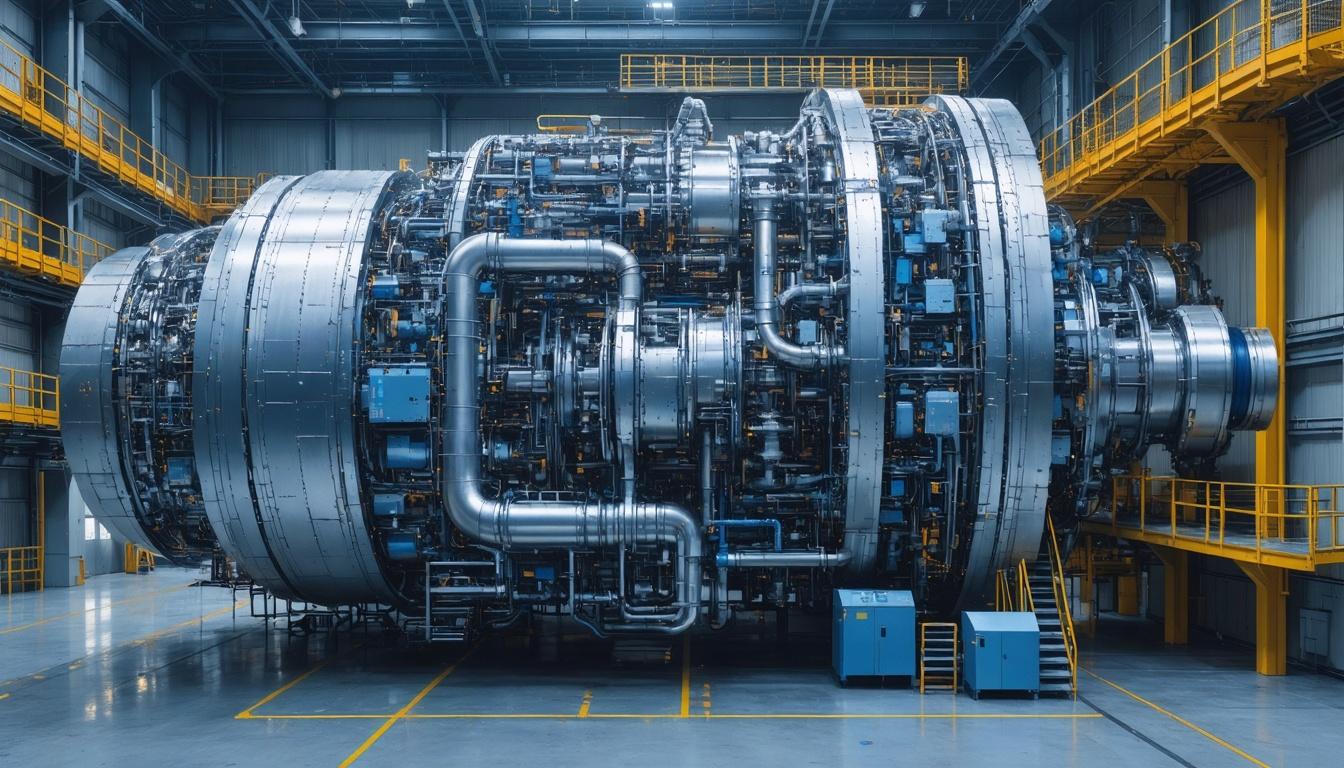
*this image is generated using AI for illustrative purposes only.
ASML Holding (NASDAQ: ASML) has generated an average annual return of 27.76% over the past 15 years, significantly outperforming the broader market by 14.47% on an annualized basis.
The lithography equipment maker currently commands a market capitalization of $678.63 billion. This valuation reflects sustained growth in the semiconductor supply chain, where ASML holds a dominant position in extreme ultraviolet (EUV) technology.
Investment Performance
An investor who purchased $1,000 worth of ASML stock 15 years ago would see that position valued at $41,174.60 today. This calculation assumes a stock price of $1,748.37 at the time of writing.
| Metric | Value |
|---|---|
| Initial Investment | $1,000 |
| Current Value | $41,174.60 |
| Annualized Return | 27.76% |
| Market Outperformance | 14.47% |
What the Numbers Show
The divergence between ASML’s total return and its outperformance margin highlights the baseline market gains over this period. With a 27.76% annualized return and a 14.47% premium over the market, the broader index returned approximately 13.29% annually (derived from source figures). This indicates that while general market conditions were favorable, ASML’s specific operational execution and monopoly-like positioning in EUV lithography drove the majority of the excess alpha for shareholders.
Compounding Impact
The primary takeaway from these figures is the exponential effect of compounding returns over long horizons. A 4,117% total gain on the initial capital underscores how consistent double-digit annual growth transforms modest initial capital into substantial wealth over a decade and a half.

Can ASML maintain its historical 27.76% annualized growth rate given the maturing semiconductor market and increasing geopolitical export restrictions?
How might the rising competition from domestic lithography efforts in China and Japan impact ASML's long-term monopoly in EUV technology?
Is ASML's current $678 billion market cap fully priced for future demand, or does it leave room for further expansion driven by AI chip requirements?
 18
18




 Create Custom Screeners
  Access 200+ Pre-built Filters
  Use 50+ Readymade Screener





