

ASML shares slide 5.58% as China mass-produces chip tools


ASML Holding NV shares fell 5.58% to $1659.10 as reports confirmed China's mass production of domestic immersion DUV lithography machines. This development offers Chinese chipmakers a non-Western alternative amid tightening US export controls, potentially impacting ASML's future revenue in the region. Technically, the stock remains above key long-term moving averages despite short-term pressure.

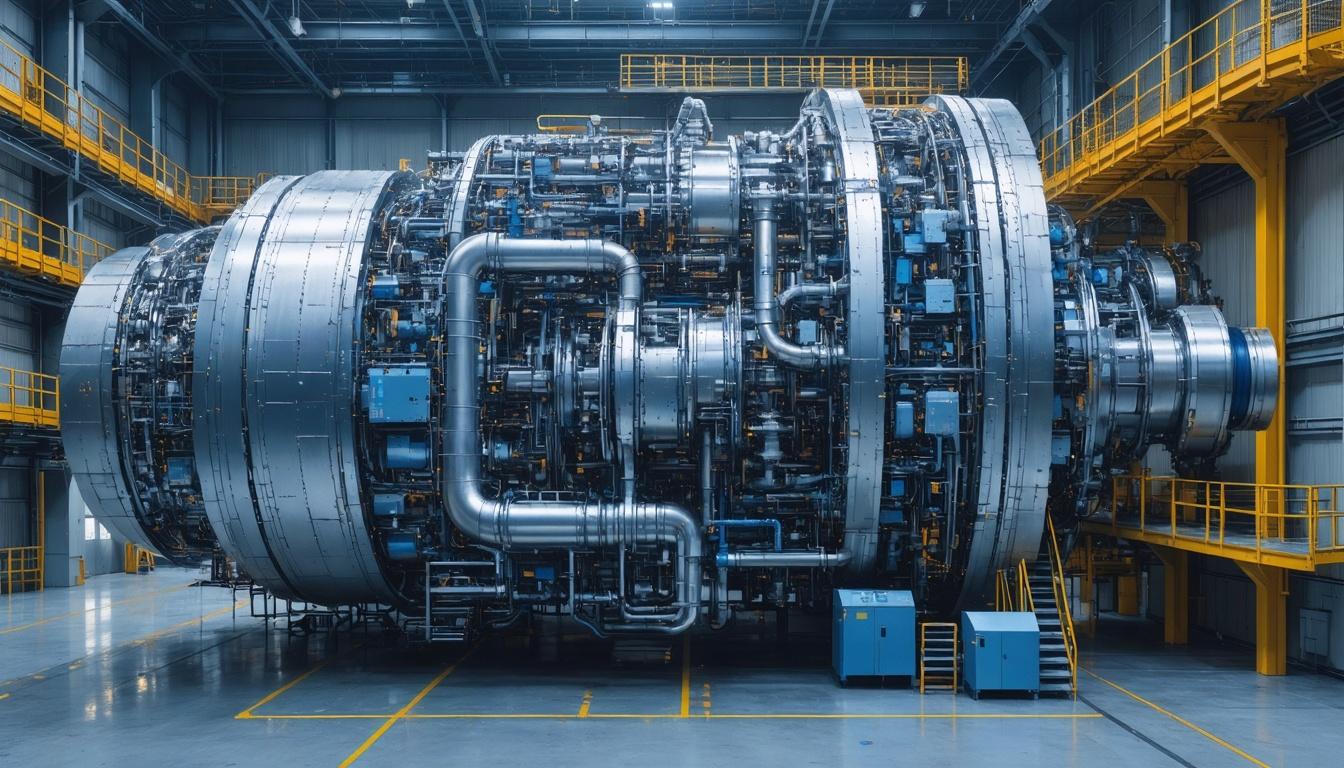

*this image is generated using AI for illustrative purposes only.
ASML Holding NV (NASDAQ: ASML) shares declined 5.58% to $1659.10 on Monday, marking its steepest single-day drop since early June, following reports that China has commenced mass production of its own immersion deep ultraviolet (DUV) lithography machines. The development poses a strategic challenge to ASML’s market position in China, where it previously held a dominant share of advanced semiconductor equipment sales before export restrictions limited access to its most advanced extreme ultraviolet (EUV) technology.
According to Reuters, citing The Information, a state-backed Chinese manufacturer has entered production of domestically developed immersion DUV systems. While the specific company name was withheld due to sensitivity, deliveries are expected to reach some of China’s most prominent chipmakers before the end of the year. This milestone is significant because immersion DUV systems represent the most capable lithography tools Chinese manufacturers can still legally obtain, given that US export controls have barred them from accessing ASML’s more advanced EUV technology.
Strategic Implications for ASML
The emergence of a homegrown alternative provides Chinese chipmakers with a fallback option that does not depend on foreign suppliers. This shift occurs at a critical juncture, as Washington weighs further tightening of restrictions on lithography equipment sales and servicing in China. Although the new domestic systems may require further refinement to match ASML’s throughput and consistency, their availability reduces reliance on Western technology and could erode ASML’s long-term revenue potential in the region.
Technical Analysis and Price Action
From a technical perspective, ASML’s stock appears to be under short-term pressure rather than experiencing a complete trend failure. The shares are trading 7.9% below their 20-day simple moving average (SMA) and 5.4% below their 50-day SMA. However, the stock remains 4.6% above its 100-day SMA and 19.6% above its 200-day SMA, suggesting that long-term demand persists while short-term traders exercise caution.
Key Technical Levels
| Level | Value | Significance |
|---|---|---|
| Resistance | $1959.00 | Round-number pivot near 52-week high zone |
| Support | $1441.50 | Prior buyer-defense area near 200-day trend |
Momentum indicators reflect fading upside pressure. The Moving Average Convergence Divergence (MACD) sits below its signal line with a negative histogram, indicating that rallies may struggle until momentum reclaims its baseline. The stock recently posted a swing high in June near the 52-week high zone and a swing low in May, with this latest decline following a failed breakout attempt in June. The moving-average stack remains constructive, with the 20-day SMA above the 50-day and the 50-day above the 200-day, leaving investors to determine whether this pullback is a routine reset or the early stage of a deeper trend shift.

How might ASML adjust its pricing or service strategies in China to retain market share against the newly emerging domestic DUV competitors?
What specific technical gaps remain between Chinese immersion DUV systems and ASML's offerings, and how long might it take for domestic manufacturers to close them?
Could this development accelerate Washington's timeline for imposing stricter export controls on older-generation lithography equipment to China?
 16
16




 Access 50+ Readymade Screeners
  Use 200+ Custom Filters
  Get Full Market Insights





