

AMD acquires World Labs for $8.2 billion to expand AI ecosystem


- AMD agreed to acquire World Labs for $8.2 billion in stock to expand into spatial intelligence and simulation technologies.
- Shares rose 1.4% in premarket to $620.30, with YTD gains nearing 200% as the company briefly crossed the $1 trillion market cap threshold.
- Analysts maintain a Buy consensus with an average price target of $618.84, led by recent upgrades from StoneX and Rosenblatt.
- The acquisition complements prior deals for ZT Systems and Silo AI, signaling a shift toward building complete AI systems rather than just chips.


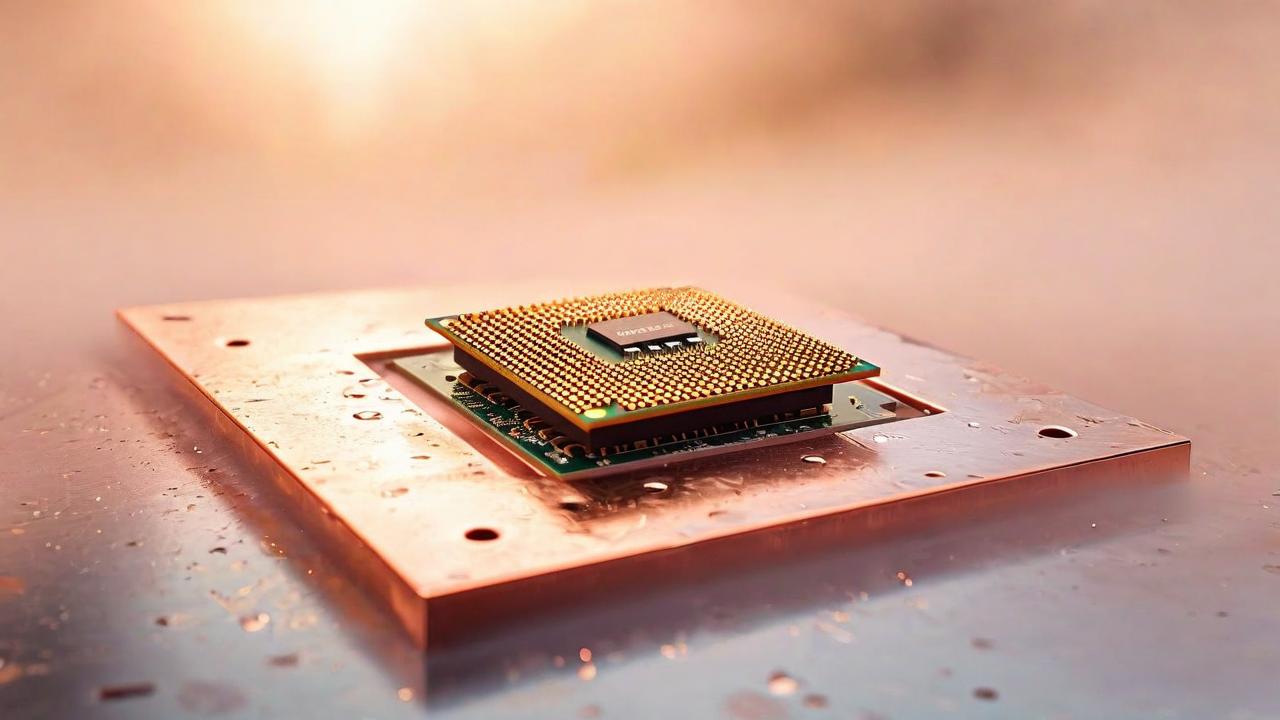
*this image is generated using AI for illustrative purposes only.
Advanced Micro Devices Inc. (NASDAQ: AMD) agreed to acquire World Labs for $8.2 billion in stock, a move designed to expand its artificial intelligence ecosystem beyond traditional chipmaking into spatial intelligence and simulation technologies.
The acquisition grants AMD access to frontier-model research capabilities that can generate and simulate 3D environments for robotics and autonomous systems. This strategic pivot aligns with CEO Lisa Su’s vision of building complete systems rather than just processors, a thesis supported by the stock’s recent surge toward the $1 trillion market capitalization milestone.
Strategic Acquisition and Leadership
World Labs founder Fei-Fei Li will join AMD as executive vice president and chief scientist. Li stated that the combination could "accelerate the flywheel between software and hardware development." Su emphasized that closer access to end-to-end research helps AMD anticipate computing requirements, noting, "The more you understand end to end, the better system you are going to build."
This deal follows AMD’s previous acquisitions of ZT Systems for $4.9 billion and Silo AI for $665 million, alongside an announced deal for specialized chip company Taalas. These moves signal a broader expansion into complete computing systems, networking equipment, and software stacks to compete more effectively with NVIDIA Corp. (NASDAQ: NVDA).
Agentic AI and Inference Demand
The shift from AI training toward inference and agentic workloads is emerging as a key growth driver. CNBC’s Jim Cramer noted that these workloads require increased CPU processing, supporting AMD’s EPYC franchise. While Cramer views NVIDIA as the leading AI-chip supplier, he believes demand can support multiple vendors and that AMD’s products are increasingly competitive.
AMD has deepened ties with major AI customers through significant commitments:
- Meta Platforms Inc. (NASDAQ: META): Chip agreements include potential equity arrangements; Meta’s Muse app has seen rapid consumer adoption.
- OpenAI: Chip agreements include potential equity arrangements.
- Anthropic: AMD agreed to invest up to $5 billion, with Anthropic committing to buy tens of billions of dollars in AMD data-center chips.
Market Performance and Technicals
AMD shares gained almost 30% in September and nearly 200% year-to-date, briefly pushing the company above a $1 trillion market value. In Thursday premarket trading, shares rose 1.4% to $620.30, close to the 52-week high of $639. The stock remains in a strong uptrend, trading 12.1% above its 20-day simple moving average and 66.3% above its 200-day SMA.
| Metric | Current Value | Change/Status |
|---|---|---|
| Stock Price (Premarket) | $620.30 | +1.4% |
| YTD Gain | ~200% | Strong Momentum |
| P/E Ratio | 156.1 | Premium Valuation |
| Avg Price Forecast | $618.84 | Buy Consensus |
Analyst sentiment remains bullish despite the premium valuation. Recent actions include:
- StoneX: Maintained Buy rating with a $685 price forecast on September 29.
- Rosenblatt: Maintained Buy rating with a $700 price forecast on September 29.
- Bank of America Securities: Maintained Buy rating and raised price forecast to $720 on September 25.
ETF Exposure and Sector Context
AMD carries significant weight in major sector funds, meaning large ETF inflows or outflows can impact its share price. It represents 8.74% of the iShares Semiconductor ETF (NASDAQ: SOXX), 8.51% of the Invesco AI and Next Gen Software ETF (NYSE: IGPT), and 6.79% of the First Trust Nasdaq Semiconductor ETF (NASDAQ: FTXL).
The broader semiconductor sector showed strength, with Nasdaq futures gaining 0.37% and S&P 500 futures rising 0.11%. However, macro headwinds persist, with rising Treasury yields posing a risk to high-multiple growth stocks. The 10-year Treasury yield recently hit 5.2%, its highest since 2007, while the 30-year yield reached 5.53%.
What the Numbers Show
The $8.2 billion World Labs acquisition represents approximately 71% of the combined value of AMD’s prior major acquisitions ($4.9 billion for ZT Systems and $665 million for Silo AI). This disproportionate allocation of capital highlights a strategic shift from hardware consolidation to acquiring specialized intellectual property in spatial intelligence. Furthermore, the divergence between AMD’s momentum (YTD +200%) and its valuation (P/E 156.1) indicates that investors are pricing in sustained structural growth from agentic AI and inference workloads, rather than cyclical recovery.

How might the integration of World Labs' spatial intelligence capabilities alter AMD's competitive positioning against NVIDIA in the robotics and autonomous systems markets?
What are the potential dilution impacts on AMD shareholders given the all-stock nature of the $8.2 billion World Labs acquisition?
Will the rising 10-year Treasury yield near 5.2% trigger a valuation correction for AMD's high P/E ratio of 156.1 despite its strong momentum?
 16
16





 Access 50+ Readymade Screeners
  Use 200+ Custom Filters
  Get Full Market Insights





