

AMD CTO sees no AI demand slowdown, shifts focus to inference


- AMD CTO Mark Papermaster states AI adoption is in early stages with no demand slowdown expected
- Computing mix shifting from training to inference, potentially moving CPU-to-GPU ratio closer to 1:1
- Company plans to launch AI rack-level integration later this year to offer complete computing systems
- Stock rose 0.95% to $550.25, trading above all major moving averages with improved momentum

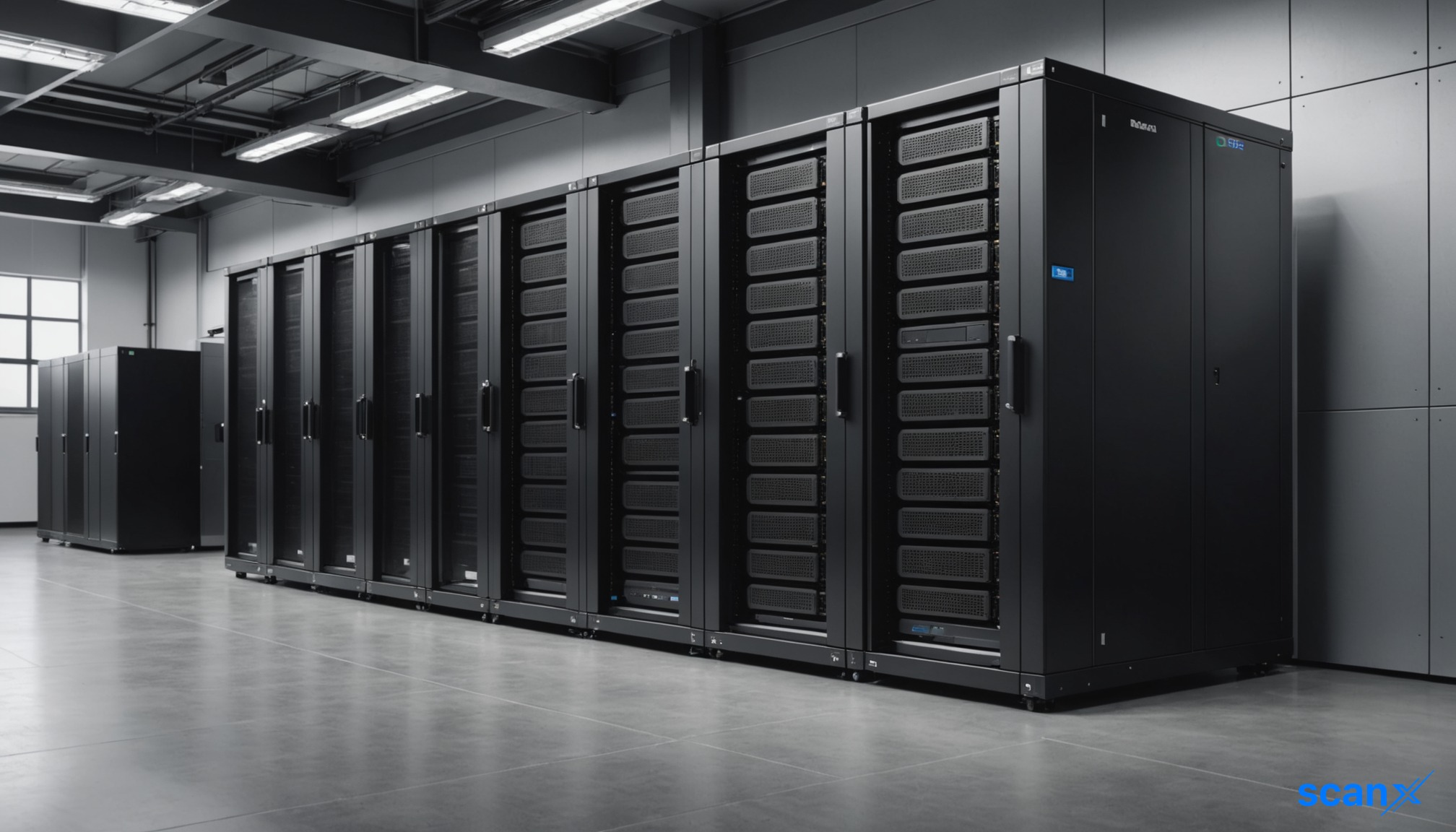

*this image is generated using AI for illustrative purposes only.
Advanced Micro Devices Inc. (NASDAQ: AMD) stock rose 0.95% to $550.25 in Friday premarket trading. Chief Technology Officer Mark Papermaster stated that artificial intelligence adoption remains in its early stages, with no expected slowdown in overall demand despite potential cost controls by businesses.
AI Workload Evolution
Papermaster indicated that the computing mix is changing as AI moves from training toward inference and real-world applications. He noted that for some AI workloads, the CPU-to-GPU ratio could shift closer to one-to-one, compared to earlier systems that typically used one CPU for every eight GPUs. Established AI workloads are also expected to move toward on-premise data centers and AI-enabled PCs as companies seek to lower costs.
The company highlighted agentic AI as a growth opportunity. Unlike applications focused on individual tasks, agentic systems can connect multiple tasks and reason across broader workflows, potentially delivering significant productivity gains.
Strategic Expansion
AMD is expanding from individual processors into complete computing systems. The company plans to introduce AI rack-level integration later this year, combining computing hardware with software and networking capabilities. Papermaster described this as a transformation from being a computer chip provider to a solution provider.
What the Numbers Show
The strategic pivot toward integrated solutions aligns with the technical shift in hardware requirements. As the CPU-to-GPU ratio moves toward parity (1:1) from previous configurations (1:8), AMD’s dual-core competency in both CPUs and GPUs becomes more critical than for competitors focused primarily on accelerators. This structural change supports the company’s push into full-stack rack-level integration rather than standalone chip sales.
Market Position
Technical indicators show the stock remains well above major moving averages. At $550.25, AMD is 13.4% above its 20-day simple moving average of $486.23, 11.3% above its 50-day SMA of $495.58, and 56.3% above its 200-day SMA of $352.92. Momentum has improved, with the MACD above its signal line and a positive histogram.
Resistance sits near $561.50, while support is near $463. The stock carries a Buy consensus rating with an average price forecast of $604. Piper Sandler initiated coverage with an Overweight rating and a $600 target on Sept. 10. Raymond James upgraded AMD to Strong Buy with a $641 target on Aug. 25. BMO Capital initiated coverage with an Outperform rating and a $550 target on Aug. 21.
ETF Exposure
AMD holds significant weightings in key semiconductor ETFs:
- iShares Semiconductor ETF (NASDAQ: SOXX): 8.22%
- First Trust Nasdaq Semiconductor ETF (NASDAQ: FTXL): 6.55%
- Pacer Data and Digital Revolution ETF (NYSE: TRFK): 6.52%
These positions provide meaningful exposure to broader semiconductor and technology ETF flows.

How will AMD's shift to rack-level integration impact its gross margins compared to traditional standalone chip sales?
What specific competitive advantages does AMD's dual CPU/GPU competency offer in the emerging 1:1 ratio inference market versus NVIDIA?
How might the migration of AI workloads to on-premise data centers and PCs affect the growth trajectory of cloud service providers' AI infrastructure spending?
 20
20









 Access 50+ Readymade Screeners
  Use 200+ Custom Filters
  Get Full Market Insights





