

Ambuja Cements Q4 FY26 Earnings Call: Record Volumes, Cost Peak, and Strategic Reset


Ambuja Cements reported its highest-ever annual sales volume of 73.7 million tonnes for FY26, with normalized EBITDA of INR6,539 crores and PAT of INR2,647 crores. Q4 FY26 production costs peaked at INR4,500 per tonne due to West Asia conflict-driven packing cost escalations, higher freight, and acquired asset maintenance expenses, with management targeting a full-year FY27 average cost of INR4,250 per tonne. The company outlined a strategic reset focused on operational discipline, SLA-based plant management, logistics recalibration, and a revised long-term capacity timeline of FY30 for the 155 million tonne target.


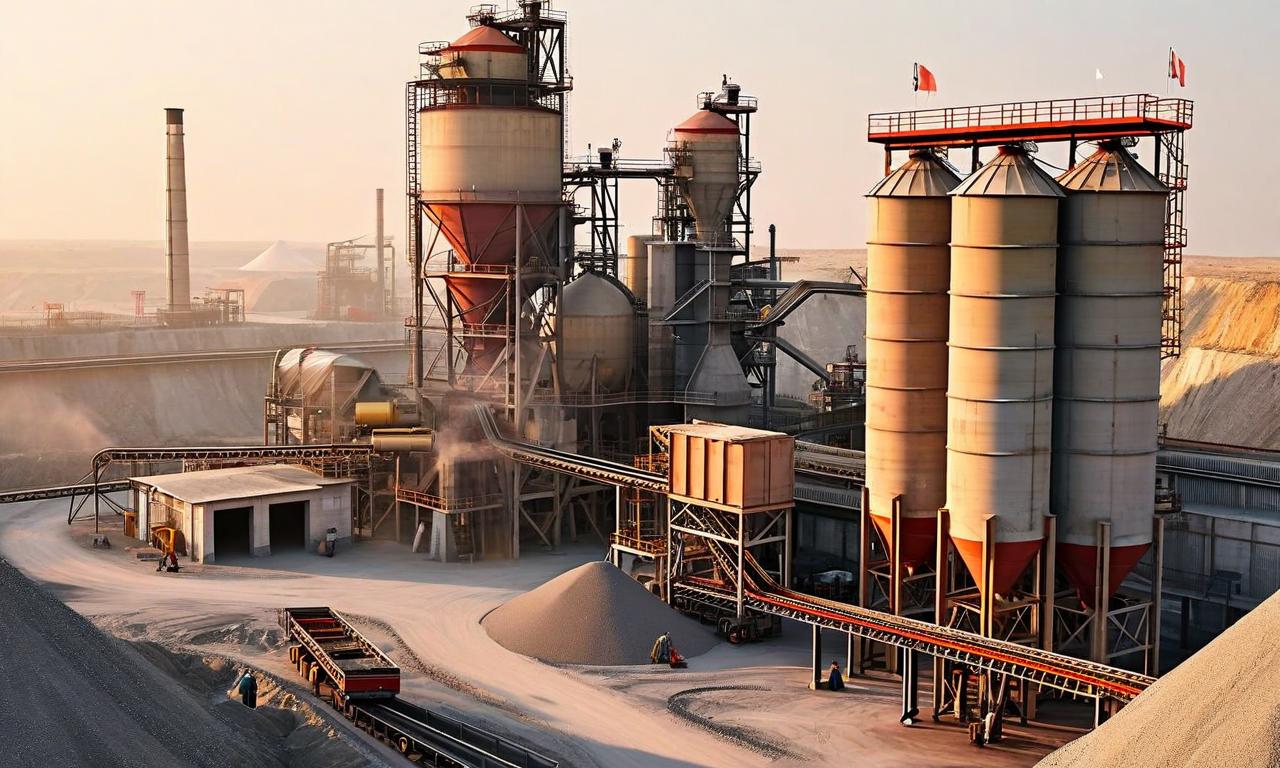
*this image is generated using AI for illustrative purposes only.
The Q4 FY26 earnings call for Ambuja Cements Limited, ACC Ltd, and Orient Cement, hosted by JM Financial on May 04, 2026, provided a comprehensive review of the group's financial performance, strategic priorities, and operational challenges for the quarter and full financial year ended March 31, 2026. The call featured key management commentary from Director Mr. Karan Adani, CEO Mr. Vinod Bahety, and CFO Mr. Rohit Soni of Ambuja Cements, along with Head of Investor Relations Mr. Deepak Balwani.
FY26 Annual Performance: Record Volumes Amid Sectoral Headwinds
FY26 was characterized by industry consolidation, GST 2.0 reforms, extended adverse weather conditions, global geopolitical factors, and state elections, all of which impacted demand across the cement sector. Against this backdrop, Ambuja Cements delivered what management described as a resilient performance, achieving its highest-ever annual sales volume. The company confirmed it remains debt-free with the highest credit rating, and annual volumes grew well ahead of the industry.
The following table summarizes the key financial and operational metrics for FY26:
| Metric: | FY26 | Change (YoY) |
|---|---|---|
| Annual Sales Volume: | 73.7 million tonnes | +16% |
| Normalized EBITDA: | INR6,539 crores | +31% |
| EBITDA per Metric Tonne: | INR887 | +12% |
| PAT: | INR2,647 crores | +17% |
| Cement Capacity: | 109 million tonnes | — |
| Premium Cement (% of Trade Sales): | 35% | — |
| Trade Sales Volume Growth: | 10% | — |
The company commissioned 10.7 million tonnes of new grinding capacity at Marwar, Farakka, Sankrail, Sindri, and Krishnapatnam, along with additional clinker capacity of 7 million tonnes at Jodhpur and Bhatapara.
Q4 FY26 Cost Structure: Pressures Peak at INR4,500 per Tonne
Q4 FY26 saw production costs reach INR4,500 per tonne, which management identified as a peak level. The normalized cost for the quarter was approximately INR4,250 per tonne, with an additional INR250 per tonne attributed to cost escalations—primarily driven by the West Asia conflict's impact on packing bag prices in the month of March. Management noted that the month of March recorded a normalized cost of INR4,100 per tonne, before the impact of the INR250 per tonne escalation.
Key cost drivers cited by management for Q4 FY26 included:
- Higher freight costs due to increased primary and secondary sale lead distances
- Additional goods tax in certain states, including Himachal Pradesh
- Higher packing costs due to supply disruptions from the West Asia conflict in March
- Higher fuel costs from elevated heat consumption, particularly at acquired assets
- Increased branding and sales promotion costs linked to the accelerated push toward trade and premium cement sales
- Higher repairs and maintenance costs at acquired assets, especially Penna
- Lower government incentives due to revised GST rates and exhaustion of incentive periods at certain plants
For the full year FY26, the company reported an average cost of INR4,400 per tonne, approximately 10% above its own internal target. Branding and advertisement costs for full year FY26 were reported at approximately INR70 per tonne. Management confirmed that Q1 FY27 costs are expected to remain approximately flat at the INR4,500 per tonne level, with the cost reduction journey expected to accelerate over the remaining three quarters of FY27. On cement pricing, management noted a modest improvement of approximately INR10 per bag for the March quarter, with select geographies seeing increases of INR15 to INR20 per bag, and April pricing trending approximately INR10 per bag above March levels. The company's realization was reported at INR254 per bag in Q4, broadly flat compared to the December quarter.
Acquired Assets: Utilization Challenges at Penna and Sanghi
The turnaround of acquired assets—Penna Cement and Sanghi Industries—took longer than anticipated, with both plants recording below-target utilization levels and higher-than-expected maintenance capital expenditure requirements. Penna's geographic concentration in South India, a region that experienced significant demand weakness in Q4 FY26, contributed to higher shutdowns and breakdowns during the quarter. Management acknowledged that a significant portion of previously deferred maintenance work had to be undertaken during the quarter. Together, Penna and Sanghi hold 19 million tonnes of capacity, and management targets a utilization improvement of at least 5% to 10% for these assets in FY27. For Sanghi, management clarified that the base ramp-up model is anchored on marine infrastructure and road movement, with seven vessels ordered for progressive delivery, rather than being dependent on the Naliya railway line, which is treated as an add-on.
| Asset: | Utilization (FY26) | FY27 Target Utilization |
|---|---|---|
| Sanghi Industries: | ~57% (cement capacity) | 65%–70% |
| Penna Cement: | ~46% | 55%–60% |
| Orient Cement: | Full capacity | Full capacity |
| Ambuja & ACC (existing): | — | 75%–80% |
| Ambuja Consolidated (overall): | — | ~70%–75% |
Management also noted that when EBITDA of Ambuja and ACC is assessed excluding acquired assets, the normalized EBITDA per tonne is at least INR800, highlighting that the drag is concentrated in the recently acquired plants.
Portfolio Integration and Balance Sheet Updates
During FY26, Ambuja completed the amalgamation of Sanghi Industries and Penna Cement with Ambuja Cements. The amalgamation of ACC and Orient Cement remains under process as part of the One Cement platform initiative. Management highlighted that the consolidated balance sheet now reflects the finalized purchase price allocation for Orient Cement and Penna Cement, previously reported on a provisional basis. This resulted in marginal changes to the balance sheet relating to the classification of goodwill and other intangible assets, as well as changes in depreciation and deferred tax accounting in the profit and loss statement.
Management also clarified that FY25 and FY26 financials are not directly comparable on a like-for-like basis, as FY25 does not include Orient Cement, while Penna was consolidated from August 16, 2025 (7.5 months in FY25 versus 12 months in FY26), and Orient Cement was included for only 11 months in FY26. On working capital, core working capital improved year-on-year from 30 days to 20 days. ACC's negative operating cash flows were attributed to receivables from Ambuja under the Master Service Agreement (MSA), which management indicated would be offset against an Inter-Corporate Deposit (ICD) in the coming quarter following shareholder approval.
Capacity Expansion and Capital Expenditure: A Calibrated Approach
Management outlined a recalibrated capital expenditure and capacity expansion strategy, emphasizing disciplined capital allocation and optimization of existing assets before pursuing new greenfield projects. Mr. Karan Adani stated that the target project IRR has been set at 18%, and confirmed that inorganic opportunities continue to be evaluated but organic development and greenfield expansion remain the primary focus. On the capex breakdown, approximately INR4 billion is already under execution, covering capacity additions, waste heat recovery systems (WHRS), and fly ash transportation infrastructure, with the balance allocated to debottlenecking and maintenance capex.
| Parameter: | Details |
|---|---|
| Current Clinker Capacity: | 69 million tonnes |
| Upcoming Clinker Addition (Maratha): | 4 million tonnes |
| Upcoming Clinker Addition (Mundra): | 2 million tonnes |
| Upcoming Clinker Addition (Assam): | 2 million tonnes |
| Target Cement Capacity by end FY27: | ~119 million tonnes |
| FY26 Capex (actual): | ~INR7,500 crores |
| FY27 Capex (estimate): | INR6,000–INR6,500 crores |
| Target Project IRR: | 18% |
The previously communicated long-term capacity target of 155 million tonnes has been deferred in terms of timeline, with FY30 now cited as a revised reference point. The 15 million tonnes debottlenecking program across existing assets was confirmed to remain in place, subject to timing adjustments based on return on investment considerations. Mr. Karan Adani acknowledged that project delays were partly attributable to contractor selection, absence of a fully formed project team at the time of acquisition, and projects being initiated without complete engineering in place—issues the management stated are being addressed. The Mundra and Assam clinker additions are targeted for completion within approximately 24 to 28 months.
On logistics recalibration, management noted that grinding units are being relocated closer to key markets—particularly in North UP, Bihar, Southern Gujarat, and Maharashtra—to reduce logistics costs. As an example, management cited that the Bihar market is currently being served through Chhattisgarh, which is not optimal, and that a dedicated grinding unit in Bihar is being planned, with Chhattisgarh repositioned as a clinker-only facility. Sanghi is being progressively repositioned as a predominantly clinker-focused facility over the next three years, with new cement capacity planned on the coastal Gujarat region, including Dahej Line 2.
Cost Reduction Roadmap and Strategic Priorities for FY27
Management provided detailed cost reduction guidance and strategic priorities for FY27 and beyond. Mr. Karan Adani confirmed that INR500 per tonne of cumulative cost reduction is targeted over the next two years, while reaffirming that the longer-term cost target of INR3,650 per tonne remains a goal, with the INR500 figure representing the committed near-term reduction.
| Priority: | Details |
|---|---|
| FY27 Cost Target: | INR4,250 per tonne (full-year average) |
| FY28 Cost Target: | Further reduction of INR250 per tonne |
| Green Power Share (Q4 FY26): | ~32% (vs. 26% previously) |
| Premium Cement (Q4 FY26): | 36% of trade sales |
| Trade Sales Share (Q4 FY26): | 74% (vs. 68% in Q3 FY25) |
| Clinker Factor (Q4 FY26): | 65% (vs. 67% in Q3 FY25) |
| RMC EBITDA (Q4 FY26): | INR102 crores |
| RMC EBITDA (Full Year FY26): | ~INR300 crores |
| FY27 Volume Target: | |
| Industry Growth Estimate (FY27): | ~5%–5.5% |
Key savings drivers identified include fly ash raw material cost reduction pending railway infrastructure completion, further improvement in green power share, and heat consumption efficiency gains. Management noted a savings potential of INR150 to INR200 per tonne from raw material and green energy components alone. On premiumization, the price gap between the base product and the super premium cement variant is approximately INR50 to INR55 per bag, and INR20 to INR25 per bag for the standard premium variant. Management indicated that a 36% share of premium cement in trade sales is a sustainable level to target going forward.
Mr. Karan Adani outlined five key operational priorities for the reset: discipline on L1 plants delivering to their respective markets; discipline on trade versus non-trade sales mix; reduction of raw material and energy consumption costs; improvement of channel network to support sales growth; and stabilization and reliability improvement at acquired assets. Management also highlighted the role of Service Level Agreement (SLA)-based contracts with external partners as a mechanism to improve plant efficiency, reduce legacy union-related issues, and drive cost discipline at the plant level. Mr. Karan Adani acknowledged that the company's performance had not met shareholder commitments and stated that the strategic reset is aimed at course-correcting execution before accelerating further capital investment.
Historical Stock Returns for ACC
| 1 Day | 5 Days | 1 Month | 6 Months | 1 Year | 5 Years |
|---|---|---|---|---|---|
| -1.77% | -5.48% | -9.46% | -5.72% | -35.18% | -47.54% |

Given Ambuja's deferred 155 million tonne capacity timeline to FY30, how might accelerating industry consolidation among competitors like UltraTech and Adani affect the company's market share ambitions if execution delays persist?
With Penna Cement operating at only 46% utilization in a structurally weak South India market, what demand recovery triggers or strategic pivots could realistically push utilization to the 55-60% target within FY27?
As Ambuja targets INR500 per tonne cost reduction over two years while competitors also pursue efficiency gains, could industry-wide cost normalization erode the pricing power needed to sustain the INR887 EBITDA per tonne benchmark?




 Access Market Heat-map & Insights
  Create, Save & Share your Screener
  Use 200+ Screening Filters





