

Amazon says its data centers use 86% less water than industry average


Amazon.com Inc. reported its data centers used 2.5 billion gallons of water in 2025, achieving an efficiency rate of 0.12 liters per kilowatt-hour. This figure is 86% more efficient than the industry average of 0.84 liters per kilowatt-hour. The efficiency advantage highlights a critical resource constraint in the expanding AI infrastructure sector.



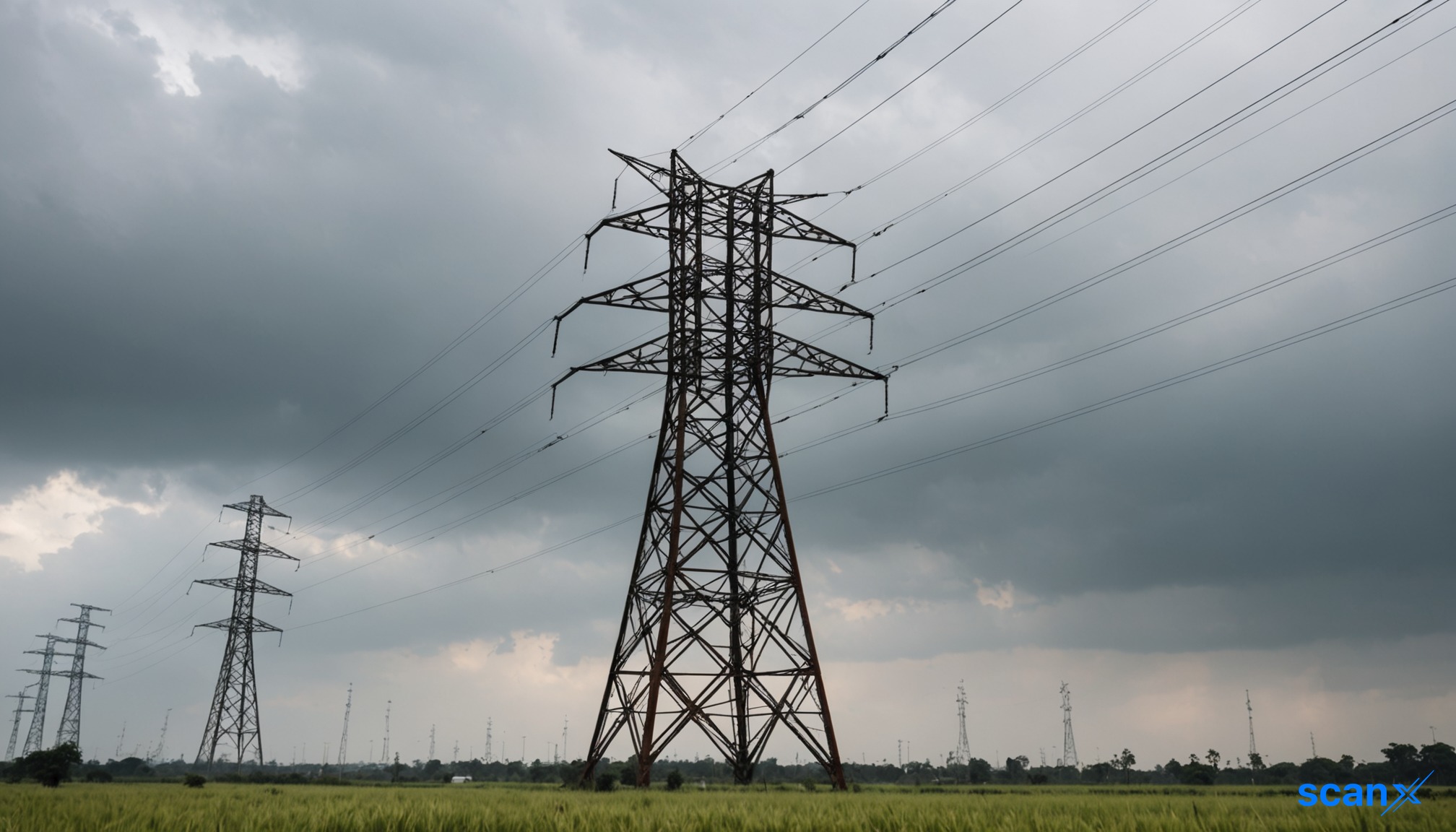
*this image is generated using AI for illustrative purposes only.
Artificial intelligence has created a new arms race among technology companies. Most investors focus on chips, power and data centers. But another resource is quickly emerging as a critical battleground: water. Amazon.com Inc. revealed this week that its data centers consumed approximately 2.5 billion gallons of water in 2025, while achieving what the company says is a water usage efficiency rate of just 0.12 liters per kilowatt-hour. According to Amazon, that compares with an industry average of 0.84 liters per kilowatt-hour, noted I/O Fund's Lead Tech Analyst Beth Kindig. The figures suggest Amazon's facilities use roughly 86% less water than the industry benchmark, highlighting a growing competitive advantage that could become increasingly important as artificial intelligence infrastructure expands.
AI’s Next Resource Constraint
For the past two years, the AI conversation has centered on NVIDIA Corp., graphics processors and soaring demand for computing power. More recently, investors have shifted their attention to electricity. Technology giants, including Amazon, Microsoft Corp., Alphabet Inc., Meta Platforms Inc. and Oracle Corp. have collectively committed hundreds of billions of dollars toward AI infrastructure, while racing to secure access to power generation and grid capacity.
Yet water may be becoming just as important. Large data centers rely on sophisticated cooling systems to keep servers operating efficiently. As AI clusters grow larger and more power-hungry, cooling requirements are increasing as well. That has drawn growing scrutiny from regulators, environmental groups and local communities concerned about water availability.
Why Amazon’s Numbers Matter
Amazon's disclosure arrives at a time when investors are paying closer attention to the environmental footprint of artificial intelligence. While Amazon's use of approximately 2.5 billion gallons may sound enormous, the company argues its facilities are significantly more efficient than industry averages when measured by the amount of computing power delivered.
If accurate, the comparison suggests Amazon may have built an advantage that extends beyond cloud market share and AI chips. Efficient cooling systems can lower operating costs, reduce environmental concerns and potentially make it easier to win approval for future data center projects. In an industry increasingly constrained by physical resources, efficiency may become just as valuable as scale.
| Metric | Amazon | Industry Average |
|---|---|---|
| Water Usage Efficiency (liters/kWh) | 0.12 | 0.84 |
| Total Water Consumption (2025) | 2.5 billion gallons | N/A |
The AI Race Is Expanding Beyond Chips
For investors, the bigger takeaway may be that the AI infrastructure story continues to evolve. First, it was chips. Then it was power. Now water is entering the conversation. Companies capable of delivering AI computing while minimizing electricity consumption, cooling requirements and water usage could gain an edge as competition intensifies.
That means investors evaluating AI winners may eventually need to look beyond Nvidia and cloud revenues. The next competitive battleground could be the resources required to keep those AI systems running. And according to Amazon's latest figures, water efficiency is becoming one of them.

Will water scarcity force tech giants to relocate future data centers to regions with more abundant water resources?
How might increased regulatory scrutiny on water usage impact the expansion timelines for AI infrastructure projects?
Could water efficiency metrics become a standard disclosure requirement for cloud providers similar to carbon emissions reporting?
 18
18














 Create Custom Screeners
  Access 200+ Pre-built Filters
  Use 50+ Readymade Screener





