

ABB launches Infinitus DC portfolio to boost AI data center efficiency


- ABB launches Infinitus, the first integrated source-to-rack DC portfolio for AI data centers
- DC distribution offers >5% efficiency gains, adding 25 MW capacity for a 500 MW facility
- Potential annual revenue increase exceeds US $300 million for large-scale data centers
- Solution addresses next-gen AI chip demand of 1 MW per rack, up from 200 kW today
- First DC-native facilities using the portfolio expected within two to three years

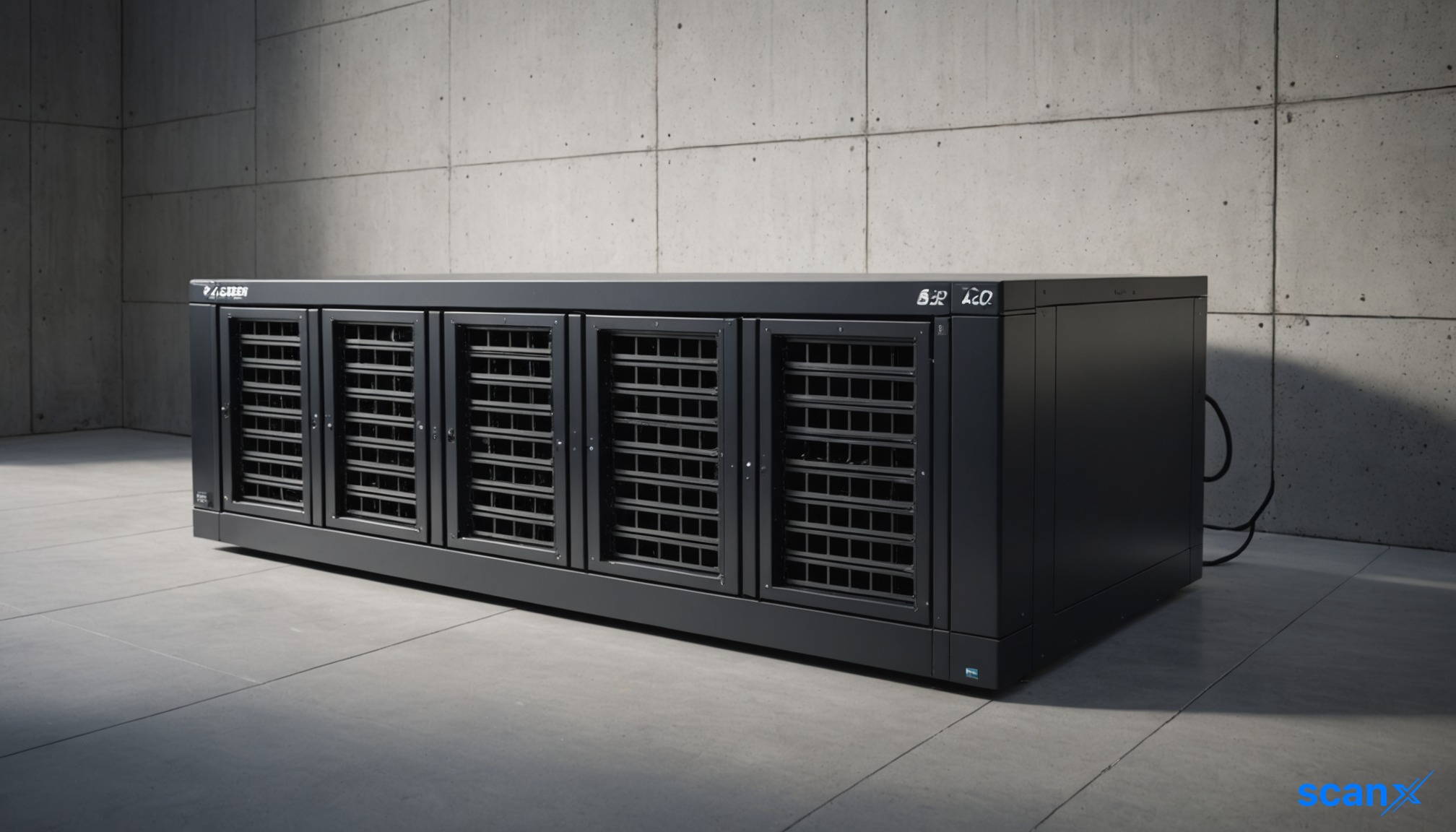

*this image is generated using AI for illustrative purposes only.
ABB has launched Infinitus, the industry’s first integrated source-to-rack direct current (DC) portfolio designed to manage rising power demands in AI data centers. The launch targets improved energy efficiency and reduced physical footprint for next-generation computing infrastructure.
The International Energy Agency expects global data center electricity demand to more than double by 2030. ABB estimates that 25-40% of new capacity installed by then could use DC distribution. Next-generation AI chips are expected to draw 1 MW per rack, up from today’s almost 200 kW. This shift requires architectures that support higher performance while driving efficiency.
Efficiency Gains and Economic Impact
ABB’s recent report with BCG calculated that DC distribution delivers energy efficiency gains of more than 5%. For a 500 MW data center, this gain translates to 25 MW more power for revenue-generating IT loads. The potential additional revenue is estimated at more than US $300 million per year. Energy savings equivalent to powering Washington D.C. for almost a full week would be realized annually.
Giampiero Frisio, President of ABB’s Electrification business area, stated that ABB has pioneered DC technology for more than 25 years. The company is working with chipmakers and hyperscale customers to set standards for high-efficiency DC architectures.
Portfolio Components
Infinitus includes five key building blocks:
| Component | Function |
|---|---|
| Medium Voltage Powertrains | Deliver stable, resilient power from grid or on-site generation |
| DC Sources and Power Quality | Convert AC to DC, removing conversion from white space |
| DC Power Distribution | Deliver power safely, enabling higher power density in smaller footprint |
| DC Power Protection | Protect operators and hardware from DC overcurrents |
| Cooling Optimization | Reduce energy consumption via DC connected variable speed drives |
At its core is ABB’s breakthrough solid-state transformer technology. The portfolio also leverages the world’s first fully IEC-certified solid-state circuit breaker and an industry-first static medium-voltage UPS.
What the Numbers Show
The economic value of the proposed efficiency gains is substantial relative to the operational scale. A 5% efficiency improvement on a 500 MW facility yields 25 MW of additional capacity. This represents a 5% increase in usable power for revenue-generating loads, directly linking marginal efficiency improvements to significant top-line potential (US $300 million+ annually). This demonstrates that in high-density AI environments, incremental energy savings translate disproportionately into computational capacity and revenue rather than just cost avoidance.
Market Outlook
ABB expects other energy-intensive industries, including industrial buildings, manufacturing, renewables, and marine operations, to adopt similar transitions. First DC-native facilities using the complete Infinitus portfolio are expected to be installed and operational within two to three years. The launch extends ABB’s collaboration with NVIDIA, announced in October 2025, to develop 800 VDC power architectures for gigawatt-scale AI facilities.
Historical Stock Returns for ABB
| 1 Day | 5 Days | 1 Month | 6 Months | 1 Year | 5 Years |
|---|---|---|---|---|---|
| +0.31% | -1.73% | -3.78% | +2.50% | +35.97% | +287.36% |

How might the adoption of ABB's Infinitus portfolio impact the competitive landscape among other power infrastructure providers like Eaton or Schneider Electric?
What regulatory or safety standard hurdles must be cleared before DC distribution becomes the default architecture for new hyperscale data centers globally?
Could the shift to 800 VDC architectures accelerate the integration of on-site renewable energy sources and battery storage systems within data center campuses?











 Access 50+ Readymade Screeners
  Use 200+ Custom Filters
  Get Full Market Insights





