ABB, Nüvü supply exoplanet camera system for NASA Roman telescope

scanx
Reviewed by
Suketu GScanX News Team
Key Highlights
  • ABB and Nüvü Camēras developed the camera readout system for NASA's Roman Telescope
  • The instrument launched on August 30, 2026, to study exoplanets beyond our solar system
  • The coronagraph is 100 to 1000 times more powerful than existing space-based systems
  • The telescope offers a field of view 100 times larger than the Hubble Space Telescope
  • The contract was awarded by NASA's Jet Propulsion Laboratory in 2020
powered bylight_fuzz_icon
49655138

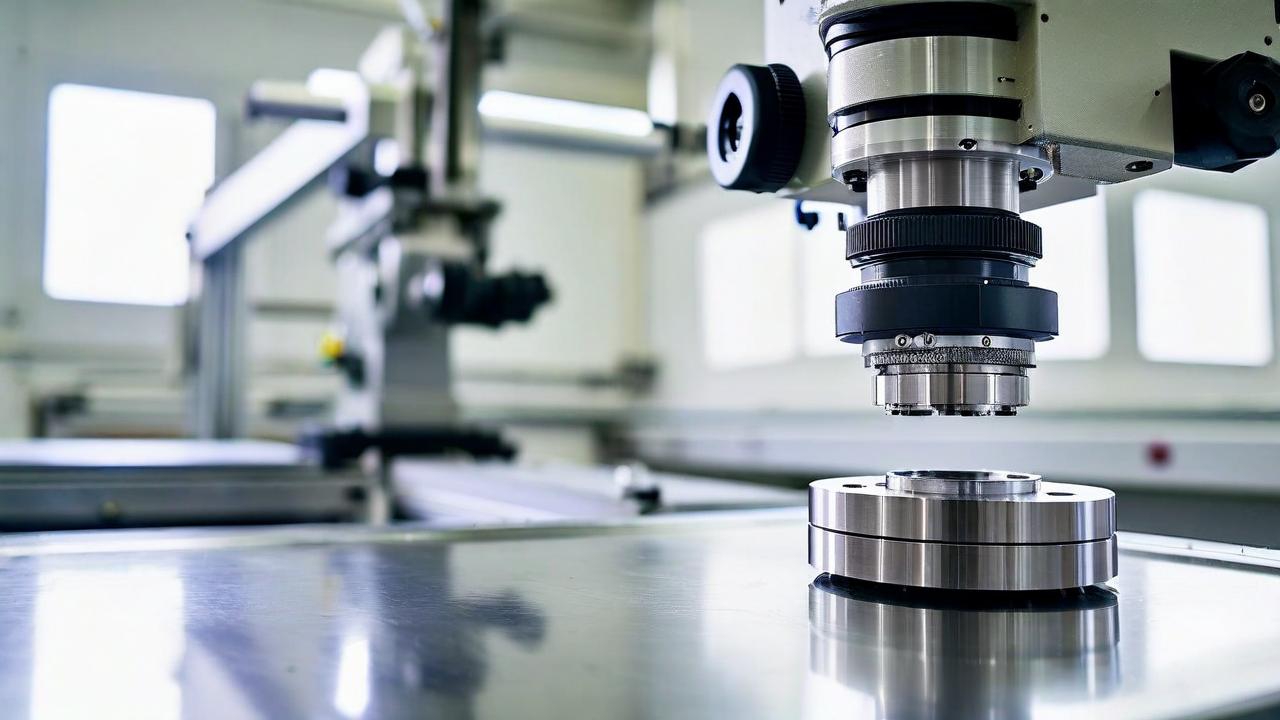
*this image is generated using AI for illustrative purposes only.

ABB and Nüvü Camēras developed the ultra-sensitive camera readout system for NASA’s Nancy Grace Roman Space Telescope. The infrared observatory launched on August 30, 2026, marking a significant milestone in deep-space imaging technology.

The Roman Coronagraph Instrument is designed to be 100 to 1000 times more powerful for imaging exoplanets than current space-based coronagraphs. This capability allows the telescope to suppress starlight and capture faint reflected light from planets orbiting distant stars. The mission aims to advance the search for other worlds and pave the way for NASA’s Habitable Worlds Observatory.

Technical Specifications

The telescope features a field of view 100 times larger than the Hubble Space Telescope. This expanded view enables scientists to survey a significantly larger portion of the sky in a single observation. The system operates at the Lagrange point L2, located roughly four times the distance between Earth and the Moon. This position allows the observatory to block light pollution from both the Earth and the Sun.

Feature Specification
Launch Date August 30, 2026
Imaging Power 100–1000x current coronagraphs
Field of View 100x larger than Hubble
Operating Location Lagrange Point L2

Engineering and Reliability

ABB engineers compressed the camera readout system into a compact unit no larger than a shoe box. The electronics are built with space-qualified components designed to withstand harsh radiation environments and cryogenic temperatures. Given the telescope’s location beyond the reach of servicing missions, the reliability of these onboard systems is critical.

Marc Corriveau, General Manager of ABB’s Measurement & Analytics division in Canada, stated that the project demonstrates the convergence of scientific ambition and engineering innovation. The technology draws on expertise from 30 years of space projects and more than 140 optical systems currently operating in orbit.

Contract Background

NASA’s Jet Propulsion Laboratory awarded ABB the contract for the exoplanet camera readout system in 2020. The development was supported by the Canadian Space Agency’s technology programs. ABB has previously contributed optical technologies to missions by the European Space Agency, the Japanese Space Agency, and commercial satellite operators including GHGSat, EarthDaily, and Hydrosat.

Historical Stock Returns for ABB

1 Day5 Days1 Month6 Months1 Year5 Years
+1.72%+2.89%+5.45%+25.78%+52.75%0.0%

How might the successful deployment of ABB's compact camera readout technology influence future contracts for space-qualified electronics in the commercial satellite sector?

What specific supply chain adjustments will ABB need to make to scale production of these cryogenic-resistant components for the upcoming Habitable Worlds Observatory?

Could the 100x larger field of view capability create new data processing bottlenecks for NASA, and how might this drive demand for advanced AI-driven astronomical data analysis tools?

ABB India Q2 Results: Orders surge 50%, revenue rises 21%

scanx
Reviewed by
Ashish TScanX News Team
Key Highlights

ABB India Limited delivered strong Q2CY26 results with a 50% YoY surge in orders and 21% revenue growth. Driven by electrification and data center demand, the company maintained healthy margins despite commodity inflation. An interim dividend of ₹90 per share was declared, backed by a ₹7,200 crore cash position.

powered bylight_fuzz_icon
47626726

*this image is generated using AI for illustrative purposes only.

ABB India Limited reported a robust performance for the second quarter of calendar year 2026 (Q2CY26), with orders surging 50% year-on-year to approximately ₹8,600 crore for the half-year period. Revenue from operations grew 21% in the quarter, supported by a strong order backlog of ₹11,900 crore. The company declared an interim dividend of ₹90 per share, reflecting its strong cash position of ₹7,200 crore. This growth underscores the accelerating demand in key sectors such as data centers, renewables, and infrastructure, positioning the firm favorably despite macroeconomic headwinds.

The earnings call, held on July 31, 2026, was led by Country Managing Director Sanjeev Sharma and Chief Financial Officer T.K. Sridhar. Management highlighted that the transition to T.K. Sridhar as Managing Director Designate, effective January 1, 2027, is underway, with a new CFO expected to be appointed soon. The company also noted a strategic expansion in manufacturing capacity, adding a second location in Nelamangala, bringing the total manufacturing sites to six. This expansion aims to support the growing demand, particularly in the electrification segment, which saw a 77% year-on-year increase in orders.

Financial Performance Highlights

ABB India’s financial results for Q2CY26 demonstrate significant growth across key metrics. The company maintained operational EBITA at 12.8%, while profit after tax (PAT) increased by 8%. The earnings per share (EPS) for the half-year stood at ₹33.61. Despite a 1 percentage point compression in EBITDA margin from 13.6% in the previous quarter to 12.6%, the company leveraged scale benefits to offset rising material costs.

Metric Value / Change
Orders (H1CY26) ₹8,600 crore (up 36% YoY)
Order Growth (Q2CY26) Up 50% YoY
Revenue Growth (Q2CY26) Up 21% YoY
Operational EBITA Margin 12.8%
Profit After Tax Growth Up 8% YoY
Interim Dividend ₹90 per share
Cash Position ₹7,200 crore

Segment-Wise Analysis

The Electrification segment emerged as the strongest growth driver, with orders up 77% year-on-year, fueled by demand from data centers, metals and mining, and infrastructure sectors. The Motion segment recorded stable growth, with revenues slightly lower due to long-gestation railway orders, though profitability remained strong at 12%. The Automation segment saw a 24% growth in orders, although revenue grew by only 7% due to cyclical nature and mix challenges. Management noted that 30% of Automation revenue came from services, helping maintain margin corridors.

What the Numbers Show

A critical observation from the filing is the divergence between ABB India’s reported order growth of 50% and the global group’s reported 82% growth. Management clarified that this discrepancy arises because Indian customers placed orders directly with ABB Group companies outside India for systems not locally available or for convenience. This includes marine and ports systems where global entities hold the primary competency. While this indicates strong overall demand for the brand in India, it highlights a structural gap in local system execution capabilities for certain high-value projects, which may limit immediate revenue recognition for the listed entity compared to the broader group.

Outlook and Challenges

Management acknowledged headwinds from elevated commodity prices, particularly copper, and forex volatility, which impacted material costs. Material cost as a percentage of revenue rose to 63% from 61% in the previous quarter. However, the company has implemented two price hikes to mitigate these impacts, with acceptance improving as customers recognize the value proposition. Looking ahead, megatrends such as electrification, automation, and grid modernization are expected to drive growth. The company anticipates that government capex and private consumption will support demand, though geopolitical uncertainties and supply chain dynamics remain factors to monitor. The strong backlog of ₹11,900 crore provides visibility for future revenue conversion, with 40% expected to be consumed in the next two quarters.

Historical Stock Returns for ABB

1 Day5 Days1 Month6 Months1 Year5 Years
+1.72%+2.89%+5.45%+25.78%+52.75%0.0%

How will the transition of T.K. Sridhar to Managing Director in January 2027 impact ABB India's strategic focus on localizing high-value system execution currently handled by global entities?

What specific measures is ABB India implementing to convert the structural gap in local system execution capabilities into domestic revenue, rather than losing orders to overseas group companies?

Given the 1 percentage point compression in EBITDA margins due to rising copper costs, will the recent price hikes be sufficient to restore margin levels to previous highs as commodity prices remain volatile?

More News on ABB

1 Year Returns:+52.75%