News Silver Isn't Cheap Gold: Understanding Key Investor Misconceptions About the Catch-Up Trade
Silver Isn't Cheap Gold: Understanding Key Investor Misconceptions About the Catch-Up Trade


Silver hit a record $109.44 per ounce, but viewing it as "cheap gold" is a fundamental error. Unlike gold's monetary function, silver has dual industrial-monetary identity with 50-60% demand from industrial uses. From 1990-2024, silver delivered 7.60% CAGR versus gold's 10.60%, with significantly higher volatility and drawdowns exceeding 50%. Silver should be treated as a cyclical risk asset with maximum 10-12% portfolio allocation, not as a defensive gold substitute.


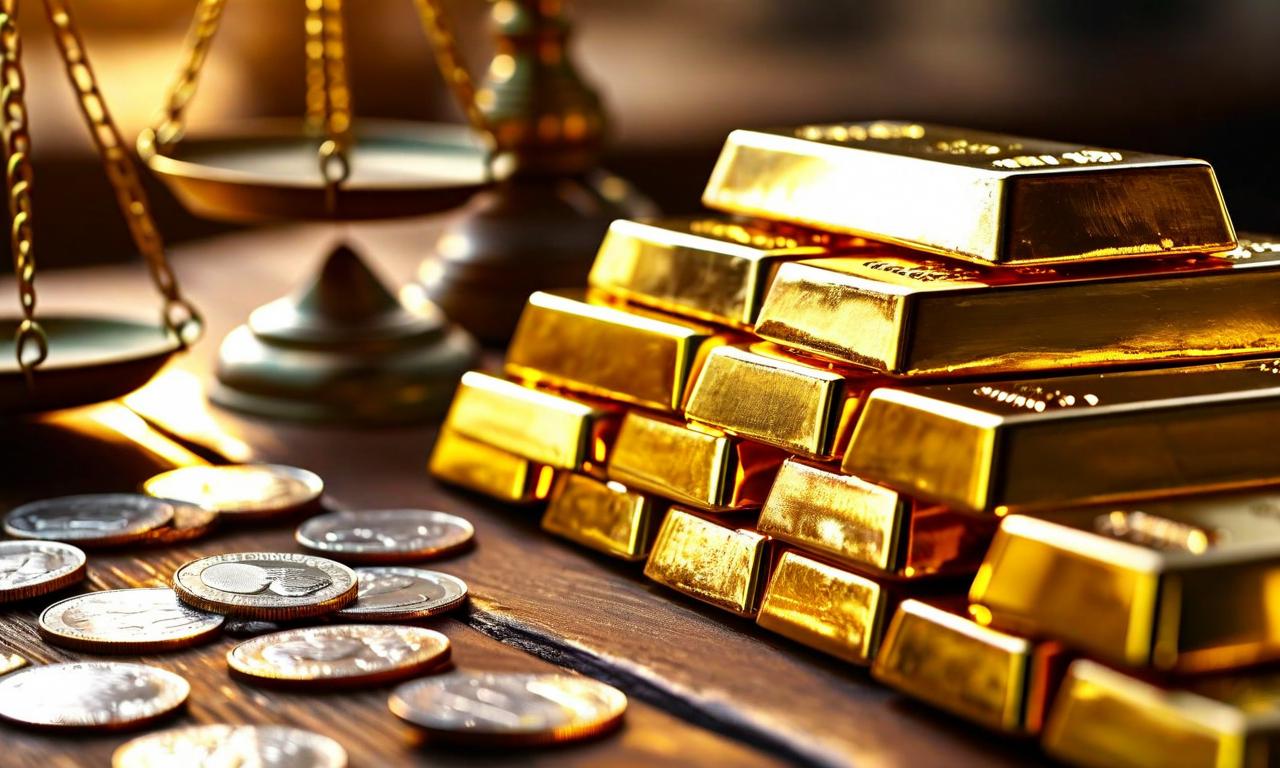
*this image is generated using AI for illustrative purposes only.
Silver recently hit a record high of $109.44 per ounce, with spot silver rising 5.79% to $108.91 per ounce on Monday, while spot gold climbed 1.98% to a record $5,081.18 per ounce. This surge has prompted many investors to view silver as "cheap gold," but this perspective represents a fundamental misunderstanding that can materially distort portfolio construction.
Silver's Dual Identity Creates Different Risk Profile
Silver is not gold's little brother—it is a fundamentally different asset with a distinct personality. While gold functions primarily as a monetary metal driven by real interest rates, currency debasement, and central-bank behavior, silver has a split identity that matters far more than relative price levels.
| Asset Characteristic: | Gold | Silver |
|---|---|---|
| Primary Function: | Monetary metal | Industrial + Monetary |
| Industrial Demand: | Minimal | 50-60% of annual demand |
| Economic Sensitivity: | Low | High |
| Volatility Profile: | Moderate | High |
Approximately 50-60% of annual silver demand comes from industrial uses, including solar energy, electronics, and electric-vehicle supply chains. This industrial linkage makes silver far more sensitive to global manufacturing cycles and economic activity.
The Safe-Haven Misconception
One of the most persistent misconceptions among retail investors is that silver offers the same protection as gold during periods of stress. Gold has repeatedly demonstrated its ability to hold or gain value during geopolitical shocks, financial crises, and policy uncertainty episodes. Silver does not behave the same way.
In deflationary slowdowns or recessions—precisely when investors expect defensive assets to perform—industrial demand weakens. Silver tends to trade less like gold and more like base metals such as copper, often selling off alongside other risk assets rather than providing portfolio cushioning.
Long-Term Performance Comparison Reveals Volatility Tax
Silver's higher volatility imposes a significant tax on long-term compounding. Historical data demonstrates this clearly:
| Performance Metric: | Silver | Gold |
|---|---|---|
| CAGR (1990-2024): | ~7.60% | ~10.60% |
| Maximum Drawdowns: | >50% | Lower |
| Volatility Profile: | Significantly Higher | Moderate |
After peaking in 2011, silver prices in India fell nearly 50% and remained below that high for close to a decade. Even across a full market cycle, the compounding outcome has been underwhelming relative to the risk taken.
Appropriate Portfolio Positioning
Silver should never be treated as a substitute for gold. A more appropriate framing views silver as a cyclical or risk-asset allocation, closer in behavior to equities than to defensive hedges. In portfolio terms, it belongs in the satellite bucket rather than the core.
Recommended Approach:
- Fixed allocation: 10-12% of portfolio maximum
- Mechanical rebalancing: Trim excess during sharp rallies
- Avoid emotional attachment: to price spikes
- Treat as cyclical asset: not defensive hedge
Managing Silver's Non-Linear Price Movements
Silver often moves in abrupt, non-linear bursts—long periods of inactivity punctuated by short, violent rallies. Chasing breakouts typically leads to disappointment once prices consolidate. The only effective management approach requires mechanical discipline through fixed allocation and periodic rebalancing.
Silver is not cheap gold—it is expensive volatility. While it can reward disciplined investors who respect its industrial and cyclical nature, it tends to punish those who mistake it for a free hedge or guaranteed catch-up trade.
 15
15