Saudi Arabia hikes oil flow on key pipeline to over 80% capacity

scanx
Reviewed by
Ritika DScanX News Team
Key Highlights
  • Saudi Arabia raised East-West Pipeline oil flow to over 80% capacity
  • Previous reports indicated flow was near 6 million barrels daily
  • Pipeline serves as strategic alternative to Strait of Hormuz shipments
  • Capacity utilization metric replaces prior volume-based reporting
powered bylight_fuzz_icon
52486825

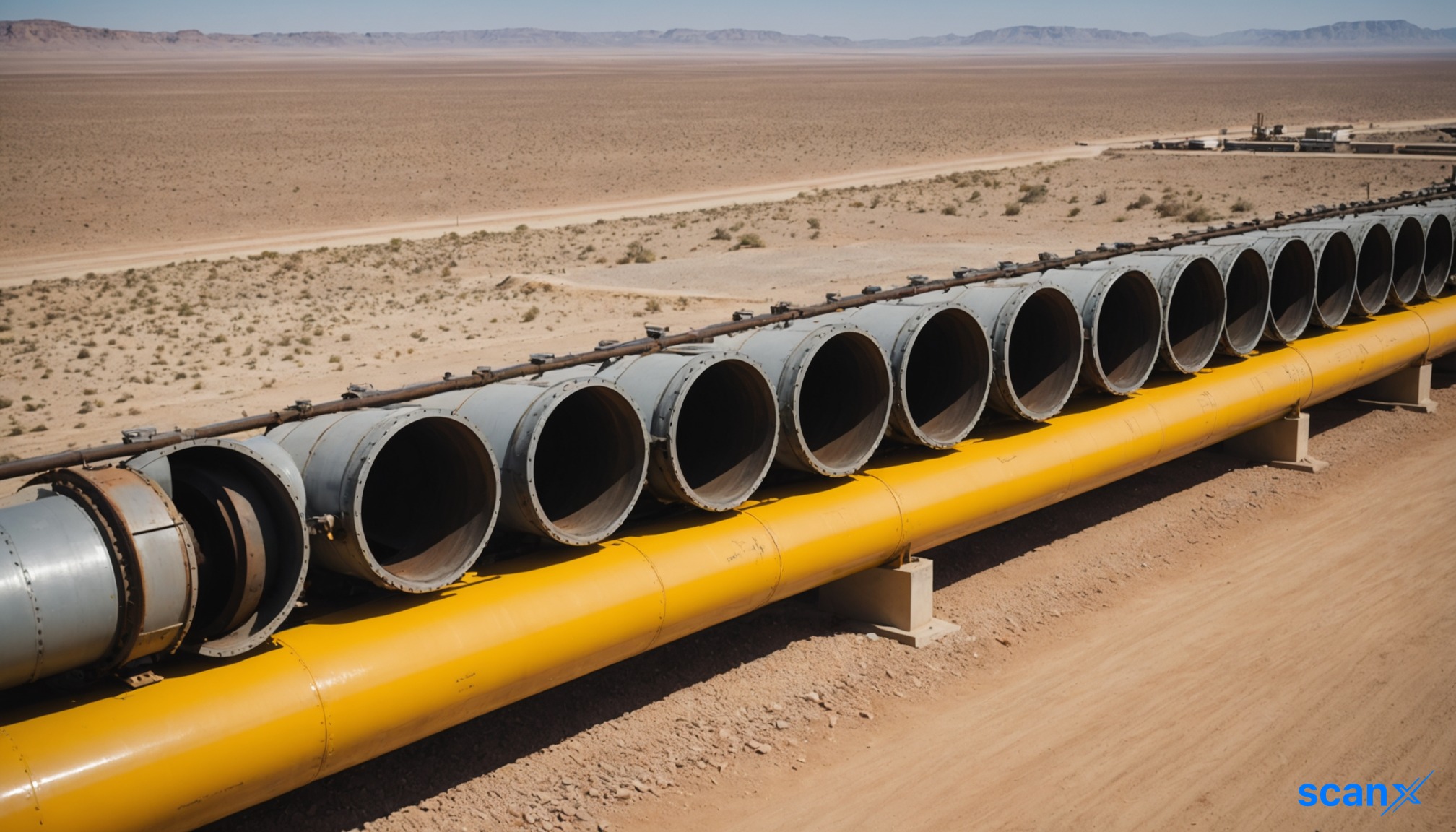
*this image is generated using AI for illustrative purposes only.

Saudi Arabia has increased oil flow on its East-West Pipeline to over 80% capacity, marking a significant escalation in crude transportation activity through this strategic corridor.

East-West Pipeline oil flow

The East-West Pipeline, a critical artery for Saudi crude transportation, has seen oil flow rise to exceed 80% of its total capacity. This update supersedes earlier reports indicating flows were near 6 million barrels daily. The pipeline serves as a strategic route for moving crude across the Arabian Peninsula, providing an alternative to maritime shipping routes.

Parameter Details
Pipeline East-West Pipeline
Oil flow status Over 80% capacity

The increase in throughput underscores the scale of Saudi Arabia's crude transportation infrastructure. By utilizing more than four-fifths of the pipeline's capacity, the Kingdom reinforces the pipeline's role in reducing dependence on shipments through the Strait of Hormuz. The shift from a volume-based description (near 6 million bpd) to a capacity utilization metric (over 80%) highlights a tighter operational focus on maximizing existing infrastructure limits.

Disclaimer: This article is AI-generated using data from ViewTrade. ScanX is not liable for any inaccuracies.

How will this increased pipeline utilization impact the insurance premiums for tankers transiting the Strait of Hormuz?

Does the shift to capacity-based metrics suggest Saudi Arabia is preparing for potential disruptions in maritime export routes?

What are the implications for global crude oil benchmarks if East-West Pipeline flows continue to rise toward full capacity?

like20
dislike

Brent-WTI spread widens to $9 as Trump hints at diesel export ban

scanx
Reviewed by
Ritika DScanX News Team
Key Highlights
  • Brent-WTI spread widened to nearly $9 a barrel on Thursday
  • WTI fell $7.70 between September 18 and 28 while Brent rose $1.41
  • USO ETF dropped 5.3% compared to BNO's 0.8% decline over same period
  • U.S. highway diesel prices hit record $6.53 a gallon in late September
powered bylight_fuzz_icon
52429073

*this image is generated using AI for illustrative purposes only.

The gap between Brent and West Texas Intermediate (WTI) crude benchmarks widened to nearly $9 a barrel on Thursday, driven by President Donald Trump’s comments on restricting U.S. diesel exports.

On Thursday, Brent stood at $100.88 and WTI at $91.89. This divergence is significantly wider than the typical $2 to $5 range. The spread reached its widest close since March at $12.68 on September 28.

Market reaction diverges

The widening gap stems from asymmetric price movements rather than a general market rally. Between September 18 and September 28, Brent gained $1.41 per barrel, while WTI fell $7.70. This contrasts with March, when both benchmarks rose due to Strait of Hormuz tensions, with Brent climbing faster.

Exchange-traded funds tracking these benchmarks reflect the split. United States Oil Fund LP (NYSE: USO), which tracks WTI futures, fell 5.3% between September 18 and September 30 closes. United States Brent Oil Fund LP (NYSE: BNO) slipped only 0.8%.

Benchmark Price (Thursday) Change (Sept 18-28) ETF Performance (Sept 18-30)
Brent Crude $100.88 +$1.41 -0.8%
WTI Crude $91.89 -$7.70 -5.3%

Policy uncertainty drives volatility

U.S. highway diesel prices hit a record $6.53 a gallon in late September, up 42.6% since July 10. On September 22, Trump stated, "Let's not send out the diesel. We make a lot of diesel." Although the White House later denied reports of a prepared 90-day export ban, Trump told Fox News on Sunday that the administration is "thinking about it very seriously."

Market participants are pricing in the risk of reduced U.S. refinery runs. Standard Chartered analyst Emily Ashford noted the market is pricing "the risk of a not-immaterial cut to U.S. refinery runs." StoneX analyst David Scutt said this implies "weaker refinery demand for WTI relative to Brent."

What the numbers show

The data reveals a structural disconnect between global supply risks and domestic policy impacts. While Brent reflects global seaborne supply constraints, WTI is increasingly decoupled due to specific U.S. downstream concerns. The $7.70 drop in WTI against a $1.41 rise in Brent indicates that traders view potential export bans as a direct threat to U.S. refiner margins and crude intake, rather than a global supply shock. Polymarket odds for a ban announcement by October 31 fell to 12% from 22% on September 24, suggesting some cooling of immediate fears despite the persistent price spread.

Disclaimer: This article is AI-generated using data from ViewTrade. ScanX is not liable for any inaccuracies.

How might a confirmed U.S. diesel export ban reshape global refining capacity allocations in Europe and Asia?

What long-term impact could sustained WTI-Brent divergence have on U.S. shale producers' hedging strategies?

Will OPEC+ adjust its production quotas to counterbalance potential supply gaps from restricted U.S. exports?

like16
dislike

More News on Crude Oil