

Gold miners offer discount as prices tumble on Fed outlook


Gold prices have corrected nearly 29% from January peaks to below $4,000 as the Federal Reserve pivots to fighting inflation under Chair Kevin Warsh. Bank of America and Deutsche Bank have lowered their near-term price targets, citing rising rate hike probabilities and a stronger dollar. However, analysis suggests gold mining equities are pricing in an average gold price of $3,354, offering a discount to current spot rates despite the volatility.



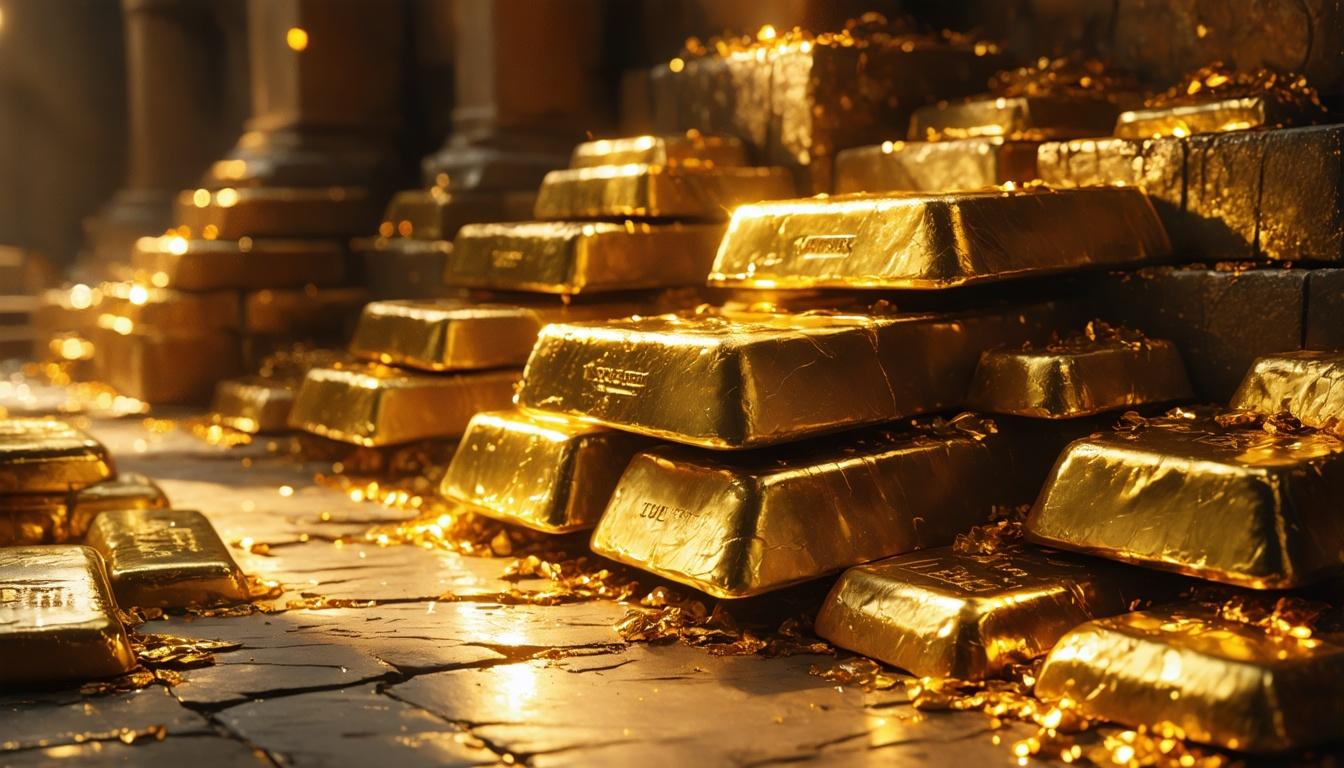
*this image is generated using AI for illustrative purposes only.
Gold prices have tumbled approximately 29% from January's record high of around $5,600 an ounce to below $4,000, driven by a significant shift in monetary policy expectations. The decline follows an inflationary energy shock stemming from the U.S.-Iran war, which has forced a revision of the lower-interest-rate expectations that previously fueled the precious metals bull market. Consequently, the SPDR Gold Trust (NYSE: GLD) has fallen 8.12% year-to-date as investors reduce exposure to non-yielding assets.
Fed Policy Shifts Outlook
Under the leadership of new Federal Reserve Chair Kevin Warsh, policymakers have pivoted from rate cuts to fighting energy inflation. The CME FedWatch indicates markets now imply roughly a 70% probability of a rate increase by September and a near-certainty of another move by December. This tightening increases the opportunity cost of holding gold while strengthening the U.S. dollar, creating a dual headwind for bullion prices.
"The shift away from inflationary cuts toward tighter policy is a headwind for gold," Bank of America analysts stated in a recent note. The bank has abandoned its previous forecast of $6,000 an ounce by next spring, arguing that gold must first "price out" expected rate hikes before investment demand can recover.
Analysts Revise Forecasts
Deutsche Bank has also adopted a more cautious stance, cutting its third-quarter gold forecast by 22% to $4,300 an ounce. This target remains above the current spot price of around $4,000. Analyst Michael Hsueh noted that "Fed repricing, together with resilient U.S. macro data, has played the primary role in pushing gold lower." The bank expects a potential rebound toward $4,800 in the fourth quarter if the Fed pauses after initial tightening, though three or four hikes could drive prices down to $3,800 an ounce.
Mining Equities Present Value
Despite short-term pessimism, the long-term outlook for gold remains supported by central bank demand and de-dollarization trends. A recent survey indicates nearly three-quarters of reserve managers expect moderate or significant reductions in U.S. dollar holdings over the next five years. This environment has created a divergence in mining equities, where Bank of America’s price-to-net-asset-value analysis suggests gold producers are valuing bullion at an average implied price of $3,354 an ounce—roughly 19% below prevailing spot levels.
| Company | Implied Gold Price (per ounce) |
|---|---|
| Wheaton Precious Metals Corp. | $4,395 |
| Franco-Nevada Corp. | $2,416 |
| Average Implied Price | $3,354 |

How might the geopolitical landscape evolve if the U.S.-Iran conflict escalates further, and would this trigger a reversal of the current bearish gold trend?
Will the anticipated reduction in U.S. dollar reserves by central banks over the next five years be sufficient to offset the downward pressure from rising interest rates?
What specific macroeconomic indicators would the Fed need to see to justify a pause in tightening following the initial rate hikes?
 20
20








 Access Market Heat-map & Insights
  Create, Save & Share your Screener
  Use 200+ Screening Filters





