

Tesla's robotaxi strategy prioritizes software over fleet size


Tesla Inc. operates a significantly smaller robotaxi fleet than Alphabet Inc.’s Waymo in Texas, a disparity JPMorgan attributes to a deliberate strategy prioritizing software readiness over rapid expansion. JPMorgan data indicates Waymo has 640 autonomous vehicles registered in Texas, comprising approximately 594 Jaguar I-PACEs and 46 sixth-generation Ojai robotaxis, while Tesla has just 84 vehicles registered in the state following its expansion beyond Austin into Dallas and Houston this year. Despite the numerical gap, analysts argue Tesla’s cautious rollout is intentional, driven by management’s belief that “many known improvements” are required in the FSD software before large-scale deployment.


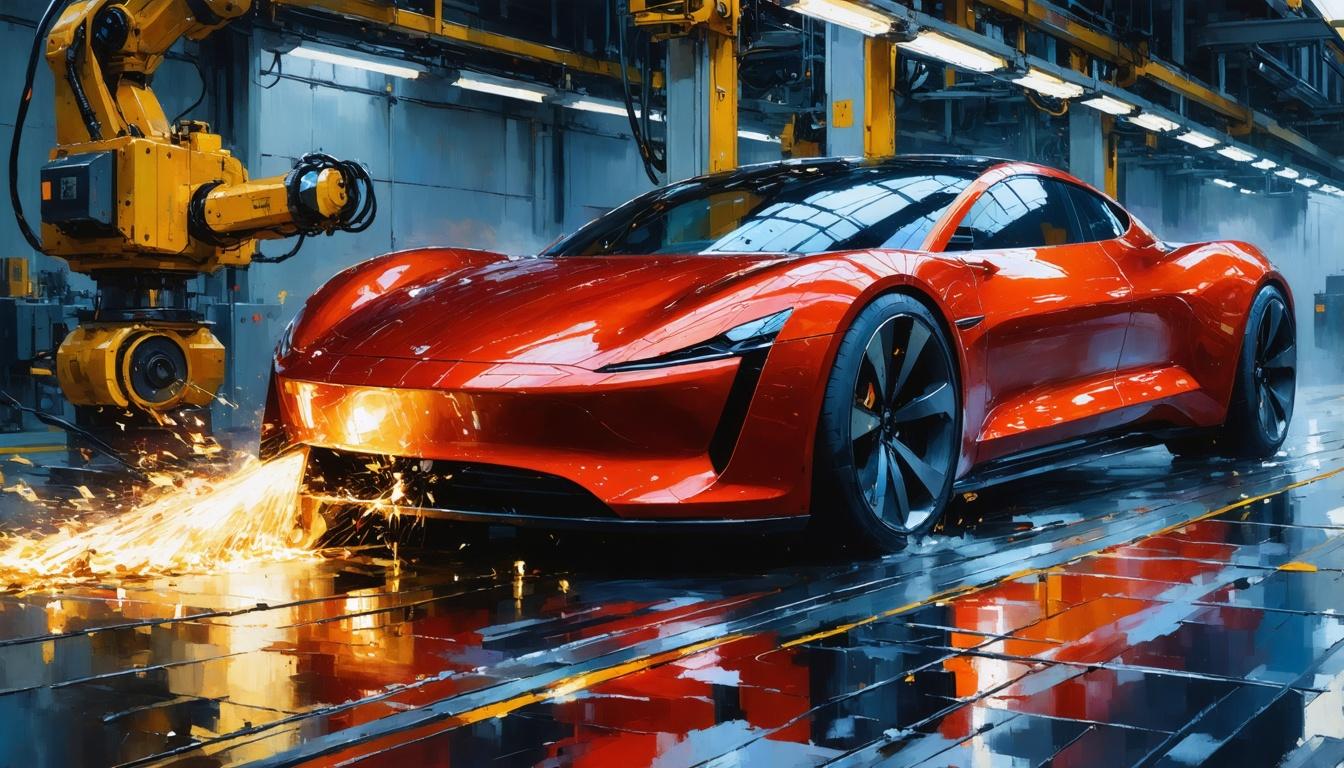
*this image is generated using AI for illustrative purposes only.
Tesla Inc. operates a significantly smaller robotaxi fleet than Alphabet Inc.’s Waymo in Texas, a disparity JPMorgan attributes to a deliberate strategy prioritizing software readiness over rapid expansion. The firm’s analysis suggests that while Waymo has aggressively deployed vehicles, Tesla is focusing on refining its Full Self-Driving (FSD) technology before scaling unsupervised operations. This approach highlights a divergence in the race for autonomous dominance, where software maturity is currently valued higher than fleet volume.
JPMorgan data indicates Waymo has 640 autonomous vehicles registered in Texas, comprising approximately 594 Jaguar I-PACEs and 46 sixth-generation Ojai robotaxis. In contrast, Tesla has just 84 vehicles registered in the state following its expansion beyond Austin into Dallas and Houston this year. Despite the numerical gap, analysts argue Tesla’s cautious rollout is intentional, driven by management’s belief that “many known improvements” are required in the FSD software before large-scale deployment.
Performance Metrics and Safety
The focus on software development appears to be yielding results in technical performance. JPMorgan highlighted that FSD version 14.x has achieved over 2,000 miles to critical disengagement, a 4.3-fold improvement compared to the approximately 460 miles recorded by version 13.x. Additionally, safety statistics for vehicles operating with FSD (Supervised) in North America show an average of 5.5 million miles before a major collision, which is more than eight times the U.S. average, and about 1.6 million miles before a minor collision, roughly seven times the national average.
| Company | Texas Fleet Count | Vehicle Models |
|---|---|---|
| Waymo | 640 | Jaguar I-PACE, Ojai |
| Tesla | 84 | Not specified |
Future Outlook
While Waymo currently leads in deployment, JPMorgan believes Tesla’s strategy positions it for a larger rollout once software matures. The Cybercab has entered pilot production, with volume production expected later this year, potentially enabling faster fleet expansion. The firm concludes that Tesla’s current fleet size reflects a calculated product strategy rather than an inability to compete, with the long-term goal hinging on the successful maturation of its autonomous driving software.

How will the anticipated volume production of the Cybercab later this year impact Tesla's ability to close the fleet gap with Waymo?
What specific regulatory hurdles might Tesla face when scaling unsupervised operations in new Texas markets like Dallas and Houston?
Could Tesla's software-first strategy allow it to overtake Waymo in total ride volume despite having a significantly smaller physical fleet?
 20
20









 Access Market Heat-map & Insights
  Create, Save & Share your Screener
  Use 200+ Screening Filters





