D-Wave Quantum wins up to CAD $300,000 from NRC Canada for quantum software

scanx
Reviewed by
Ritika DScanX News Team
Key Highlights

D-Wave Quantum Inc. has received up to CAD $300,000 in funding from the NRC's Applied Quantum Computing Challenge program. The project, based at D-Wave's Quantum Centre of Engineering Excellence in Burnaby, British Columbia, will develop graph minor-embedding algorithms for the Zephyr topology and integrate them into the open-source Ocean software development kit. The initiative targets commercial optimization applications on Advantage2 annealing quantum computers across sectors including logistics, manufacturing, scheduling, resource allocation, machine learning, and quantum and materials simulation.


powered bylight_fuzz_icon
48088766

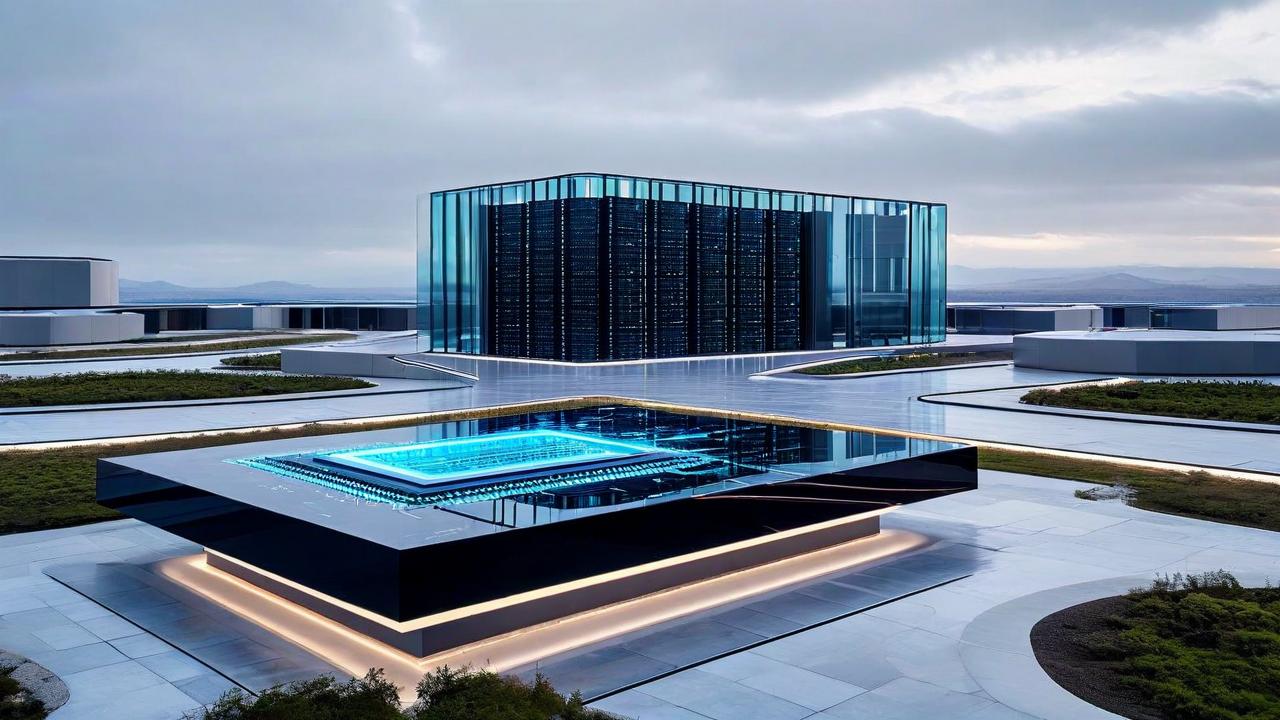
*this image is generated using AI for illustrative purposes only.

D-Wave Quantum Inc. has been awarded up to CAD $300,000 in funding from the National Research Council of Canada's (NRC) Applied Quantum Computing Challenge program to advance annealing quantum computing software for commercial applications. The announcement positions D-Wave as the only dual-platform quantum computing company providing both annealing and gate-model systems, software, and services.

Project scope and development focus

Working in collaboration with the NRC, D-Wave's team at its Quantum Centre of Engineering Excellence in Burnaby, British Columbia, will develop next-generation software and algorithms. The primary objective is to help organizations solve larger, more complex optimization problems on D-Wave's Advantage2 annealing quantum computers.

The project will create new graph minor-embedding algorithms for D-Wave's Zephyr topology and integrate them into the company's open-source Ocean software development kit. These algorithms perform the foundational process of mapping optimization problems to the Advantage2 system's topology.

Key details at a glance

Parameter: Details
Funding awarded: Up to CAD $300,000
Funding body: National Research Council of Canada (NRC)
Program: Applied Quantum Computing Challenge
Development location: Burnaby, British Columbia
Target system: Advantage2 annealing quantum computers
Software integration: Ocean software development kit
Topology: Zephyr

Commercial use cases addressed

The new algorithms are expected to expand the scale and complexity of computations that Advantage2 systems can address. The targeted commercial use cases span multiple industries and disciplines, including:

  • Logistics
  • Manufacturing
  • Scheduling
  • Resource allocation
  • Machine learning
  • Quantum and materials simulation

By embedding these algorithms into the open-source Ocean software development kit, D-Wave aims to make advanced optimization capabilities more accessible to organizations working across these sectors.

Disclaimer: This article is AI-generated using data from ViewTrade. ScanX is not liable for any inaccuracies.

How will the integration of new graph minor-embedding algorithms into the open-source Ocean SDK impact D-Wave's competitive positioning against gate-model quantum providers?

Which specific logistics or manufacturing companies are likely to be early adopters of these enhanced Advantage2 optimization capabilities?

What is the projected timeline for the commercial availability of software leveraging the new Zephyr topology algorithms?

like19
dislike

D-Wave Quantum Q2 Results: Net loss widens, bookings surge

scanx
Reviewed by
Anirudha BScanX News Team
Key Highlights

D-Wave Quantum Inc. reported a Q2 net loss of $0.13 per share, missing estimates, with revenue flat at $3.1 million. Operating expenses rose 93% to $55.0 million. However, H1 bookings surged 1,120% to $35.5 million, driven by increased adoption among Forbes Global 2000 firms.

powered bylight_fuzz_icon
47579459

*this image is generated using AI for illustrative purposes only.

D-Wave Quantum Inc. shares declined 7.15% to $19.86 on Thursday morning after the quantum computing firm reported second-quarter earnings that missed Wall Street estimates on both top- and bottom-line metrics. The company posted a net loss of $0.13 per share for the quarter ended June 30, compared to consensus projections of a $0.10 loss per share. Revenue remained essentially flat year-over-year at $3.1 million, falling short of analyst expectations of $4.03 million. The earnings miss underscores the ongoing cash burn associated with scaling operations in the nascent quantum sector, even as commercial interest grows.

The widening loss was driven by a significant increase in operating expenses, which rose 93% to $55.0 million from $28.5 million in the prior-year period. Management attributed this surge to strategic investments in product development and go-to-market strategies aimed at accelerating commercial adoption. These expenditures reflect the capital-intensive nature of advancing dual-platform quantum technology roadmaps.

Bookings Surge Amid Commercial Expansion

Despite the quarterly financial shortfall, D-Wave reported strong momentum in its order book. Total bookings for the first six months of 2026 jumped 1,120% year-over-year to $35.5 million. This growth was supported by expanded customer acquisition among large enterprises. Forbes Global 2000 clients accounted for 47.7% of second-quarter revenue, a substantial increase from 20.4% a year earlier, indicating deeper penetration into major corporate sectors.

Metric Value Change
Net Loss Per Share $0.13 Missed est. ($0.10)
Revenue $3.1 million Flat YoY
Operating Expenses $55.0 million Up 93% YoY
H1 2026 Bookings $35.5 million Up 1,120% YoY
Forbes Global 2000 Rev Share 47.7% Up from 20.4%

Management Commentary

Dr. Alan Baratz, Chief Executive Officer of D-Wave, emphasized the company’s technical leadership and commercial progress. "This quarter reinforced the strength and breadth of D-Wave's leadership," Baratz stated. "We expanded commercial momentum through stronger bookings and engagements with major global organizations, while achieving important milestones across our dual-platform technology roadmap." He added that the company is translating technical leadership into commercial progress, positioning itself to lead as the quantum computing market accelerates.

What the Numbers Show

The divergence between flat revenue and surging bookings suggests a shift in D-Wave’s sales cycle dynamics. While immediate revenue recognition remains constrained, the 1,120% increase in bookings indicates that enterprise customers are committing to larger, potentially longer-term contracts. The rising share of revenue from Forbes Global 2000 clients further validates this trend, pointing to a maturing customer base capable of sustaining higher future revenue streams despite current operational losses.

Disclaimer: This article is AI-generated using data from ViewTrade. ScanX is not liable for any inaccuracies.

How long will D-Wave's current cash reserves sustain operations given the 93% surge in operating expenses and continued net losses?

What specific milestones must D-Wave achieve to convert the $35.5 million in H1 2026 bookings into recognized revenue in the near term?

How does D-Wave's dual-platform strategy compare to competitors like IBM or Google in terms of cost-efficiency and time-to-market for enterprise clients?

like19
dislike

More News on D-Wave Quantum Inc