

AT&T and Ericsson demonstrate drone detection at AT&T Stadium


AT&T and Ericsson successfully demonstrated drone detection using advanced 5G network sensing at AT&T Stadium, detecting and tracking drones at 300–400 feet. The demo utilized Massive MIMO radios and AI algorithms to transform existing infrastructure into a distributed sensing platform. This initiative highlights how 6G-like capabilities can be realized today through advanced 5G technology, with future applications planned for major events and public safety.



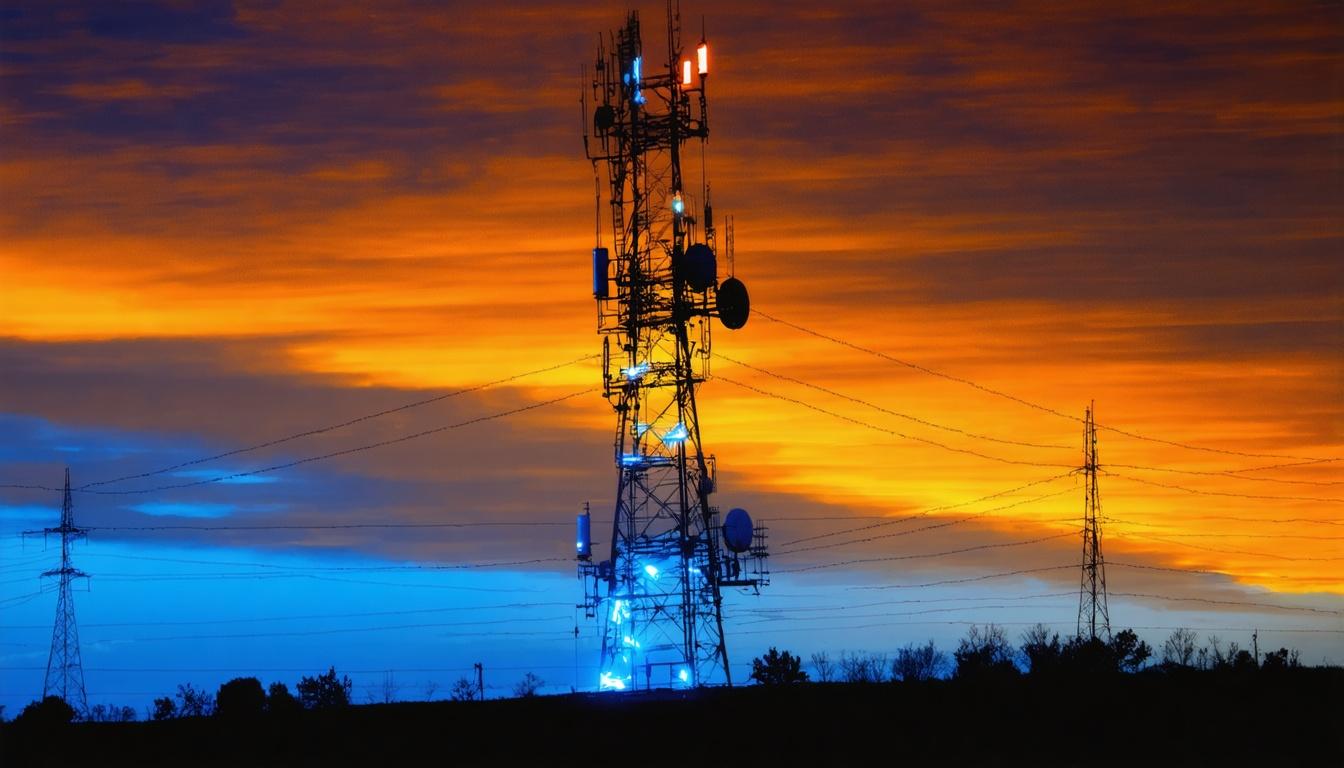
*this image is generated using AI for illustrative purposes only.
AT&T and Ericsson demonstrated drone detection using advanced network sensing over a 5G network, showing how capabilities often associated with future 6G systems can begin coming to life today. The demo was conducted in authorized airspace outside AT&T Stadium in Arlington, Texas, during one of the largest global sporting events in the world. Using Ericsson technology and AT&T network expertise, it detected and located multiple drones, then tracked their movement, illustrating how wireless infrastructure could help protect major venues, critical infrastructure and other key locations.
This demonstration showed how advanced network features can be enabled using 5G capabilities as the industry momentum towards 6G standardization and subsequent deployment accelerates. Critically, the same underlying capabilities could support new levels of low altitude threat detection and tracking around major venues, public spaces and other complex environments. By combining observations from multiple synchronized sensing nodes, the technology provided enhanced detection reliability, improved positioning accuracy, and robust target tracking performance.
Technical Implementation
Using existing cellular towers, Ericsson deployed its Massive MIMO radios across multiple sites, creating a multi-static sensing configuration. The demonstration combined sensing-enabled radio transmissions with advanced signal processing and AI-enabled sensing algorithms to detect, locate, and track the drones in real time. The network utilized the radio signals typically used for communications to enable real-time environmental sensing, while delivering a total cost of ownership advantage for nation-wide coverage.
Demonstration Metrics
| Metric | Value |
|---|---|
| Detection Altitude | 300–400 feet |
| Technology | Massive MIMO radios, AI algorithms |
| Configuration | Multi-static sensing |
The sensing technology generated real-time target metrics, including the drone's location, velocity, and elevation, enabling comprehensive tracking and monitoring throughout the flight path. The demonstration highlighted how existing network infrastructure can be transformed into a distributed sensing platform, enabling advanced applications such as drone detection without requiring additional standalone sensing technology.
Strategic Roadmap
The demonstration reflects a broader view shared by AT&T and Ericsson: that some of the capabilities people may think of as "6G" can begin taking shape now through software, advanced radios and continued growth of 5G. Together, AT&T and Ericsson will continue bringing their expertise to the evolution of Integrated Sensing and Communication (ISAC) through future demonstrations and learnings, alongside others helping shape the path toward major event environments such as the next major global sporting event in Los Angeles in 2028.
"As networks evolve, the opportunity is not just to prepare for 6G someday, but to begin introducing important building blocks now," said Dyon Agnew, SVP and Head of Customer Unit AT&T, Ericsson Americas. "This demonstration with AT&T shows a product roadmap in action: using advanced 5G capabilities today to explore how sensing and connectivity can work together, then evolving those capabilities over time as the path to 6G becomes clearer."
"Integrated sensing is an important part of the road to 6G, and this work helps show how we can start bringing that future to life right now," said Yigal Elbaz, SVP and Network CTO, AT&T. "By working with Ericsson, we are exploring how advanced wireless networks can add sensing capabilities to connectivity in ways that could support safer operations, smarter venues and stronger customer experiences, while creating a path to evolve these capabilities responsibly over time."
Future Capabilities
The roadmap aims to enable several key outcomes over time:
- Help event and facility teams improve planning and staffing by providing broader visibility into how vehicles move through large environments.
- Enhance coordination around temporary event infrastructure and logistics by adding network-based environmental awareness alongside connectivity.
- Support a wide-area drone awareness system for public-sector stakeholders, improving visibility into low-altitude drone activity as the low-altitude economy develops across cities and regions.
- Inform the evolution of future 5G and 6G capabilities as sensing and communications mature together for large venues, enterprises, governments and public-sector environments.
AT&T and Ericsson will continue exploring how sensing capabilities can be introduced pragmatically using existing network foundations, then advanced over time as standards, ecosystems and market needs develop. The goal is to help shape a practical path where future 6G capabilities are not treated as a distant leap, but as an evolution that can begin delivering value well before full 6G commercialization.

How will the integration of sensing capabilities into commercial 5G networks impact the total cost of ownership compared to deploying standalone radar systems?
What regulatory hurdles must be overcome to implement drone detection and tracking in public spaces using existing cellular infrastructure?
How might this technology be adapted to handle the increased density of drones expected with the growth of the low-altitude economy?
 20
20













 Access 50+ Readymade Screeners
  Use 200+ Custom Filters
  Get Full Market Insights





