Q3 Credit Growth Signals Economic Pickup; Experts Prefer Large Banks Over Smaller Lenders

2 min read     Updated on 06 Jan 2026, 09:33 AM
scanx
Reviewed by
Shriram SScanX News Team
Overview

Indian banks reported strong Q3 performance with 12% year-on-year credit growth led by PSU banks and mid-sized lenders. Market expert Sandip Sabharwal views this double-digit growth as indicative of economic recovery, preferring large banks like Axis, Kotak, ICICI, and SBI over smaller institutions due to historical NPA risks. Microfinance stress is easing with collection efficiency exceeding 99%, while net interest margins appear near cycle bottom.


29217791

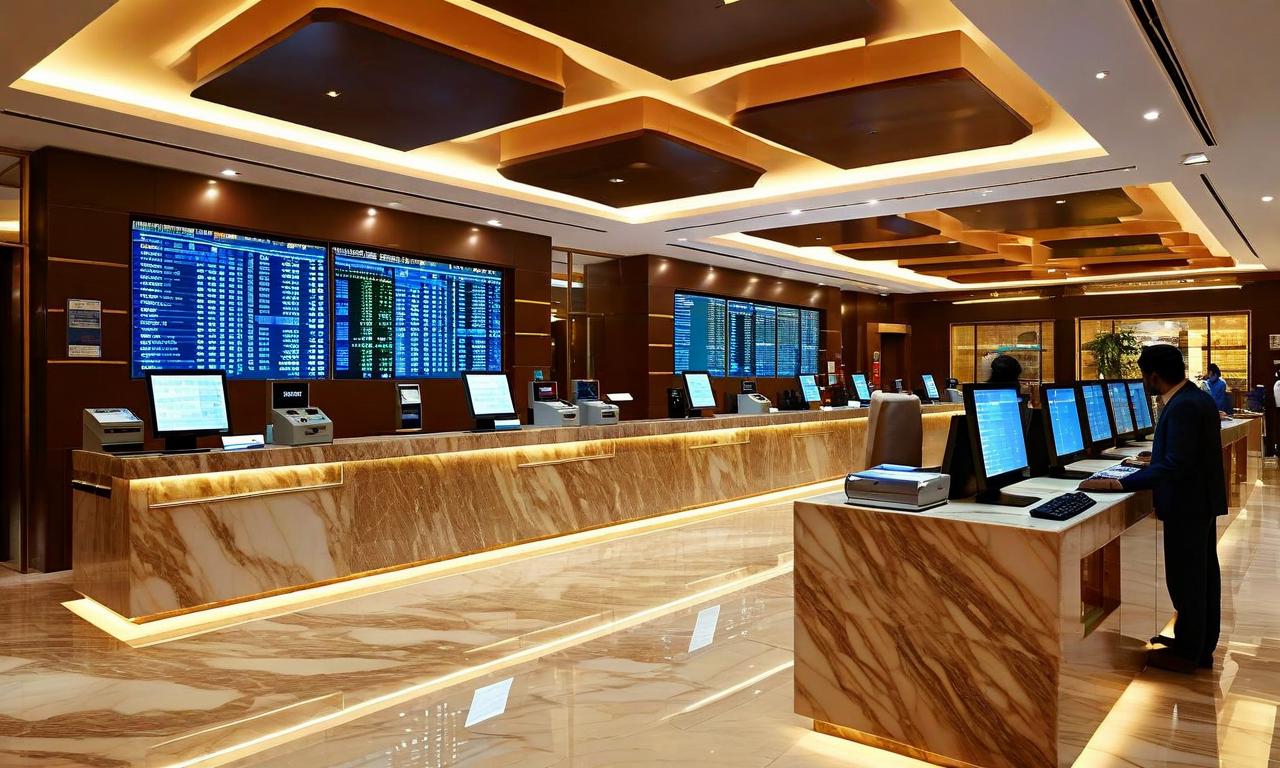
*this image is generated using AI for illustrative purposes only.

Indian banks delivered healthy third-quarter business updates, with public sector banks and select mid-sized lenders driving robust credit growth while stress in microfinance and credit card segments continued to ease gradually. Banking research indicates the sector is tracking close to 12% year-on-year credit growth, with market experts viewing this as a clear indicator of economic recovery after a prolonged phase of single-digit system growth.

Strong Performance Across PSU and Mid-Sized Banks

Public sector banks posted particularly strong growth numbers in Q3, while mid-sized lenders including AU Bank and Equitas reported solid quarter-on-quarter loan expansion. This performance signals stabilization in unsecured portfolios after a prolonged period of asset quality stress. According to Sandip Sabharwal, founder of asksandipsabharwal.com, the double-digit loan growth across most large banks reflects rising economic activity.

"Credit growth drives the economy. What we are seeing now—double-digit growth for most large banks—is clearly indicative of an economic pickup," Sabharwal told ET Now.

Expert Preferences: Large Banks Over Smaller Lenders

Despite visible recovery in credit growth among small finance banks, market experts prefer sticking with large banks due to historical asset-quality risks. Sabharwal cautioned that aggressive lending by smaller institutions often leads to NPA issues later.

Expert Bank Preferences: Details
Top Picks: ICICI Bank, Axis Bank, SBI, IDFC First Bank
Standout Performers: Axis Bank, Kotak Mahindra Bank
Valuation Attractiveness: Axis Bank particularly compelling
Risk Factor: Smaller banks' aggressive growth patterns

"Whenever smaller institutions grow too fast, NPAs tend to surface a couple of years later," Sabharwal noted, highlighting that system-wide gross NPAs have fallen to multi-year lows.

Microfinance Sector Shows Recovery Signs

The microfinance segment, which faced asset quality challenges through most of the year, is now showing signs of normalization. While loan books have contracted sequentially, collection efficiencies have improved significantly:

Recovery Metric: Current Status
Collection Efficiency: Over 99% for several MFI lenders
Portfolio Status: Stabilizing after deterioration
Outlook: Further improvement expected

Month-on-month collection efficiency improvements indicate that the worst of the pain around slippages and collections is largely behind the sector, with portfolios expected to return to normal operating levels.

Net Interest Margins Near Cycle Bottom

The banking system appears close to the bottom of the net interest margin cycle, despite recent rate cuts. Among banks that have reported Q3 updates, Axis Bank and Kotak Mahindra Bank delivered strong numbers, while HDFC Bank posted stable but unspectacular growth.

Expected NIM Performance: Bank Category
Expansion Expected: IDFC First, Kotak, Bandhan, Equitas, AU Bank
Marginal Pressure: Some large private and PSU banks
Recovery Timeline: Broader recovery anticipated

A broader-based margin recovery is anticipated as funding costs begin to soften across the system, with IDFC First Bank expected to benefit particularly when interest rates trend lower.

Sector Outlook and Investment Strategy

Banking performance remains highly divergent across institutions, making stock selection critical for investors. The preference for large banks reflects their superior asset quality management and sustainable growth models. System-wide improvements in gross NPAs to multi-year lows strengthen the investment case for established players.

The third and fourth quarters typically represent strong periods for the banking industry, with expectations for moderation in slippage run rates as portfolios stabilize. Vehicle finance is experiencing recovery with strong disbursement growth, while retail credit growth across the system shows early signs of revival, supporting the broader economic pickup narrative.

like18
dislike

Devyani surges 8% as Sapphire merger creates India's largest QSR platform

4 min read     Updated on 02 Jan 2026, 08:01 AM
scanx
Reviewed by
Naman SScanX News Team
Overview

Devyani International shares jumped 8% on merger news with Sapphire Foods creating India's largest QSR platform. Consumer consultant emphasizes profitability as key success metric, noting the combined entity's 17% EBITDA margin could improve by 2.5% through synergies in corporate costs and procurement.

28866677

*this image is generated using AI for illustrative purposes only.

Devyani International shares surged 8% to hit an intraday high of ₹159.66 while Sapphire Foods declined 4% following the announcement of their transformative merger that will create one of India's largest quick-service restaurant platforms with over 3,000 restaurants and consolidated revenue exceeding ₹7,800.00 crore.

Market Response and Trading Activity

Devyani International was trading at ₹149.25, up ₹1.82 or 1.23% from its previous close of ₹147.43, with heavy volumes of 330.24 lakh shares traded valued at ₹508.24 crore. In contrast, Sapphire Foods was trading at ₹251.70, down ₹11.00 or 4.19% from its previous close of ₹262.70, with 53.92 lakh shares changing hands worth ₹137.74 crore.

Stock Performance: Devyani International Sapphire Foods
Intraday High: ₹159.66 (+8%) -
Current Price: ₹149.25 ₹251.70
Change: +₹1.82 (+1.23%) -₹11.00 (-4.19%)
Volume Traded: 330.24 lakh shares 53.92 lakh shares
Value: ₹508.24 crore ₹137.74 crore

Merger Structure and Valuation

The boards of both companies approved the scheme of arrangement with a 177:100 share swap ratio, meaning Sapphire Foods shareholders will receive 177 shares of Devyani International for every 100 shares they hold. JM Financial has valued the combined entity at ₹387.00 billion based on 28 times estimated pre-Ind AS EV/EBITDA, implying a 45% upside over the current combined market capitalization of ₹266.00 billion.

Transaction Details: Specifications
Share Exchange Ratio: 177 DIL shares for every 100 SFIL shares
Combined Restaurants: Approximately 2,875 stores by FY26
Consolidated Revenue: Exceeding ₹7,800.00 crore
JM Financial Valuation: ₹387.00 billion
Upside Potential: 45% over current market cap
Price Target: ₹180.00 (JM Financial)

Expert Analysis on Profitability Focus

Akshay D'Souza, an independent consumer business consultant, emphasized that profitability will be the key factor to track after the merger, as cost savings and scale benefits start flowing through the combined entity. D'Souza noted that the merged entity has guided for a 2.50% improvement in profitability within a couple of years, stating that even achieving half of that target would position the company well.

Profitability Metrics: Current Status
Current EBITDA Margin: 17.00%
Guided Margin Improvement: 2.50%
Timeline for Improvement: 2-3 quarters post-merger
Synergy Areas: Corporate costs, brand spends, procurement

D'Souza highlighted that profitability plays a critical role in how QSR companies raise capital, expand store networks, and manage supply chains. He pointed out that improved profitability can reduce the cost of capital, supporting faster expansion over time.

Financial Synergies and Integration Benefits

The combined entity expects annual synergy benefits of ₹210.00 to ₹225.00 crore on a steady-state basis from the second full year of operations, driven by lower royalty costs, reduced corporate overheads, and procurement efficiencies. Management has guided for EBITDA benefits of ₹100.00 to ₹150.00 crore in the first integration year.

Synergy Timeline: Financial Impact
FY28 EBITDA Benefit: ₹100.00-150.00 crore
Annual Steady-State Savings: ₹210.00-225.00 crore
Revenue Scale Increase: 50-60% higher than current levels
EBITDA Margin Addition: 2.50%

D'Souza noted that operating as a single entity improves negotiating power with suppliers, especially at a time when input costs remain elevated. He believes these supply-chain benefits will be among the first gains to reflect in the bottom line, even before the merger is fully completed.

Strategic Positioning and Competitive Dynamics

The merger transforms Devyani into a pan-India QSR platform with operations across multiple brands including KFC, Pizza Hut, Costa Coffee, and owned brands like Biryani By Kilo. D'Souza observed that profitability also depends on whether consumption is on-premise or off-premise, noting that KFC has a higher share of on-premise dining which supports margins, while Pizza Hut relies more on off-premise orders where profitability faces greater pressure.

Brand Performance Factors: Impact on Margins
KFC On-premise Dining: Higher margin support
Pizza Hut Off-premise Orders: Greater profitability pressure
Current Market Challenges: Demand and cost pressures
Scale Benefits Relevance: Increased due to challenges

Implementation Timeline and Market Impact

The appointed date for the merger is April 1, 2026, with completion expected in 12-15 months subject to regulatory approvals. D'Souza expects the merger to change competitive dynamics in the QSR space, particularly in procurement, and put pressure on other QSR players as scale and cost efficiencies become more important for profitability.

Implementation Schedule: Timeline
Merger Effective Date: April 1, 2026
Regulatory Approval Period: 12-15 months
Margin Improvement Timeline: 2-3 quarters post-merger
Early Benefits: Supply-chain gains before full completion
like18
dislike
Explore Other Articles
Power Mech Projects Subsidiary Secures ₹1,563 Crore BESS Contract from WBSEDCL 6 hours ago
Elpro International Acquires Additional Stake in Sundrop Brands for ₹39.18 Crores 6 hours ago
Transformers & Rectifiers Targets ₹8000 Crore Order Book by FY26 End 7 hours ago
Reliance Industries Schedules Board Meeting for January 16, 2026 to Approve Q3FY26 Financial Results 9 hours ago
Krishival Foods Limited Completes Rights Issue Allotment of 3.33 Lakh Partly Paid-Up Equity Shares 8 hours ago
Raymond Realty Board Approves Employee Stock Option Plan 2025 Following Demerger 8 hours ago