

Power Ministry unveils draft National Electricity Policy 2026 for public consultation


The Ministry of Power has unveiled the draft National Electricity Policy 2026, targeting per capita consumption of 2,000 kWh by 2030 and over 4,000 kWh by 2047. The policy addresses distribution challenges including high losses and non-cost reflective tariffs while promoting renewable energy integration, financial viability reforms, and infrastructure modernisation. Key interventions include resource adequacy planning, cross-subsidy exemptions for industry, storage deployment, and cybersecurity frameworks to create a sustainable power sector aligned with India's net-zero commitments by 2070.

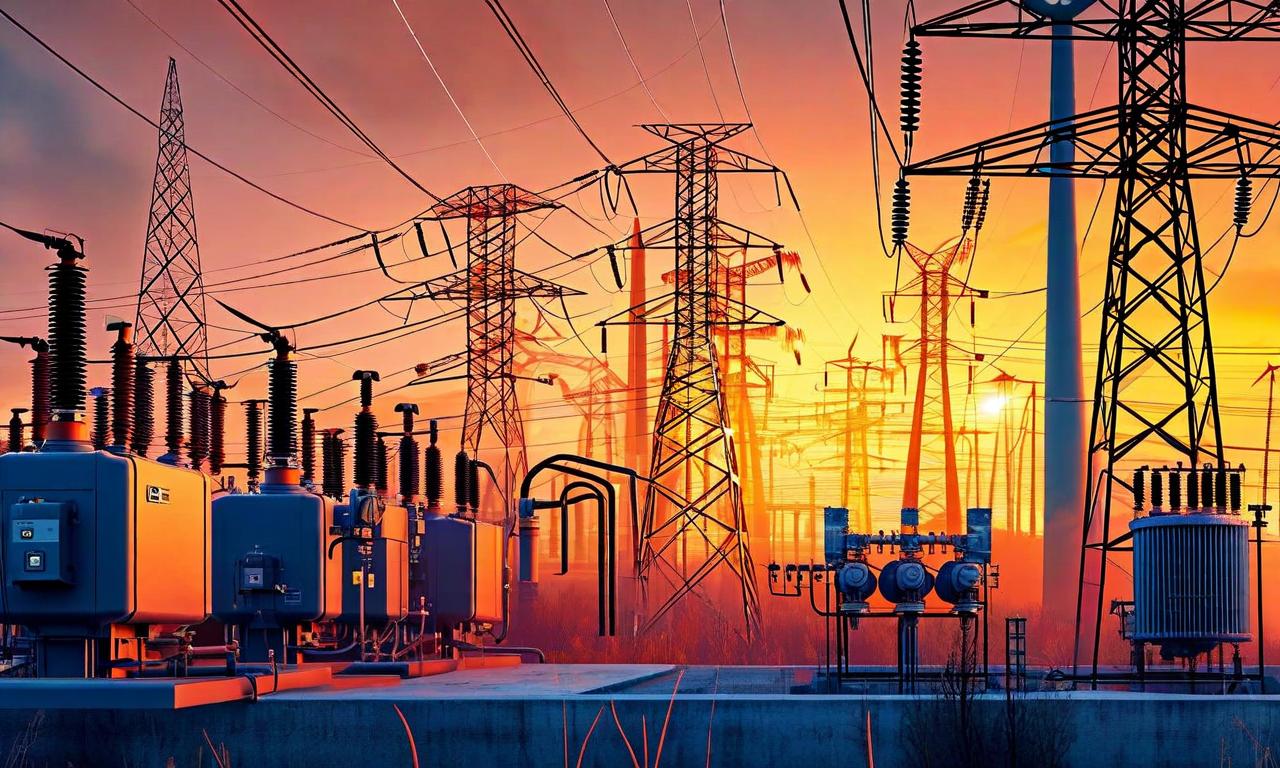

*this image is generated using AI for illustrative purposes only.
The Ministry of Power has released the draft National Electricity Policy (NEP) 2026 for public consultation, marking a significant step toward transforming India's power sector. The comprehensive policy aims to replace the existing NEP that was notified in 2005, addressing evolving challenges and opportunities in the electricity landscape.
Sector Transformation Since 2005
India's power sector has witnessed remarkable progress since the first National Electricity Policy was implemented in February 2005. The installed generation capacity has increased fourfold with significant private sector participation, while universal electrification was achieved by March 2021. The country established a unified national grid in December 2013, and per capita electricity consumption reached 1,460 kWh in 2024-25.
| Achievement | Timeline | Details |
|---|---|---|
| Universal Electrification | March 2021 | Complete coverage achieved |
| Unified National Grid | December 2013 | Operational across country |
| Per Capita Consumption | 2024-25 | 1,460 kWh |
| Generation Capacity | Since 2005 | Increased fourfold |
Despite these achievements, the Ministry acknowledged that persistent challenges remain, particularly in the distribution segment. High accumulated losses and outstanding debt continue to plague the sector, while tariffs in several segments remain non-cost reflective. High cross-subsidisation has resulted in elevated industrial tariffs, adversely affecting the global competitiveness of Indian industry.
Ambitious Consumption Targets
The draft NEP 2026 sets ambitious targets for electricity consumption growth, aiming for per capita consumption of 2,000 kWh by 2030 and over 4,000 kWh by 2047. These targets align with India's climate commitments, including a 45 percent reduction in emissions intensity below 2005 levels by 2030 and achieving net-zero emissions by 2070.
Key Policy Interventions
Resource Adequacy and Financial Viability
The policy introduces comprehensive resource adequacy planning where DISCOMs and SLDCs will prepare plans at utility and state levels, while the Central Electricity Authority (CEA) will develop a corresponding national plan. Financial reforms include linking tariffs to suitable indices for automatic annual revision and progressively recovering fixed costs through demand charges to reduce cross-subsidisation.
| Reform Area | Key Measures |
|---|---|
| Tariff Structure | Automatic annual revision through indexing |
| Cross-subsidies | Exemption for manufacturing, railways, metro |
| Universal Service | Exemption for consumers above 1 MW load |
| Dispute Resolution | Strengthened mechanisms for faster resolution |
Renewable Energy and Storage Integration
The draft policy emphasizes renewable energy capacity addition through market-based mechanisms and captive power plants. It promotes storage installation by distribution licensees for small consumers and enables peer-to-peer trading of surplus energy from distributed renewable sources. The policy targets parity between renewable and conventional sources in scheduling and deviation by 2030.
Sector-Specific Developments
The policy addresses various generation sources comprehensively. For thermal generation, it focuses on integration with storage and repurposing older units for grid support. Nuclear generation aims to achieve 100 GW by 2047 through advanced technologies and modular reactors. Hydroelectric development emphasizes storage-based projects for flood moderation and water security.
Infrastructure and Technology Modernisation
The draft includes significant infrastructure reforms targeting single-digit AT&C losses in distribution and establishing Distribution System Operators (DSO) to facilitate network sharing. Cities with populations exceeding 10 lakh will require N-1 redundancy at distribution transformer level by 2032, with consideration for underground networks in congested areas.
| Infrastructure Target | Timeline | Scope |
|---|---|---|
| AT&C Losses | Ongoing | Single-digit targets |
| N-1 Redundancy | 2032 | Cities above 10 lakh population |
| Indigenous SCADA | 2030 | Complete transition |
| RE-Conventional Parity | 2030 | Transmission tariff equality |
Cybersecurity and Data Management
Recognising modern challenges, the policy establishes robust cybersecurity frameworks with mandatory storage of power sector data within India to ensure data sovereignty and system resilience. It also promotes transition to indigenously developed SCADA systems by 2030 and domestic software solutions for critical power system applications.
The comprehensive draft NEP 2026 provides a blueprint for creating a future-ready, financially viable, and environmentally sustainable power sector designed to deliver reliable and quality power at affordable prices while supporting India's economic growth and climate objectives.
 16
16






 Access Market Heat-map & Insights
  Create, Save & Share your Screener
  Use 200+ Screening Filters





