

January Market Volatility Defines Indian Equity Trends Over Past Decade


Historical analysis of Indian equity markets shows January as a volatile month with mixed performance across indices and sectors. Nifty 50 averaged -0.31% returns over the past decade with only two positive Januaries. IT sector performed best with 1.40% average returns while metals and pharma lagged significantly. Individual stock analysis reveals stark consistency patterns with only four large-cap stocks delivering six consecutive positive Januaries.



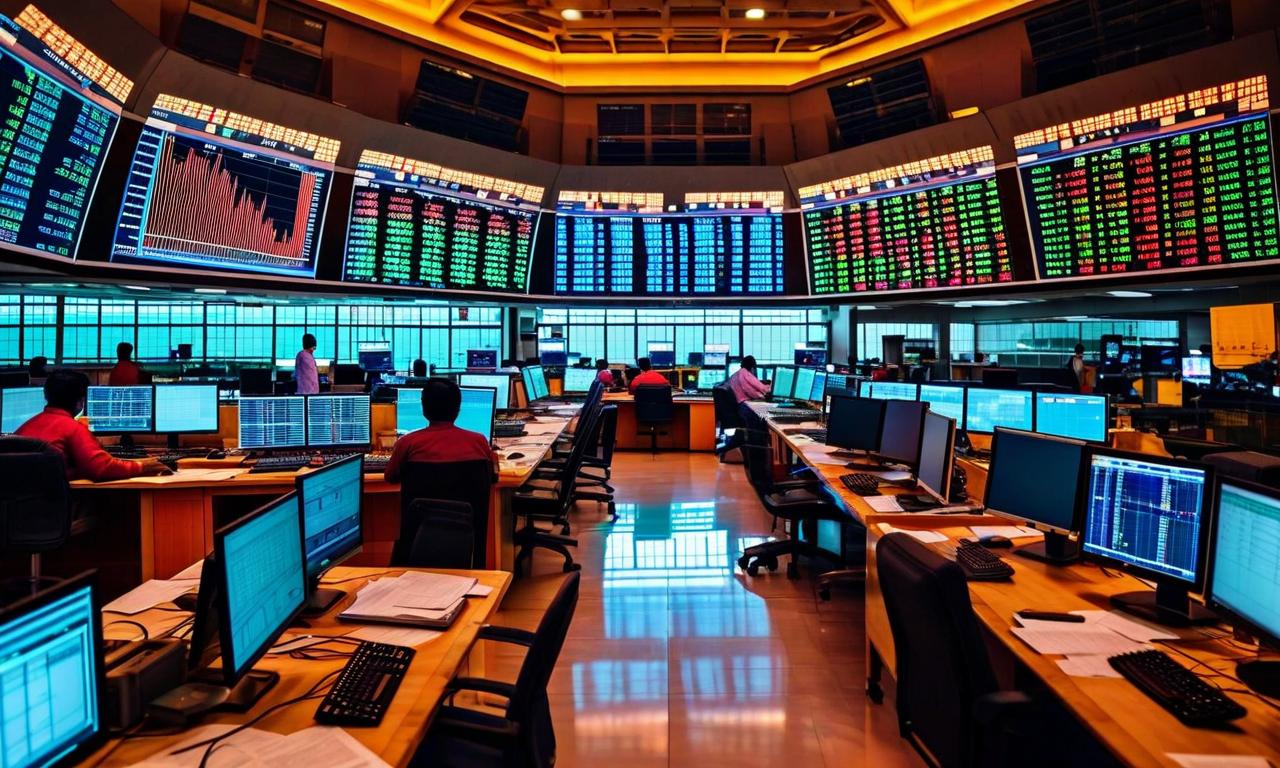
*this image is generated using AI for illustrative purposes only.
Historical analysis of Indian equity markets reveals a consistent pattern of volatility during January, with performance varying significantly across different market segments and sectors over the past decade.
Benchmark Index Performance Shows Mixed Results
The Nifty 50's January performance over the past ten years demonstrates the unpredictable nature of market movements during this period. The benchmark index closed positively in only two instances, delivering notable gains exceeding 4.50% in both 2017 and 2018. However, the overall trend remained subdued with an average return of -0.31% for the month.
| Index Performance: | Positive Januaries | Average Return | Notable Movements |
|---|---|---|---|
| Nifty 50: | 2 out of 10 | -0.31% | +4.5% (2017, 2018), -4.5% (2016) |
| Nifty Midcap 100: | 4 out of 10 | -0.51% | >5% gains (2017, 2020, 2024) |
| Nifty Smallcap 100: | 4 out of 10 | -1.00% | ~10% decline (2016, 2025) |
Broader Market Indices Mirror Volatility Trends
The broader market segments exhibited similar inconsistency patterns. The Nifty Midcap 100 finished higher in four of the last ten Januaries, recording an average return of -0.51%. The index experienced three instances of declines exceeding 5.00% in 2016, 2019, and 2025, balanced by three periods of gains surpassing 5.00% in 2017, 2020, and 2024.
Small-cap stocks faced even greater volatility, with the Nifty Smallcap 100 posting an average return of -1.00%. The index recorded substantial declines of approximately 10.00% in both 2016 and 2025, while achieving gains exceeding 5.00% in 2017, 2020, and 2024.
Sector Analysis Reveals Clear Winners and Laggards
Sectoral performance data over the past decade identifies distinct patterns among different industry segments. The IT sector emerged as the most consistent performer, delivering positive returns in seven out of ten Januaries with an average return of 1.40%.
| Sector Performance: | Positive Januaries | Average Return |
|---|---|---|
| IT: | 7 out of 10 | +1.40% |
| Auto: | 6 out of 10 | +0.60% |
| Energy: | 5 out of 10 | +0.50% |
| Banking: | 4 out of 10 | -0.50% |
| FMCG: | 4 out of 10 | -0.80% |
| Real Estate: | 3 out of 10 | -0.50% |
| Metals: | Not specified | -1.90% |
| Pharma: | Not specified | -2.10% |
The automotive and energy sectors also demonstrated relatively better performance, with positive returns in six and five Januaries respectively. Conversely, metals and pharmaceuticals emerged as the biggest underperformers with average returns of -1.90% and -2.10% respectively.
Individual Stock Consistency Patterns
Analysis of individual stock performance reveals remarkable consistency among select companies. Only four stocks with market capitalization above ₹10,000.00 crore achieved six consecutive positive Januaries, led by RVNL with 24.50% average returns, followed by Indian Bank at 8.00%, Hero MotoCorp at 5.80%, and Jyothy Labs at 4.30%.
On the opposite spectrum, five stocks with market capitalization above ₹2,000.00 crore recorded six consecutive negative Januaries:
- Zee Entertainment: -12.40% average return
- GM Breweries: -9.50% average return
- Spandana Sphoorty: -9.00% average return
- Rane Holdings: -6.60% average return
- Stylam: -5.90% average return
The historical data emphasizes that while seasonal patterns exist in Indian equity markets, they do not guarantee directional movement. Volatility remains the defining characteristic of January trading, requiring investors to approach the month with appropriate risk management strategies rather than relying solely on historical trends for investment decisions.
 17
17













 Access Market Heat-map & Insights
  Create, Save & Share your Screener
  Use 200+ Screening Filters





