

India's Steel Industry Faces Coking Coal Challenge Amidst Ambitious Growth Targets


India's steel industry is struggling to meet national production targets due to a shortage of domestically produced steel-grade coking coal. The country currently imports 90% of its coking coal needs, with imports projected to increase by 42% by 2030. The government aims to achieve a steel production capacity of 300 million tonnes by FY2030-31 and 500 million tonnes by 2047. Challenges include high raw material costs, MSME sector impacts, and the need for green steel initiatives. The industry is working with the Coal Ministry to increase domestic coking coal production and reduce import dependence.

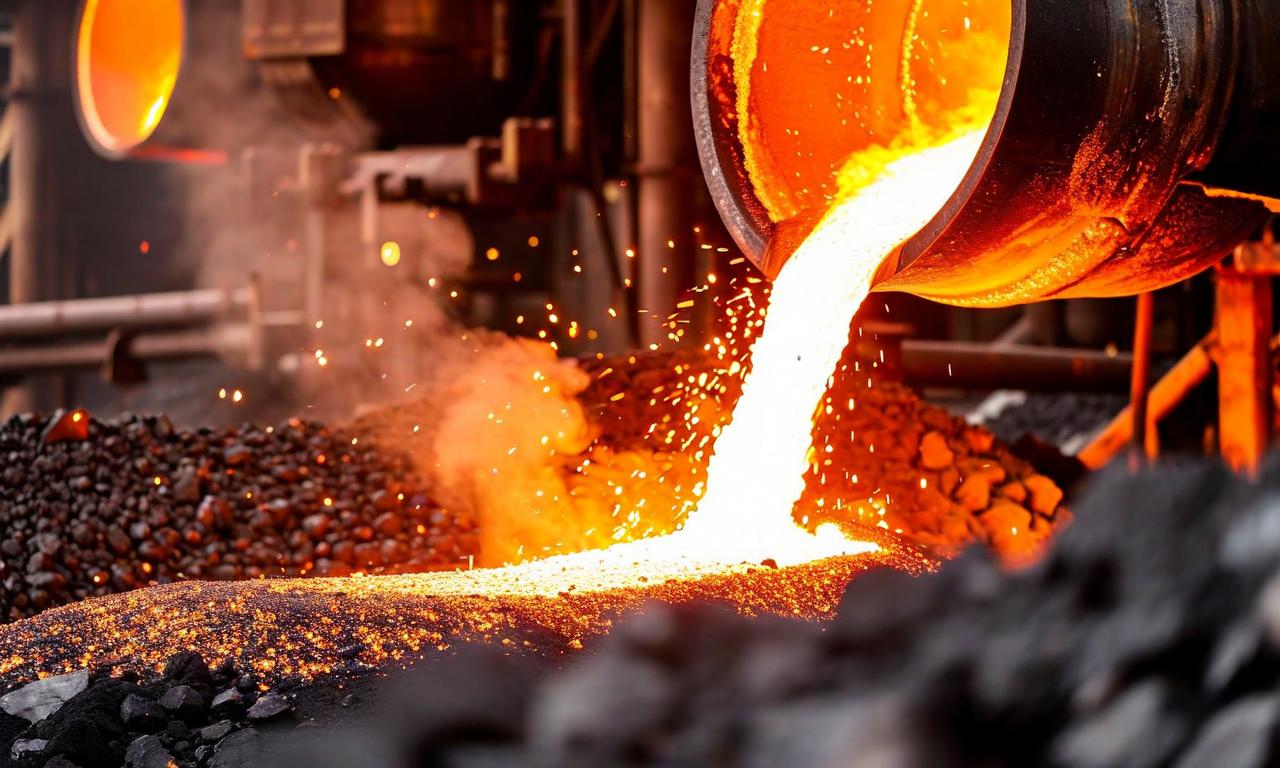

*this image is generated using AI for illustrative purposes only.
India's steel sector is grappling with a significant challenge as it aims to scale up production to meet ambitious national targets. Steel Secretary Sandeep Poundrik has highlighted the lack of growth in domestic steel-grade coking coal production as a major hurdle in the industry's expansion plans.
Import Dependence and Future Projections
India currently imports 90% of its coking coal requirements, a critical raw material for steel production. The import figures and future projections paint a concerning picture:
| Metric | Current (FY25) | Projected (2030) | Increase |
|---|---|---|---|
| Coking Coal Imports | 81.00 | 115.00 | 42.00% |
| Coking Coal Demand | - | 135.00 | 55.00% |
These projections, provided by the Indian Steel Association and EY Parthenon, underscore the urgent need for strategic interventions to reduce import dependence.
National Steel Policy Targets
The government has set ambitious targets for the steel industry:
| Target Year | Steel Production Capacity |
|---|---|
| FY2030-31 | 300.00 |
| 2047 | 500.00 |
Challenges and Initiatives
Raw Material Costs
Coking coal remains the most expensive raw material in steel production, significantly impacting the industry's competitiveness.
Domestic Production
Discussions are underway with the Coal Ministry to increase the share of domestically produced coking coal, aiming to reduce import dependence and stabilize costs.
MSME Sector Impact
The steel industry's structure in India presents unique challenges:
- 50% of India's steel is produced by 22,000 MSMEs
- 150 smaller players have recently shut down due to five-year low steel prices
Green Steel Initiative
The Ministry has launched pilot projects for Green Steel production, addressing:
- Carbon footprint concerns
- Trade barriers like the EU's Carbon Border Adjustment Mechanism
Industry Outlook
The steel sector in India faces a complex landscape of challenges and opportunities. While the government's ambitious production targets signal a strong commitment to growth, the industry must navigate significant hurdles, particularly in securing cost-effective and sustainable raw material supplies.
The focus on increasing domestic coking coal production and exploring green steel technologies demonstrates a proactive approach to addressing both immediate and long-term challenges. However, the recent closures of smaller steel producers highlight the volatile nature of the market and the need for supportive policies to ensure the sector's resilience.
As India continues its pursuit of becoming a global steel manufacturing hub, the success of these initiatives will be crucial in determining the industry's competitiveness and sustainability on the world stage.
 16
16






 Access Market Heat-map & Insights
  Create, Save & Share your Screener
  Use 200+ Screening Filters





