

India Establishes Second Crop Gene Bank in Himachal's Keylong for ₹500 Crore


India announces establishment of second National Gene Bank in Keylong, Himachal Pradesh, with ₹500.00 crore investment and capacity for 10 lakh germplasm samples. The facility will serve as strategic backup to existing Delhi gene bank, leveraging Keylong's natural cold climate for energy-efficient storage. Expected operational by end of 2027, the gene bank will support agricultural resilience and crop improvement efforts while strengthening global biodiversity conservation.

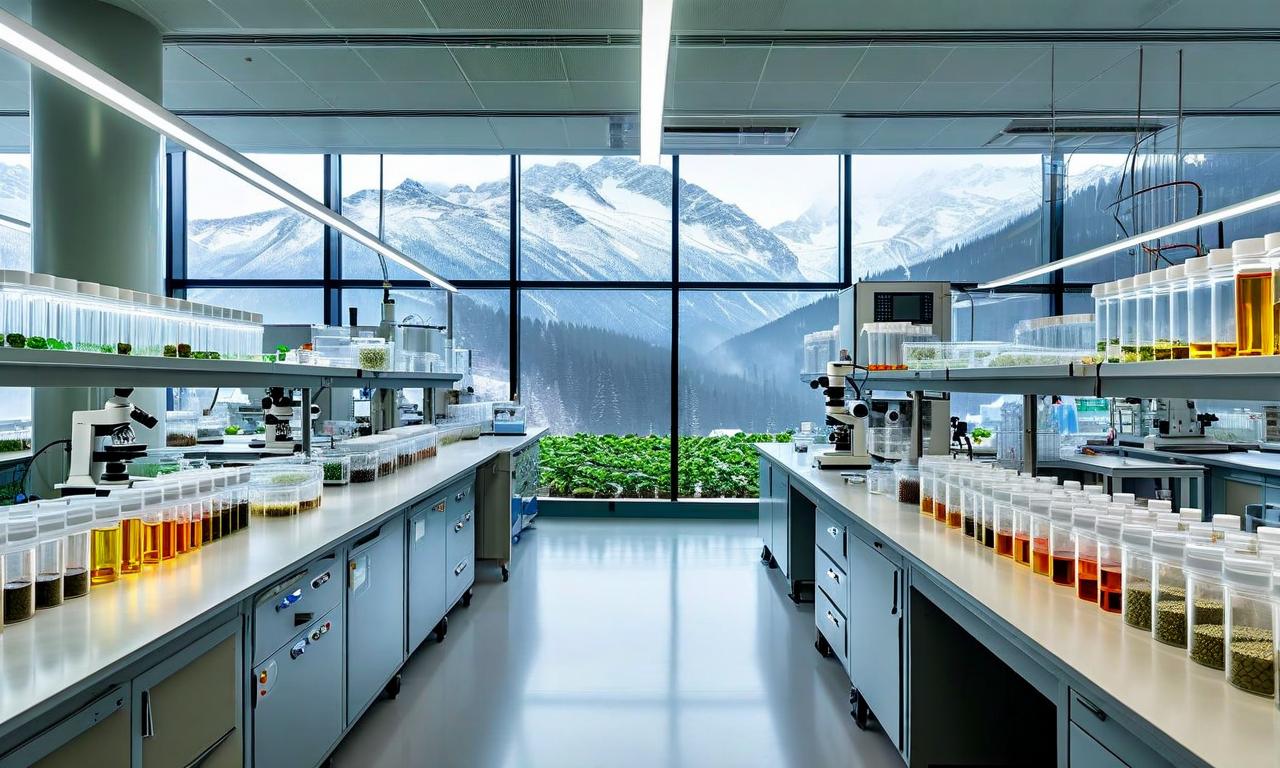

*this image is generated using AI for illustrative purposes only.
India is set to establish its second National Gene Bank in Keylong, Himachal Pradesh, at an estimated cost of ₹500.00 crore, as announced in the Union Budget for 2025-26. The facility will serve as a crucial backup to the country's existing gene bank infrastructure and strengthen agricultural resilience amid growing climate uncertainties.
Strategic Backup for Agricultural Security
The proposed facility will function as a duplicate gene bank to India's existing National Gene Bank established in 1996 at the ICAR–National Bureau of Plant Genetic Resources in New Delhi. Rising threats from climate change, natural disasters, and geopolitical uncertainties have increased risks to global genetic resources, making the backup facility critically important for long-term food security.
| Parameter: | Details |
|---|---|
| Estimated Cost: | ₹500.00 crore |
| Capacity: | 10 lakh germplasm samples |
| Expected Operational Date: | End of 2027 |
| Implementing Agency: | Indian Council of Agricultural Research (ICAR) |
Keylong's Natural Advantages
Keylong was strategically chosen for its naturally cold climate that helps maintain the required storage temperatures of around -18°C. This natural advantage significantly reduces electricity consumption, making the facility both energy-efficient and reliable for long-term conservation. The location's climatic conditions provide optimal storage environments while minimizing operational costs.
Civil work on the facility is expected to begin shortly, with ICAR currently preparing a detailed project report for the project.
India's Existing Gene Bank Infrastructure
India's first National Gene Bank, established in 1996, stands as the world's second-largest gene bank after the Svalbard Global Seed Vault in Norway. The facility demonstrates impressive conservation capacity:
| Conservation Statistics: | Numbers |
|---|---|
| Total Accessions: | Over 4.74 lakh |
| Species Coverage: | More than 2,000 species |
| Regional Support Stations: | 12 across India |
| Crop Categories: | Cereals, millets, legumes, oilseeds, vegetables |
Benefits for Agricultural Development
The new gene bank will support crop improvement by providing scientists access to genetic traits essential for developing high-yielding, climate-resilient, and disease-resistant varieties. This access ultimately benefits farmers through enhanced productivity and agricultural stability. The facility will also strengthen global biodiversity efforts by extending conservation support to countries in the SAARC and BRICS regions.
Dr D.K. Yadava, deputy director general (crop science), ICAR, emphasized the initiative's importance: "Amid growing uncertainties, establishing a secure backup gene bank has become critically important. Modeled on global best practices, the initiative will act as a genetic insurance policy."
Critical Role in Food Security
Crop genetic diversity conservation plays a vital role in global food security. While Earth contains approximately 300,000 higher plant species, only about 7,000 have been domesticated for food, fodder, and feed. Currently, just 30 plant species provide nearly 95.00% of the world's dietary energy or protein.
India's agricultural biodiversity is particularly rich, containing around 50,000 rice landraces and approximately 200 wild rice species, alongside new improved varieties released annually. This genetic diversity enables crops to adapt to different climates, soils, and environmental stresses, ensuring sustainable agricultural production for future generations.
 17
17






 Access 50+ Readymade Screeners
  Use 200+ Custom Filters
  Get Full Market Insights





