
 NewsFirst Vande Bharat sleeper train to connect Guwahati and Kolkata, launch imminent after successful trials
First Vande Bharat sleeper train to connect Guwahati and Kolkata, launch imminent after successful trials


Indian Railways has completed trials for its first Vande Bharat sleeper train connecting Guwahati and Kolkata, with PM Modi set to launch the service soon. The train achieved 180 kmph in safety trials and offers competitive fares from ₹2,300 for 3AC compared to ₹6,000-10,000 airfares. The 16-coach rake features advanced safety systems including KAVACH, modern amenities, and energy-efficient technologies, with 12 more sleeper trains planned by year-end.

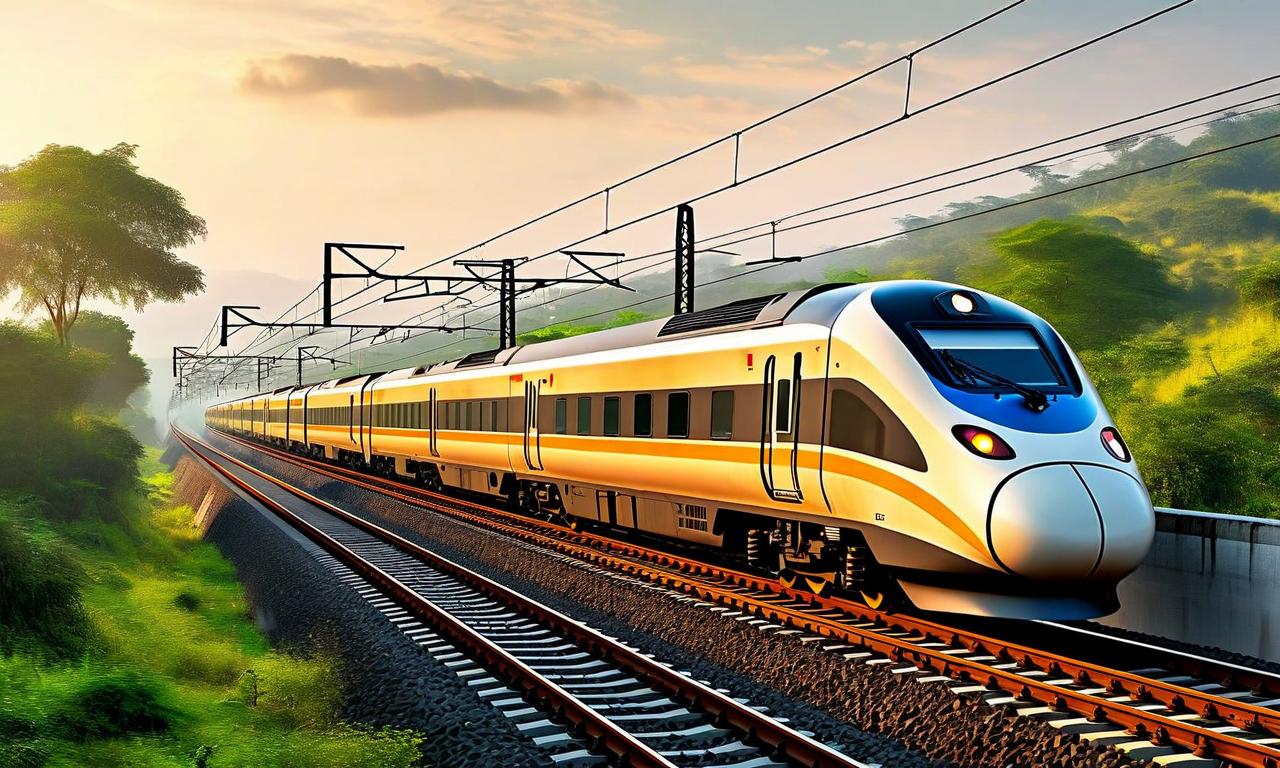

*this image is generated using AI for illustrative purposes only.
Indian Railways is set to revolutionize long-distance travel with the launch of its first Vande Bharat sleeper train, connecting Guwahati and Kolkata. Railway Minister Ashwini Vaishnaw announced on January 1 that trials, testing and certification have been successfully completed, with Prime Minister Narendra Modi expected to flag off the service soon.
Service Launch and Route Details
The sleeper variant represents a significant expansion of the Vande Bharat brand into overnight and long-distance travel segments. Vaishnaw noted that the strong public response to existing Vande Bharat chair car services encouraged this development. The new train has been specifically designed for journeys exceeding 1,000 km, promising passengers a faster, safer and more comfortable travel experience.
The Guwahati-Kolkata route will showcase modern sleeper coaches equipped with improved suspension systems, advanced safety features and upgraded passenger amenities designed to enhance overnight journey comfort.
Competitive Fare Structure
The railway ministry has positioned the service as an affordable alternative to air travel, with strategically priced tickets across different classes:
| Class | Fare |
|---|---|
| 3AC | ₹2,300.00 |
| 2AC | ₹3,000.00 |
| First AC | ₹3,600.00 |
These fares offer substantial savings compared to airfares on the same route, which typically range between ₹6,000.00 and ₹8,000.00, and can reach ₹10,000.00 during peak demand periods.
Technical Performance and Safety Trials
Indian Railways recently completed comprehensive high-speed trials under Commissioner of Railway Safety supervision on the Kota-Nagda section. The train achieved a maximum speed of 180 kmph while undergoing rigorous technical evaluations covering multiple safety parameters:
- Ride stability assessment
- Vibration behavior analysis
- Braking system performance
- Emergency response capabilities
- Overall safety performance validation
Vaishnaw demonstrated the train's stability through a water-glass test shared on social media, where glasses filled with water remained steady without spillage at high speeds, highlighting the robustness of the suspension system and overall design.
Advanced Features and Technology
The 16-coach Vande Bharat sleeper rake incorporates state-of-the-art features designed for enhanced passenger experience and safety:
Safety Systems:
- KAVACH collision avoidance system
- Crashworthy couplers and anti-climbers
- Fire detection and suppression systems
- Fire barrier doors with improved safety protocols
- CCTV-based surveillance network
Passenger Amenities:
- Automatic and centrally controlled plug doors
- Modern toilet facilities
- Digital passenger information systems
- Energy-efficient technologies
- Sealed gangways for climate control
- Emergency talk-back units
- Special accessibility features for Divyangjan passengers
- Centralized coach monitoring system
Future Expansion Plans
Vaishnaw outlined ambitious expansion plans for the Vande Bharat sleeper network. Approximately 12 sleeper trains are expected to be ready and inducted into service by the end of this year, with a rapid scale-up planned for the following year. This expansion reinforces Indian Railways' commitment to innovation, safety and indigenous manufacturing under the Atmanirbhar Bharat initiative.
The successful completion of Commissioner of Railway Safety trials represents a significant milestone, clearing the path for commercial operations and establishing a new benchmark for long-distance rail travel in India.
 18
18



 Access Market Heat-map & Insights
  Create, Save & Share your Screener
  Use 200+ Screening Filters





