

Constitutional Framework Supports Nuclear Power Oversight Transfer to Ministry of Power


India's constitutional framework through Article 77(3) supports transferring nuclear power oversight to the Ministry of Power for better integration with the national grid. The proposal would maintain AERB's safety oversight while enabling coordinated capacity planning across thermal, nuclear, and renewable sources. Long-term plans envision an integrated energy ministry managing all power sources including hydrocarbons.

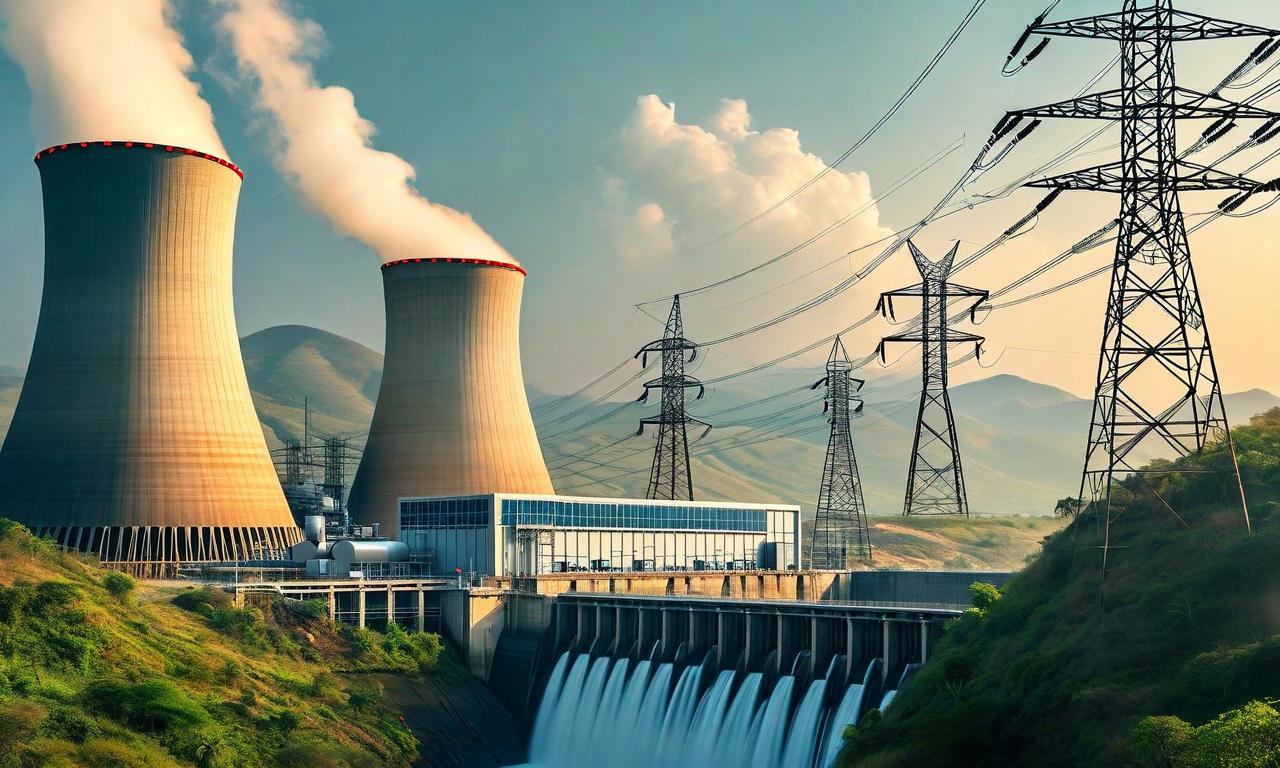

*this image is generated using AI for illustrative purposes only.
India's constitutional framework provides clear grounds for restructuring nuclear power oversight, with Article 77(3) mandating that government responsibilities be allocated among ministries without overlap. The ongoing debate centers on whether nuclear energy supervision should transfer from the Department of Atomic Energy (DAE) to the Ministry of Power.
Constitutional Mandate for Clear Allocation
The Constitution establishes specific requirements for government organization through Article 77(3), which empowers the President to make rules for convenient transaction of government business and allocation among ministers. This constitutional provision ensures accountability by requiring clear assignment of responsibilities across ministries through two comprehensive lists covering broad subjects and specific areas within each domain.
Strategic Integration with Power Grid Management
As nuclear power evolves from experimental capacity to mainstream baseload generation, integration with India's broader electricity portfolio becomes essential. The Ministry of Power currently manages thermal, hydroelectric, and renewable energy sources, creating a foundation for comprehensive energy oversight.
| Power Source Category | Operational Characteristics | Grid Function |
|---|---|---|
| Nuclear & Thermal | Difficult to switch on/off quickly | Baseload electricity supply |
| Gas & Hydroelectric | Easy restart capability | Middle layer for demand fluctuations |
| Solar & Wind | Intermittent generation | Top layer with storage systems |
The proposed structure addresses grid stability challenges when solar and wind sources experience natural interruptions. Battery storage systems and flexible gas and hydroelectric sources would fill supply gaps, while nuclear and thermal plants provide consistent baseload power.
Capacity Planning and Efficiency Considerations
Source-agnostic management under the Ministry of Power would enable coordinated decision-making for capacity additions and reactor locations. Current DAE commissioning without integrated demand and supply analysis may result in inefficient resource allocation.
The Ministry of Power would determine optimal capacity requirements across different timeframes and geographical locations, ensuring nuclear development aligns with overall grid needs and demand patterns.
Regulatory Framework and Safety Oversight
The proposed restructuring maintains specialized safety oversight through the Atomic Energy Regulatory Board (AERB), which would retain responsibility for:
- Reactor operation monitoring
- Safety rule enforcement
- Regular inspection protocols
The AERB would ideally function as an independent regulator, receiving policy mandates from both the Ministry of Power and DAE while maintaining autonomous regulatory authority and parliamentary accountability.
Long-term Vision for Integrated Energy Management
The ultimate goal involves establishing a comprehensive energy ministry that encompasses hydrocarbons alongside thermal, nuclear, and renewable power sources. This integrated approach would support future grid developments incorporating traditional power sources with advanced battery storage systems, including vehicle-based storage solutions. Nuclear safety would remain under specialist oversight within this broader framework.
 19
19






 Access Market Heat-map & Insights
  Create, Save & Share your Screener
  Use 200+ Screening Filters





