

Goldman Sachs initiates SpaceX coverage with Buy rating, sees $2.1T valuation


Goldman Sachs initiated coverage of Space Exploration Technologies Corp. with a Buy rating and a $205 price target, valuing the company at $2.1 trillion. The firm projects revenue will surge from $18.7 billion in 2025 to $474.3 billion in 2030, driven by growth in its space, connectivity, and AI segments. Despite requiring $270 billion in debt by 2030, the bank expects operating margins to reach 50% by then, aligning with a largely bullish Wall Street consensus.



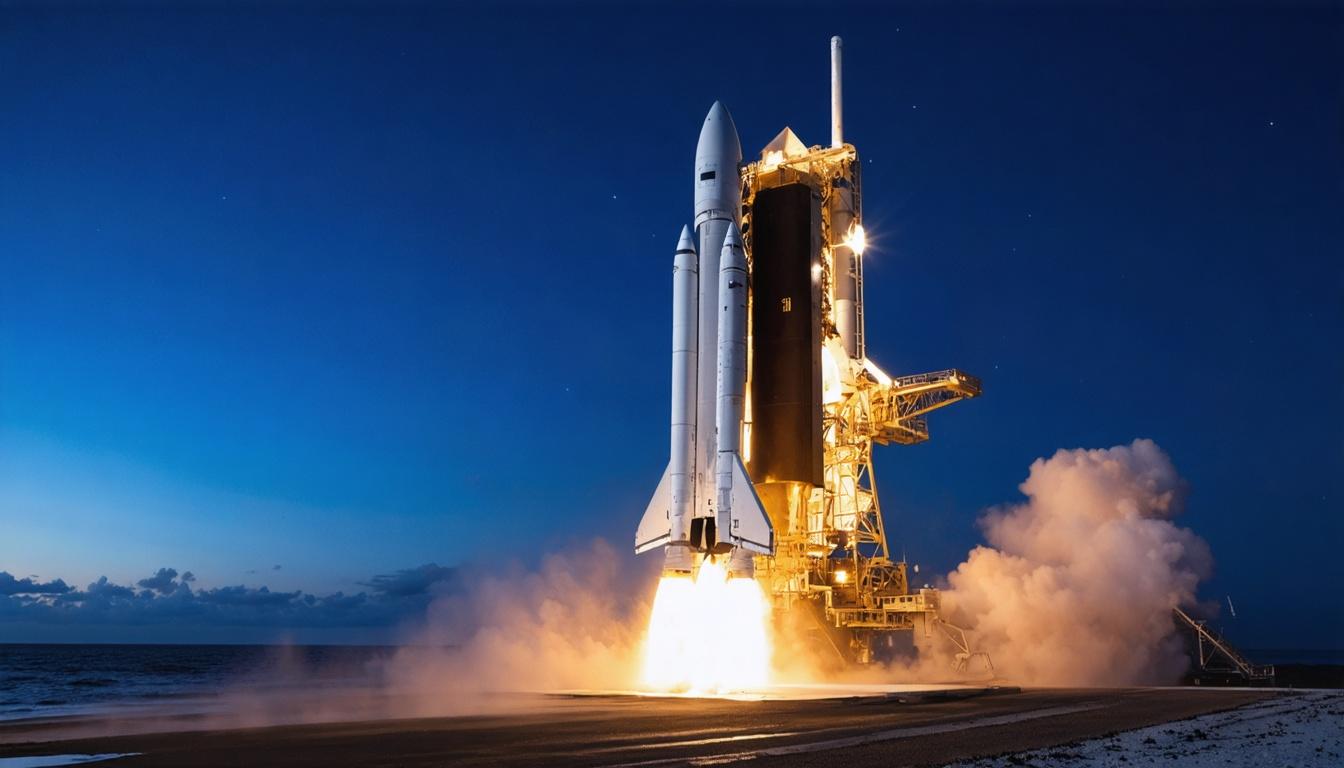
*this image is generated using AI for illustrative purposes only.
Goldman Sachs has initiated coverage of Space Exploration Technologies Corp. with a Buy rating and a 12-month price target of $205, implying roughly 28% upside from the July 6 close of $160.42. Analyst Eric Sheridan and his team set a target that values Elon Musk’s company at about $2.1 trillion, suggesting a 2-to-1 risk-reward profile for investors. This bullish stance follows the company's June 12 listing, which saw the stock price at $135, opening at $150, and closing near $161 on debut.
The firm argues that Space Exploration Technologies Corp. is no longer a pure-play rocket company. After merging with Musk’s xAI in February and integrating the X platform, the company now operates across three segments: space (launch and reusable rockets), connectivity (Starlink broadband and mobile), and AI (compute, Grok, and advertising). Goldman’s thesis rests on the scale of these units, which address a combined $28.5 trillion opportunity outlined in the IPO filing.
Financial Projections
Goldman forecasts total revenue climbing from $18.7 billion in 2025 to $474.3 billion in 2030, representing a 91% compound annual growth rate. The AI segment is projected to scale from about $15.6 billion this year to $589 billion by 2031. Consolidated operating margins are expected to swing from negative 13.9% in 2025 to roughly 50% by 2030 as high-margin Starlink and AI revenues expand.
However, this growth requires significant capital. Goldman estimates the company needs about $270 billion of debt between 2026 and 2030 and does not expect positive free cash flow until the fourth quarter of 2030. The bank models about 2 gigawatts of compute online by year-end, scaling to 36 gigawatts by 2030.
Market Position and Consensus
Space Exploration Technologies Corp. has delivered more than 80% of all mass sent to orbit worldwide since 2023. This launch advantage facilitates the deployment of Starlink satellites and orbital AI data centers at costs competitors struggle to match. On the AI side, the company has struck compute hosting deals with Anthropic, Alphabet Inc., and Reflection AI at rates estimated to run above typical cloud pricing.
| Metric | Value |
|---|---|
| Rating | Buy |
| Price Target | $205 |
| Implied Valuation | $2.1 trillion |
| 2025 Revenue Estimate | $18.7 billion |
| 2030 Revenue Estimate | $474.3 billion |
| 2030 Operating Margin | ~50% |
| Free Cash Flow Positive | Q4 2030 |
Wall Street sentiment is largely positive. Benzinga Analyst Ratings data shows a consensus Buy rating and an average price target of $237.74. Morgan Stanley’s Adam Jonas set the most aggressive target among bulge-bracket banks at $300, with a bull case of $600. Other firms include Deutsche Bank at $255, Wells Fargo at $230, and Citigroup and Needham at $200. Moffett Nathanson was the lone skeptic, initiating at Neutral with a $131 target.

How will the company secure the estimated $270 billion in debt required between 2026 and 2030, and what impact will this leverage have on its credit profile?
What are the potential regulatory hurdles for integrating orbital AI data centers, and could international space laws impede the deployment of these data centers?
Given the projected 91% compound annual growth rate, which specific operational milestones must be met in the near term to validate such an aggressive revenue trajectory?
 15
15














 Access 50+ Readymade Screeners
  Use 200+ Custom Filters
  Get Full Market Insights





