

LG Electronics, NVIDIA accelerate robotics collaboration in Seoul


LG Electronics and NVIDIA are deepening their robotics partnership with a focus on data-driven development at LG's new Seoul facility. The collaboration leverages NVIDIA's AI stack to process 100,000 hours of training data, aiming to enhance humanoid robot performance. A newly formed Robotics Business Center will oversee the expansion into home and industrial robotics sectors.


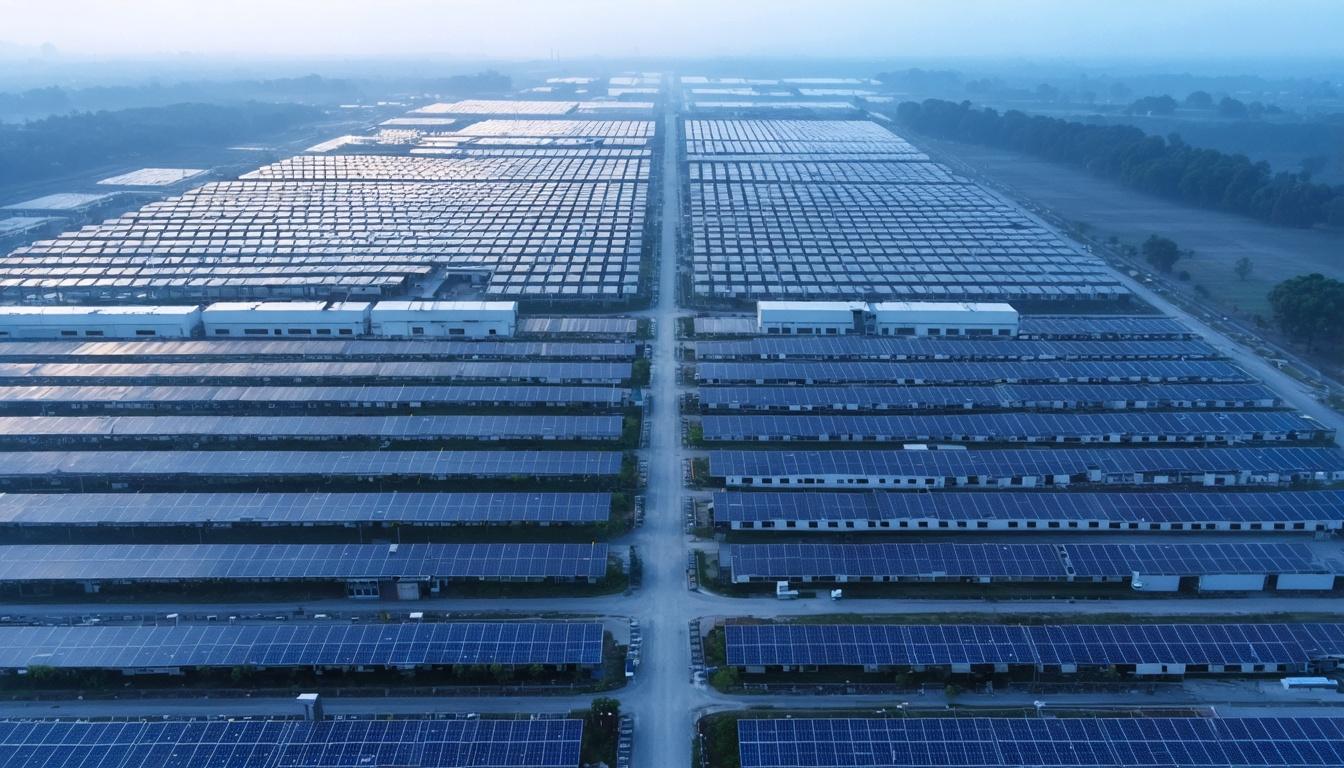
*this image is generated using AI for illustrative purposes only.
LG Electronics and NVIDIA are accelerating their strategic collaboration on robotics, hosted at LG's Data Factory in Seoul. Senior executives from both companies convened at the facility under construction at LG's Yangjae R&D Campus to review the direction of the partnership and discuss synergies. This meeting follows a memorandum of understanding signed by LG Group and NVIDIA on August 13 at NVIDIA's headquarters in Santa Clara, California.
The Data Factory is scheduled to be fully operational by the end of the year. It features training spaces where robots practice tasks, including a replicated home environment for cleaning tasks and a simulated manufacturing space modeled on LG's washing machine plant in Tennessee. Robots are also being deployed in LG CNS's logistics automation solutions and in a space where LG Innotek trains robotic hands.
What the Numbers Show
LG plans to accumulate 100,000 hours of training data by the end of the year, combining direct collection at the facility with synthetic data generated using NVIDIA Cosmos open world models. This volume is equivalent to roughly 12 years of continuous operation data. The data will be used to advance LG's Robot Foundation Model (RFM), which underpins the performance of humanoid robots.
| Metric | Value |
|---|---|
| Total Floor Area | 10,000 square meters |
| Facility Structure | Four floors (one basement, three above ground) |
| Target Robot Count | Several hundred by year-end |
| Training Data Target | 100,000 hours (approx. 12 years) |
The core competitiveness of this initiative lies in building a "data flywheel," where high-quality data from LG's decades of manufacturing and logistics operations is secured and used to continuously improve robots. This data is linked with NVIDIA's robotics stack, including NVIDIA Omniverse libraries, NVIDIA Cosmos open world models, and the open NVIDIA Isaac robotics development platform.
LG has designated this year as the starting point for its robotics business push. Last month, the company established a Robotics Business Center reporting directly to the CEO to oversee companywide robotics business and improve execution efficiency. While LG already has a strong presence in industrial and commercial robotics, it plans to expand into home robotics, leveraging its expertise in core components such as actuators.
"Through the synergy built on 'One LG' – bringing together core capabilities across the Group – and strategic collaboration with global partners, we will secure our competitiveness in physical AI and become a comprehensive robotics solutions provider," said Lyu Jae-cheol, CEO of LG Electronics.
Historical Stock Returns for LG Electronics
| 1 Day | 5 Days | 1 Month | 6 Months | 1 Year | 5 Years |
|---|---|---|---|---|---|
| +1.97% | +2.04% | +5.07% | +22.83% | +3.97% | +3.97% |

How will LG's integration of NVIDIA's Isaac platform and Cosmos models differentiate its Robot Foundation Model from competitors like Tesla Optimus or Boston Dynamics?
What specific regulatory or safety hurdles might LG face when transitioning its robotics focus from controlled industrial environments to unstructured home settings?
Could the establishment of a CEO-direct Robotics Business Center signal a potential spin-off or IPO for LG's robotics division in the near future?
 18
18











 Access Market Heat-map & Insights
  Create, Save & Share your Screener
  Use 200+ Screening Filters





