Macquarie sees massive upside in SpaceX as AI infrastructure play

2 min read     Updated on 22 Jul 2026, 12:23 AM
scanx
Reviewed by
Radhika SScanX News Team
AI Summary

Macquarie has set a $250 price target for SpaceX, identifying it as a premier AI infrastructure asset with nearly 100% upside potential. The firm's valuation relies on Sum-of-the-Parts and DCF analysis, emphasizing the company's ability to bypass terrestrial data center constraints through orbital AI systems. Recent deals with Anthropic and Alphabet Inc. validate this thesis, positioning SpaceX as a key supplier of high-end compute infrastructure.

powered bylight_fuzz_icon
44966149

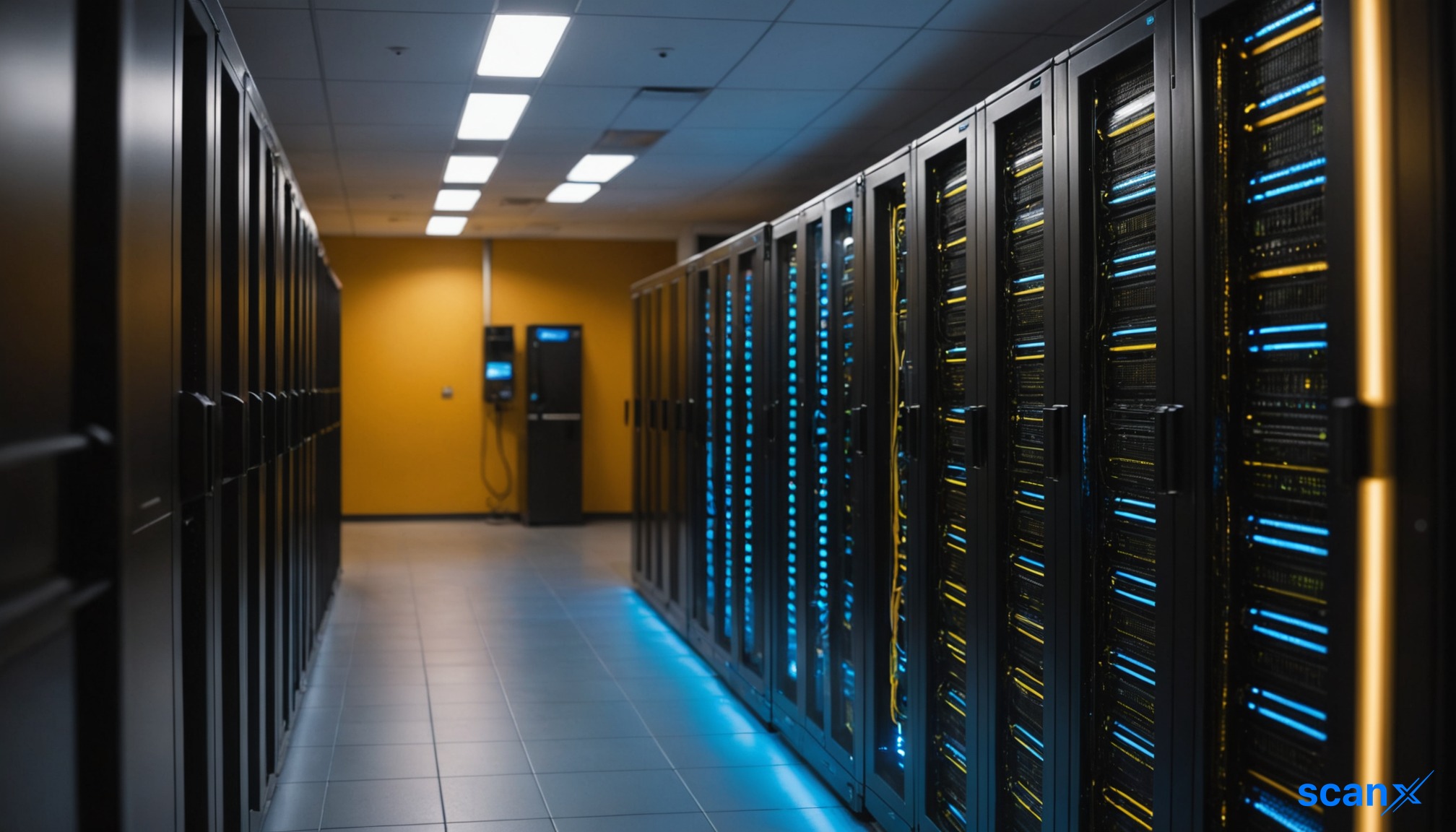
*this image is generated using AI for illustrative purposes only.

Macquarie has reiterated an Outperform rating on SpaceX (NASDAQ:SPCX) and established a $250 price target, positioning the company as a premier AI infrastructure asset with significant upside potential. The firm argues that pullbacks in the stock represent buying opportunities, driven by SpaceX's vertical integration and emerging AI compute revenue streams. This target implies nearly 100% upside from the current level near $127 per share.

Macquarie’s Valuation Framework

The analysts utilize a blend of Sum-of-the-Parts and Discounted Cash Flow analysis to justify the valuation, tying it to both core launch economics and AI compute potential. Macquarie emphasizes "significant upside from AI optionality," suggesting that even partial realization of SpaceX’s long-term compute ambitions could justify valuations far above the current price. The firm views SpaceX's orbital networks and vertically integrated data centers as a "compute utility" capable of compounding beyond launch revenues.

Compute Demand and Bottleneck Relief

Macquarie highlights that hyperscale data centers face escalating power, cooling, and land constraints as AI models expand. SpaceX’s proposed orbital AI data-center system, potentially utilizing up to one million satellites with near-continuous solar power, aims to circumvent ground-based limits while lowering energy intensity per unit of compute. The firm’s upside case assumes that capturing even a fraction of terminal AI compute demand with this architecture could significantly enhance revenue and margin profiles.

Commercial Traction and Key Deals

The thesis is supported by recent commercial agreements. Anthropic has secured a deal to use all compute capacity at SpaceX’s Colossus 1 data center, accessing roughly 300 megawatts of power and more than 220,000 Nvidia GPUs. Additionally, multi-billion-dollar AI compute arrangements with Alphabet Inc. (NASDAQ:GOOGL) (NASDAQ:GOOG) reinforce SpaceX’s role as a wholesale supplier of high-end infrastructure. These contracts provide early proof of concept for the strategy to monetize unused capacity and anchor the argument to buy into the stock as the AI revenue stack scales.

Analyst Consensus and Ratings

SpaceX continues to garner bullish sentiment from Wall Street, with multiple firms maintaining positive ratings and high price targets.

Firm Analyst Rating Price Target
Macquarie - Outperform $250
Cantor Fitzgerald Colin Canfield Overweight $246
BofA Securities Ronald Epstein Buy $235
Evercore ISI Group Kutgun Maral Outperform $230
RBC Capital Ken Herbert Outperform $225

What are the estimated capital expenditure requirements to scale the orbital data center network to one million satellites?

How will SpaceX manage the latency limitations of orbital networks compared to terrestrial hyperscale data centers for real-time AI applications?

What specific regulatory hurdles must be cleared for SpaceX to deploy large-scale orbital AI infrastructure globally?

like17
dislike

Musk warns SpaceX short-sellers of low survival probability

2 min read     Updated on 21 Jul 2026, 10:49 PM
scanx
Reviewed by
Radhika SScanX News Team
AI Summary

SpaceX short interest has surged to 29% of the public float, representing $25 billion in bets against the company, as the stock fell below its $135 IPO price. CEO Elon Musk warned that the survival probability of firms maintaining a short position is very low, while former hedge fund manager Whitney Tilson reiterated his view that the stock is significantly overvalued at 92 times trailing revenues.

powered bylight_fuzz_icon
44964204

*this image is generated using AI for illustrative purposes only.

SpaceX (NASDAQ:SPCX) is facing intensified bearish pressure as short sellers ramp up their bets against the company, with nearly 185 million shares, or about 29% of the public float, now sold short. This represents $25 billion in wagers, a significant increase from just three weeks ago when short interest was between 5% and 7%. The surge in short selling comes as SPCX’s stock struggles, having dropped below its $135 IPO price on Wednesday for the first time, marking a drawdown of roughly 40% from the June 16 record high of $225.64. The stock has lost approximately $283 billion in value last week, overshadowing Boeing Co.’s entire market cap of $169 billion.

SpaceX CEO Elon Musk has issued a stern warning to those betting against the company. "The survival probability of firms who maintain a significant short position in SpaceX over time is very low," Musk tweeted in response to a user questioning the logic of short sellers. The user suggested that short sellers are well-educated individuals with "perfect resumes" who fail to grasp the company's long-term potential and total addressable market. Musk’s comments, highlighted by Teslarati, coincide with a rebound in SpaceX shares on Tuesday.

Musk’s History vs. Short Sellers

Musk has a long history of antagonism toward short sellers, particularly during his tenure at Tesla Inc (NASDAQ:TSLA). In 2018, he told short sellers they had "about three weeks before their short position explodes." He has repeatedly stated that short selling should be illegal. Musk famously clashed with billionaire Bill Gates over a short position in Tesla, refusing to discuss philanthropy unless Gates closed the trade. "Sorry, but I cannot take your philanthropy on climate change seriously when you have a massive short position against Tesla," Musk told Gates. In 2024, he predicted short holders would be "obliterated" upon Tesla achieving full autonomy and volume production of the Optimus robot.

Analyst Criticism

Former hedge fund manager Whitney Tilson remains bearish on the SpaceX IPO. Despite shares trading below their IPO price, Tilson advises investors to stay away. "Don’t even think about bottom-fishing this one, as it still trades at 92 times trailing revenues," Tilson wrote. "That means it’s still nearly 10 times overvalued, given that I think a generous multiple for the stock would be 10 times revenues." Tilson previously called SpaceX "the most overvalued large-cap stock of all time." He also cautioned investors to take analyst price targets with a grain of salt, citing the $500 million fee pool associated with the IPO.

Technical Levels and Market Structure

SPCX is currently positioned well below its 20-day simple moving average, indicating a bearish trend. The stock’s price is 17.4% below this moving average, suggesting weak momentum. The RSI sits at 31.98, which is considered neutral but recently dipped into oversold territory on July 7, 2026. Despite the recent downturn, SPCX trades 43.74% above its 50-day simple moving average of $87.04 and 218.27% above its 200-day simple moving average of $39.31, indicating a long-term uptrend remains intact. The MACD sits below its signal line with a negative histogram, pointing to fading upside pressure.

Key Metrics

Metric Value
Recent Low $132.15
IPO Price $135
June Peak $225.64
Short Interest 29% of float
50-day SMA $87.04
200-day SMA $39.31

What catalysts could trigger a short squeeze given the current high short interest?

How might SpaceX's upcoming earnings or product launches influence the stock's momentum?

What are the potential risks for short sellers if the stock rebounds above its IPO price?

like19
dislike

More News on SpaceX