

SpaceX central to fourth industrial revolution despite volatility


Dan Ives identifies SpaceX as a crucial player in the fourth industrial revolution despite current valuation gaps and early public trading volatility. He predicts an over 80% likelihood of SpaceX acquiring Tesla, a view supported by Chamath Palihapitiya but contested by Gary Black over potential dilution risks. Tesla is set to report second-quarter earnings on July 22, with Wall Street anticipating revenue of $26.02 billion.


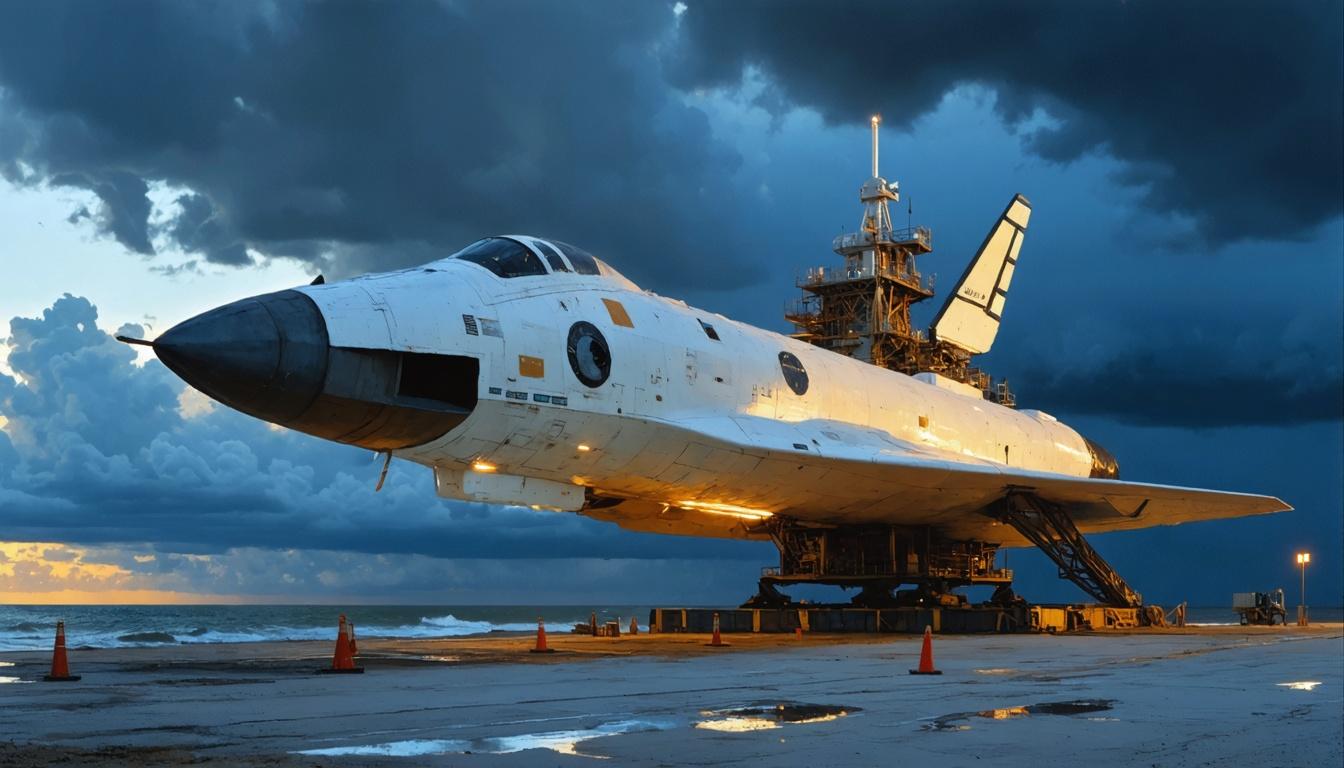
*this image is generated using AI for illustrative purposes only.
Former Wedbush technology analyst Dan Ives stated that SpaceX is becoming an indispensable artificial intelligence and data infrastructure company, calling Elon Musk’s rocket maker a foundational pillar of the "fourth industrial revolution" despite its volatile start as a publicly traded company. Ives urged investors to judge the company over several years rather than its first weeks following the June IPO, comparing the situation to the early trading periods of Amazon and Facebook.
Speaking with Yahoo Finance’s Brian Sozzi on Thursday, Ives acknowledged that "the valuation support is not there." He emphasized that investors should focus on what SpaceX could become over the next two to five years. Ives, who left Wedbush this month to launch an investment-banking venture, compared the company’s execution challenges to those of other prominent technology listings such as Anthropic and OpenAI, noting that execution is the primary risk and reward factor.
Ives reiterated his view that SpaceX will eventually acquire Tesla Inc., raising the probability of such a transaction to above 80%. "This is essentially Musk," Ives said. "A lot of it is really… betting on Musk." Early SpaceX investor Chamath Palihapitiya supported this view, stating there is "a very obvious industrial logic" to combining SpaceX and Tesla under one capital structure and balance sheet.
Investor Gary Black pushed back against the merger thesis, arguing that Musk’s 82% voting control does not release SpaceX directors from fiduciary duties to all shareholders. Black noted that at current valuations, an all-stock purchase of Tesla could dilute SpaceX holders by roughly 25%. "The math won’t pass muster," he wrote. No transaction has been announced, and any combination would require board review, valuation work, and likely regulatory scrutiny.
The debate precedes Tesla’s second-quarter results report scheduled for July 22 after the closing bell. Wall Street expects earnings of 32 cents per share on revenue of $26.02 billion. SpaceX stock is currently trading about 2.8% lower than its IPO price of $135 per share.
Key Market Expectations for Tesla
| Metric | Expected Value |
|---|---|
| Earnings per share | 32 cents |
| Revenue | $26.02 billion |
| Reporting date | July 22 |

How will SpaceX's upcoming quarterly results influence investor confidence in its long-term AI and data infrastructure strategy?
What regulatory hurdles could a potential SpaceX-Tesla merger face, and how might they impact the timeline?
How might SpaceX's volatile early trading performance affect its ability to secure future funding for ambitious projects?
 17
17





 Access Market Heat-map & Insights
  Create, Save & Share your Screener
  Use 200+ Screening Filters





